A Renaissance Embrace: Unveiling Cranach’s Madonna
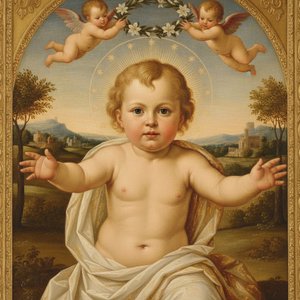
Lucas Cranach the Elder's Madonna and Child, a painting radiating serene grace and profound spiritual depth, stands as a cornerstone of German Renaissance art. More than simply a depiction of Mary cradling her infant son, it’s a carefully constructed tableau brimming with symbolic resonance and technical mastery – a testament to Cranach’s ability to capture both the divine and the deeply human within a single frame. Painted likely between 1504 and 1515, during his prolific tenure as court painter for the Electors of Saxony, this work embodies the evolving artistic sensibilities of the era while firmly rooted in established devotional traditions.
Cranach’s approach diverges subtly from the prevailing Italian influence then dominating European art. While acknowledging the impact of Raphael and other masters, he imbues his Madonna with a distinctly German sensibility – a quiet dignity and an understated emotionality that speaks to the spiritual realities of his time. The composition itself is remarkably balanced, drawing the eye effortlessly towards the central figures while simultaneously establishing a sense of depth through the carefully rendered landscape behind them. Notice how the rocky terrain, bathed in soft light, anchors the scene, providing a grounding element against the ethereal beauty of the Virgin and Child.
The Language of Symbolism
Every element within this painting is laden with symbolic weight. Mary’s pose, reminiscent of depictions found in Byzantine iconography, subtly references the traditional image of the Theotokos – “God-bearer.” However, Cranach introduces a gentle intimacy rarely seen in earlier representations. Mary isn't presented as an aloof goddess; she gazes directly at the viewer with a tender expression, inviting a personal connection. Her hands are open and relaxed, cradling the Christ Child not with rigid formality but with a palpable sense of love and protection.
The infant Jesus, depicted nursing – a detail that sets this painting apart from many contemporary depictions – immediately establishes his divine nature while simultaneously evoking the primal image of human nourishment. The gesture is both symbolic and profoundly affecting, suggesting an unbroken lineage of faith and compassion. Even the angels flanking the scene contribute to the overall narrative; their presence signifies God’s watchful care over Mary and her son, reinforcing the central theme of salvation and divine grace.
Craftsmanship and Technique
Cranach's skill as a painter is evident in every brushstroke. He employs a meticulous technique, layering colors with remarkable precision to create a sense of luminous depth and texture. The use of oil paint allows for subtle gradations of tone and color, contributing to the painting’s overall atmospheric quality. Observe how he masterfully renders the folds of Mary's robes, creating a dynamic interplay of light and shadow that adds volume and realism to the figures.
Furthermore, Cranach was a skilled printmaker, and his mastery of woodcut and engraving influenced his painting style. The clarity and precision of his lines – particularly evident in the rendering of details such as the folds of fabric and the texture of the landscape – are hallmarks of his artistic practice. The influence of this meticulous approach is apparent even in the painted version, lending it a remarkable sense of detail and refinement.
A Timeless Portrait of Devotion
Madonna and Child transcends its historical context to offer a timeless meditation on motherhood, faith, and divine grace. It’s a painting that invites contemplation, prompting viewers to reflect on the profound beauty and enduring significance of the Christian narrative. Reproductions of this masterpiece capture not only its visual splendor but also the emotional resonance that has captivated audiences for centuries. Whether adorning a private chapel or gracing a gallery wall, Cranach's Madonna remains a powerful symbol of hope, love, and spiritual connection – a testament to the enduring legacy of one of Germany’s greatest Renaissance artists.



 Náhled
 Přepnout na tisk
 Sdílet
 Sdílet
 Podrobnosti o díle

 Stáhnout
 Podobné položky
 Rentgenové snímky
 Slideshow
 Statistiky


 Zobrazit více






































 Skleněná varianta je dostupná pouze u rozměrů menších než 110 cm