A Portal Between Worlds: The Visionary Geometry of Juan Gris
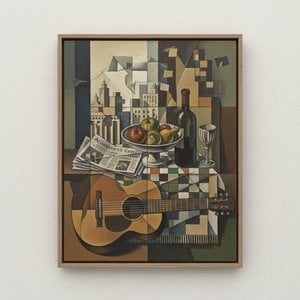
In the quiet intersection of interior intimacy and Mediterranean expanse lies The Open Window, a 1921 masterpiece by the Spanish virtuoso Juan Gris. This work serves as more than a mere depiction of a seaside view; it is a profound meditation on the boundary between the known and the infinite. As the viewer gazes through the structured frame of the window, they are invited into a space where the analytical rigor of Cubism meets the sun-dasting warmth of the French coast. The composition masterfully balances the heavy, tactile presence of a still life in the foreground—featuring bottles, bowls, and scattered books—with the ethereal, light-filled promise of the ocean beyond. It is a painting that breathes, offering a rhythmic pulse between the stillness of a room and the movement of the tides.
Gris, often celebrated as the "third musketeer" of Cubism alongside Picasso and Braque, brought a unique, mathematical precision to the movement. Unlike the more fragmented deconstructions of his contemporaries, Gris utilized a method of synthetic reconstruction. In The Open Window, we see this technique at its zenith; he does not merely break objects apart but builds them back up through a sophisticated interplay of geometric planes and light. The artist uses sharp contrasts of shade to create a three-dimensional depth that pulls the eye from the tangible objects on the table toward the distant horizon. This structural integrity makes the piece particularly captivating for collectors who appreciate art that possesses both intellectual complexity and visual stability.
The Harmony of Interiority and Light
The historical context of this work is deeply intertwined with Gris’s personal journey and his relationship with the landscape of Southern France. Following his time in Collioure, where he was influenced by the vibrant color palettes of Matisse, Gris developed a signature way of treating the "open window" motif. In this 1921 composition, he achieves a rare clarity, separating the interior world—characterized by the musicality and intellectual weight of books and instruments—from the exterior world of nature. This separation creates a beautiful tension; the indoor setting feels like a sanctuary of thought, while the view through the window acts as an escape into the boundless Mediterranean light.
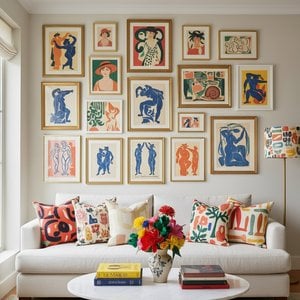
For the discerning interior designer or art enthusiast, this painting offers an unparalleled emotional resonance. It embodies a sense of tranquil contemplation and sophisticated leisure. The presence of everyday objects arranged with such deliberate grace suggests a life lived with intention and aesthetic awareness. Whether placed in a sunlit study to enhance a sense of scholarly calm or in a modern living space to provide a focal point of structural elegance, a high-quality reproduction of this work brings an atmosphere of timelessness and prestige. It is an invitation to pause, to look through the frame, and to find beauty in the structured harmony of our surroundings.
Otázky a odpovědi
Jaká je vnímaná jasnost díla „The Open Window“ od Juan Gris?
Z hlediska vnímané jasnosti je dílo „The Open Window“ od Juan Gris shadow.
Jakou barvu v kompozici díla „The Open Window“ od Juan Gris dominuje?
Dominantní barvou díla „The Open Window“ od Juan Gris je Putty (#d4d2de).
Je dílo "The Open Window" typické pro to, co Juan Gris obvykle vytvářel/a?
„The Open Window“ zachycuje window, ocean view, interior space, musical instrument, composition, light shadow, mediterranean landscape, zatímco v díle umělce Juan Gris se setkáváme s tématy jako cubist innovation, mediterranean spirit, artistic dialogue, spatial contrast, visual exploration. Porovnání těchto dvou aspektů odhaluje, jak toto dílo navazuje na obvyklá témata tohoto autora.



 Náhled v interiéru
 Přepnout na tisk
 Sdílet
 Sdílet
 Podrobnosti o díle
 Průvodce

 Stáhnout
 Podobné položky
 Rentgenové snímky
 Slideshow
 Statistiky


 Zobrazit více






































 Skleněná varianta je dostupná pouze u rozměrů menších než 110 cm