Zobrazit v interiéru Zkusit v AR Objednat ručně malovanou reprodukci Přepnout na digitální verzi obrazu Odeslat
Podrobnosti Průvodce Přidat do oblíbených Stáhnout obrázek Podobné kousky Rentgenové snímky Slideshow Statistiky

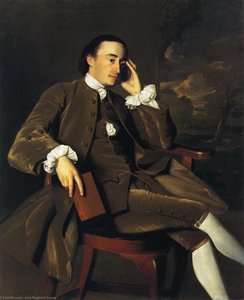
John A. Sidell

Experience Neoclassical elegance with John Vanderlyn's 1830 portrait of John A. Sidell, showcasing masterful detail and classical form; discover this American art masterpiece today.

John Vanderlyn (1775-1852) byl americký malíř, průkopník neoklasicismu v USA. Známý svými portréty a historickými díly, jako "Zátah Kolumba", ovlivnil vývoj amerického umění a spojil evropské vzdělání s americkou tradicí.

Giclée / Umělecký tisk

Giclée nebo plátěný tisk muzeální kvality s rychlou výrobou a širokou nabídkou povrchových úprav. ( Objednat ručně malovanou reprodukci Přepnout na digitální verzi obrazu)

Corner sample of the P118B picture frame: moulded polystyrene, 5 cm wide and 3 cm thick
P118B Kč10
Corner sample of the P118H picture frame: moulded polystyrene, 5 cm wide and 3 cm thick
P118H Kč10
Corner sample of the P118W picture frame: moulded polystyrene, 5 cm wide and 3 cm thick
P118W Kč10
Corner sample of the P438Z picture frame: moulded polystyrene, 5.5 cm wide and 3.5 cm thick
P438Z Kč10
Corner sample of the P508JH picture frame: moulded polystyrene, 7 cm wide and 3.5 cm thick
P508JH Kč12
Corner sample of the P508YH picture frame: moulded polystyrene, 7 cm wide and 3.5 cm thick
P508YH Kč12
Corner sample of the P805H picture frame: moulded polystyrene, 5 cm wide and 3.5 cm thick
P805H Kč10
Corner sample of the P805Z picture frame: moulded polystyrene, 5 cm wide and 3.5 cm thick
P805Z Kč10
Corner sample of the P919BZ picture frame: moulded polystyrene, 7 cm wide and 3.5 cm thick
P919BZ Kč10
Corner sample of the P919G picture frame: moulded polystyrene, 7 cm wide and 3.5 cm thick
P919G Kč10
Corner sample of the P919XJ picture frame: moulded polystyrene, 7 cm wide and 3.5 cm thick
P919XJ Kč10
Corner sample of the P959ZH picture frame: moulded polystyrene, 5 cm wide and 3 cm thick
P959ZH Kč10
Corner sample of the P968JZ picture frame: moulded polystyrene, 6 cm wide and 4 cm thick
P968JZ Kč12
Corner sample of the W106C picture frame: solid wood, 5 cm wide and 3 cm thick
W106C Kč8
Corner sample of the W218G picture frame: solid wood, 5 cm wide and 3 cm thick
W218G Kč10
Corner sample of the W218JH picture frame: solid wood, 5 cm wide and 3 cm thick
W218JH Kč8
Corner sample of the W218Y picture frame: solid wood, 5 cm wide and 3 cm thick
W218Y Kč10
Corner sample of the W307PJ picture frame: solid wood, 6 cm wide and 3 cm thick
W307PJ Kč10
Corner sample of the W316G picture frame: solid wood, 6 cm wide and 3 cm thick
W316G Kč10
Corner sample of the W316PJ picture frame: solid wood, 6 cm wide and 3 cm thick
W316PJ Kč8
Corner sample of the W316Y picture frame: solid wood, 6 cm wide and 3 cm thick
W316Y Kč10
Corner sample of the W398PJ picture frame: solid wood, 5 cm wide and 3 cm thick
W398PJ Kč8
Corner sample of the W4111J picture frame: solid wood, 6.5 cm wide and 3.5 cm thick
W4111J Kč10
Corner sample of the W500HY picture frame: solid wood, 7 cm wide and 5 cm thick
W500HY Kč15
Corner sample of the W500JH picture frame: solid wood, 7 cm wide and 5 cm thick
W500JH Kč15
Corner sample of the W692G picture frame: solid wood, 8 cm wide and 4 cm thick
W692G Kč12
Corner sample of the W849H picture frame: solid wood, 5 cm wide and 3 cm thick
W849H Kč8
Corner sample of the W940BG picture frame: solid wood, 7.5 cm wide and 4.5 cm thick
W940BG Kč15
Corner sample of the W953PJ picture frame: solid wood, 6 cm wide and 3.5 cm thick
W953PJ Kč8

Standardní velikost
na zakázku
CM
INCH

Vyberte si z našich přednastavených velikostí, které odpovídají původním proporcím díla.

šířka
výška

Můžete zadat vlastní rozměry tak, aby výtvor odpovídal konkrétnímu rámu nebo prostoru. Pokud zvolená velikost nebude odpovídat poměru stran původního obrazu, dílo buď ořížeme, nebo obraz rozšíříme pomocí zrcadlového efektu či jednobarevného okraje. Před zahájením výroby vám bude zaslán digitální náhled k schválení.
Mějte prosím na paměti, že náhled na obrazovce neodráží skutečné oříznutí nebo rozšíření. Pouze digitální náhled přesně zobrazí finální kompozici.
Ačkoliv jsou k dispozici i vlastní rozměry, pro zachování původních proporcí doporučujeme vybrat si rozměr z předdefinovaného seznamu.

Celosvětové doručení () do 2 týdnů namísto standardních 4/5 týdnů. (10 říjen)

Zdarma celosvětová expresní doprava
Vysoce kvalitní lněné plátno
Úplné pojištění přepravy
Záruka vrácení celního poplatku
Záruka věrného barevného shodu
100dení lhůta pro vrácení zboží (pouze při vadách výroby)
100% garance vrácení peněz
Sleva při více objednávkách

Celková cena

Kč 1419

John A. Sidell

Giclée / Umělecký tisk

Velikost reprodukce

-

Celková cena

Kč 1419

Rychlé informace

  • Year: ca. 1830
  • Movement: Neoclassicism
  • Dimensions: 76 x 61 cm
  • Artist: John Vanderlyn
  • Medium: Oil on Canvas
  • Subject or theme: Portrait
  • Title: John A. Sidell

Kvíz o umění

U každé otázky je pouze jedna správná odpověď.

Otázka 1:
What artistic movement is John Vanderlyn’s ‘John A. Sidell’ primarily associated with?
Otázka 2:
The painting features a prominent red curtain, which serves what purpose in the composition?
Otázka 3:
What notable element can be found near the bottom right corner of the painting?
Otázka 4:
John Vanderlyn’s background influenced his artistic approach by emphasizing training in European styles, specifically...
Otázka 5:
Based on the image description, what can you infer about John Vanderlyn’s artistic skill?

A Pioneer Bridging Worlds: The Life and Art of John Vanderlyn

John Vanderlyn’s “John A. Sidell,” painted circa 1830, stands as a testament to the burgeoning Neoclassical movement's influence on American artistic sensibilities during its formative years. Born in Kingston upon Thames, England, in 1775, Vanderlyn wasn’t merely an artist; he was instrumental in establishing a precedent for American painters to pursue formal training abroad—specifically in Paris—rejecting the prevailing stylistic norms of London’s established academies.

His lineage provided him with an inherent understanding of artistic principles. As grandson to Pieter Vanderlyn, a respected colonial portraitist known for his meticulous attention to detail and masterful rendering of likenesses, John inherited not only a name but also a foundational skillset crucial for mastering the neoclassical style. Early employment with a New York print seller honed his observational abilities and exposed him to the broader artistic landscape, preparing him for his subsequent studies under Archiba Duffrin in Paris.

Style and Technique: Embracing Classical Idealism

“John A. Sidell” exemplifies Vanderlyn’s commitment to Neoclassical ideals—clarity of form, balanced composition, and idealized representation—characteristics deeply rooted in the artistic traditions of antiquity. The painting utilizes oil paint on canvas with a smooth, polished surface, demonstrating Vanderlyn's meticulous brushwork and skillful blending techniques. Careful attention is paid to anatomical accuracy and drapery folds, reflecting the influence of Greek sculpture and Roman portraiture.

Historical Context: Shaping American Artistic Identity

Painted during a period of significant cultural exchange between Britain and America, “John A. Sidell” reflects the broader trend toward adopting European artistic conventions. The neoclassical style gained traction in New York City as artists sought to elevate their craft beyond the more sentimental Romantic tendencies prevalent at the time. Vanderlyn’s work contributed to establishing American painting as a serious pursuit of aesthetic excellence alongside its European counterparts.

Symbolism and Emotional Impact: Dignity and Reflection

The portrait depicts John A. Sidell seated with an air of quiet contemplation, gazing intently at something unseen—perhaps a book or a document—suggesting intellectual engagement and inner reflection. Vanderlyn’s masterful depiction captures not only Sidell's physical appearance but also conveys a sense of dignified composure. The inclusion of the red curtain serves as a visual anchor, adding depth to the scene and subtly emphasizing the formality of the setting.

Decorative Potential: Bringing Classical Elegance Home

A high-quality reproduction of “John A. Sidell” would undoubtedly infuse any interior space with an aura of refined taste and intellectual curiosity. Its balanced composition, muted color palette dominated by reds and browns, and meticulous detailing align perfectly with contemporary design sensibilities seeking inspiration from timeless artistic traditions.

Otázky a odpovědi

Kolik let bylo Jan Vanderlyn, když v roce 1830 vytvořil(a) dílo „John A. Sidell"?

Jan Vanderlyn bylo 55 let, když v roce 1830 vytvořilo dílo „John A. Sidell“. Věk je vypočítán z roku narození umělce, 1775.

Hangi tónem se "John A. Sidell" sklání?

Dílo „John A. Sidell“ od Jan Vanderlyn je protknuto Green to Violet Spectrum odstínem.

Jak se v díle "John A. Sidell" propojují kontrast a harmonie?

Barevná analýza díla „John A. Sidell“ od Jan Vanderlyn zachycuje Serene kontrast a Softly Mixed Palette harmonii.

V jakém roce bylo vytvořeno dílo „John A. Sidell“ od Jan Vanderlyn?

Dílo "John A. Sidell" pochází z roku 1830. Toto datum situuje dílo do období tvůrčí činnosti Jan Vanderlyn i do jeho dobové kontextu.

Jaká je vnímaná jasnost díla „John A. Sidell“ od Jan Vanderlyn?

Vnímaná jasnost díla „John A. Sidell“ od Jan Vanderlyn je deep_shadow. Lze jej přizpůsobit osvětlení daného prostoru.

K kterému umělci je dílo "John A. Sidell" připisováno?

Autorem díla „John A. Sidell“ je Jan Vanderlyn. Práce je v katalogu uvedena pod jménem Jan Vanderlyn.

V jakém roce a v rámci kterého směru bylo dílo "John A. Sidell" vytvořeno?

Dílo "John A. Sidell" vzniklo v roce 1830 v rámci směru Neoclassical Style.


Biografie umělce

A Pioneer Bridging Worlds: The Life and Art of John Vanderlyn

John Vanderlyn, born in Kingston upon Thames, United Kingdom, on October 15, 1775, occupies a unique position in the narrative of American art. He wasn’t merely a painter; he was a cultural bridge, forging a path for American artists to embrace European training—specifically, the burgeoning Neoclassical style emanating from Paris—rather than defaulting to the established artistic centers of London. His story is one of ambition, talent, and ultimately, a poignant struggle against financial hardship, yet his contributions remain significant in shaping the early landscape of American painting. Vanderlyn’s lineage itself hinted at an artistic destiny; he was the grandson of Pieter Vanderlyn, a respected colonial portraitist, inheriting not just a name but also a foundational understanding of form and representation. Early employment with a New York print seller provided practical exposure to the art world, while initial instruction under Archibald Robinson honed his fundamental skills. However, it was through copying portraits by Gilbert Stuart—and crucially, spending time within Stuart’s studio—that Vanderlyn truly began to cultivate his own portraiture abilities, absorbing the techniques of a master already renowned for capturing likeness and character.

Early Life and Artistic Foundations

Vanderlyn's early years were steeped in artistic tradition. His grandfather, Pieter Vanderlyn, was a well-regarded colonial portraitist known for his dignified depictions of prominent figures. This familial connection instilled within John a deep appreciation for the craft of painting and a desire to emulate his ancestor’s success. Initially, he gained practical experience working as an apprentice in a New York print shop, a role that exposed him to the printing process and provided valuable insights into the commercial aspects of art production. Simultaneously, he received formal instruction from Archibald Robinson, a Scottish-born artist who served as a director of the American Academy of Fine Arts. Robinson’s guidance focused on establishing Vanderlyn's foundational skills—drawing, composition, and color theory—laying the groundwork for his future artistic endeavors. A pivotal element in his development was his time spent studying under Gilbert Stuart, arguably the most celebrated portrait painter of his era. Working as a copyist within Stuart’s studio allowed Vanderlyn to observe firsthand the master's techniques – his meticulous attention to detail, his ability to capture personality and character, and his mastery of light and shadow. This apprenticeship proved invaluable, shaping Vanderlyn’s artistic sensibilities and providing him with a model for achieving excellence in portraiture.

Parisian Refinement and the Embrace of Neoclassicism

A pivotal moment arrived in 1796 when Aaron Burr, recognizing Vanderlyn’s potential, dispatched him to Paris to study art. This decision was revolutionary; it marked a deliberate shift away from the traditional British artistic influence that had long dominated American training. For five years, Vanderlyn immersed himself in the Parisian art scene, absorbing the principles of Neoclassicism—an aesthetic movement emphasizing classical forms, order, and thematic content drawn from ancient Greece and Rome. This exposure profoundly shaped his style, instilling a sense of clarity, balance, and idealized beauty into his work. He studied diligently at the *École des Beaux-Arts*, mastering techniques in drawing, painting, and sculpture. The Parisian art world offered Vanderlyn a wealth of inspiration—from the grand monuments of antiquity to the works of celebrated Neoclassical painters like Jacques-Louis David and Jean-Auguste Ingres. He quickly demonstrated an aptitude for historical painting—a genre considered more prestigious than portraiture at the time—and began experimenting with compositions that reflected the ideals of order, reason, and civic virtue championed by the Neoclassical movement.

Major Works and Artistic Versatility

Vanderlyn’s career was remarkably diverse, encompassing portraiture, landscape painting, and even large-scale panoramic works. He secured commissions from prominent figures—James Monroe, John C. Calhoun, and Andrew Jackson all sat for his portraits—and skillfully replicated Gilbert Stuart's iconic Lansdowne portrait of George Washington for the House of Representatives. However, it was his ventures beyond traditional portraiture that truly distinguished him. In 1802, he created two striking views of Niagara Falls, which were subsequently engraved and published in London, bringing the majesty of the American landscape to a European audience. His ambition reached new heights with *Caius Marius Amid the Ruins of Carthage*, exhibited at the Paris Salon of 1808, where it earned him a coveted gold medal—a testament to his mastery of Neoclassical technique and composition. Later, he experimented with panoramic paintings, including “Panoramic View of the Palace and Gardens of Versailles” (1818-19), demonstrating an innovative approach to immersive art experiences. Perhaps his most historically significant work was *The Landing of Columbus*, commissioned by Congress in 1842 for the U.S. Capitol rotunda. Though controversial—Vanderlyn employed a French artist to assist with its execution—the painting achieved widespread recognition, even being reproduced on US five-dollar banknotes.

Legacy and Enduring Significance

John Vanderlyn’s legacy extends beyond his individual artworks. He was a true pioneer, challenging the established norms of American artistic training by championing the study of art in Paris. This opened doors for future generations of artists to explore new influences and develop their own unique styles. His commitment to Neoclassical principles contributed significantly to the development of this aesthetic movement within American art, influencing subsequent painters with its emphasis on form, clarity, and historical subject matter. Furthermore, his paintings served as a visual record of early American history, capturing the likenesses of important figures and depicting pivotal events. As one of the founding members of the National Academy of Design, Vanderlyn played an active role in establishing a professional organization dedicated to promoting American art. Despite facing financial difficulties later in life—he died in relative obscurity on September 23, 1852, in Kingston, New York, and is buried at Wiltwyck Rural Cemetery—his contributions to the development of American painting remain undeniable. He was an artist who dared to look beyond established conventions, embracing innovation and leaving an indelible mark on the cultural landscape of his time.
Jan Vanderlyn

Jan Vanderlyn

1775 - 1852 , Spojené království

Rychlé informace

  • Artistic Movement Or Style: Neoklasicismus
  • Artists Or Movements Influenced By This Artist: ['Francouzský neoklasicismus']
  • Artists Who Influenced This Artist: ['Stuart']
  • Date Of Birth: 15. října 1775
  • Date Of Death: 23. září 1852
  • Full Name: John Vanderlyn
  • Nationality: Američan
  • Notable Artworks:
    • Zátoka Columbus
    • Niagara
  • Place Of Birth: Kingston, USA