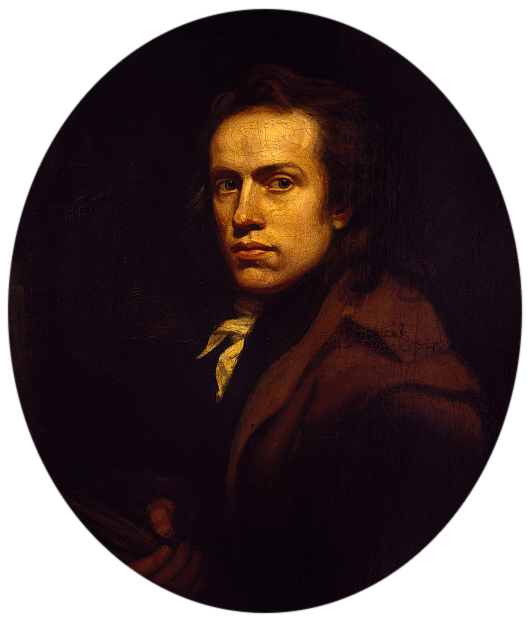
Biografie umělce
Vzest cornského génia: Život a umění Johna Opieho
John Opie, narozen v pokorném prostředí chýše Harmony Cottage v Trevellas v Cornwallu v roce 1761, se vyvinul jako jedna z nejvýraznějších uměleckých postav své generace. Jeho příběh je poutavým vyprávěním o syrovém talentu pěstovaném navzdory všem překážkám, o cestě syna truhláře, který se stal oslavovaným portrétistou a malířem historickým, členem Královské akademie a vlivným hlasem britského světa umění. Opieho raný život byl poznamenán předčasnou schopností jak v kresbě, tak v matematice – tato dualita snad do jisté míry ovlivnila jeho pečlivý přístup k kompozici a formě. Již jako malý chlapec projevoval nezávislého ducha; založil večerní školu, aby učil místní děti číst, psát a počítat, zatímco sám ovládal Eukleidovu geometrii. Tato touha po vědění, spojená s jeho uměleckým náklonem, se zpočátku setkala s odporem jeho otce, který trval na jeho učňovském poměru v truhlářství. Osud však zasáhl v podobě doktora Johna Wolcota, známého jako Peter Pindar, lékaře a satyrika, jehož bystré oko rozpoznalo mimořádný potenciál v mladém Opieovi.
Mentorství, Londýn a královská patronáž
Wolcot se stal Opieovým ochráncem, zajistil mu ukončení truhlářského učňovství a poskytl mu nepostradatelnou radu, povzbuzení i klíčové představení v vyšších kruzích. Toto mentorství bylo pro nastartování Opieho kariéry zásadní. V roce 1781 společně odcestovali do Londýna, kde Wolcot chytře představil Opieho jako samouka a génia – „cornského divu“, který se nezapletl do formálního výcviku. Tento narativ okamžitě zaujal londýnskou uměleckou scénu a vyvolal srovnání s mistry jako Caravaggio či Velázquez, a to od samotného sira Joshuy Reynoldsa. Úvodní úspěch byl bleskový a oslnivý. Obklopily ho zakázky, včetně portrétů členů britské královské rodiny – mezi ně patřili vévodská a vévodyně Glosterská, Lady Salisbury či Mary Delany. Opieho sídlo na Castle Street se stalo centrem módní společnosti, kde si jeho talent získával pozornost i obdiv. Nicméně partnerství s Wolcotem se nakonec rozpadlo, jak Opie prosazoval svou nezávislost a usiloval o vlastní cestu bez omezení jejich dohodou o podílu na zisku. Toto období upevnilo Opieovu pověst jako předního portrétisty schopného zachytit nejen fyzickou podobnost, ale i charakter a společenský status svých modelů.
Za hranice portrétu: Historická malba a akademické uznání
Ačkoliv byl zpočátku oslavován pro své portréty, Opie v sobě skrýval ambice přesahující pouhé zachycování tváří elit. Toužil po zapojení do velkých historických narativů a usiloval o upevnění svého postavení malíře významných témat. Tato ambice ho vedla k průzkumu historické malby, což vyvrcholilo díly jako Vražda Jakuba I. (1786) a Zavraždění Rizzia (1787). To druhé mělo zejména silný dopad a přineslo mu okamžité zvolení do sboru Asociátů Královské akademie a v následujícím roce plné členství. Tyto historické malby demonstrovaly rostoucí mistrovství v kompozici, dramatické světlo – často připomínající Rembrandta – a odhodlání vyjádřit emocionální intenzitu. Opieho oddanost svému řemeslu však sahala daleko za rámec malířství; aktivně usiloval o rozšíření svých intelektuálních obzorů studiem latiny, francouzské literatury a účastí v kultivovaných společenských kruzích. Hluboce se také zapojil do projektů Shakespearovy galerie Johna Boydella, kde vytvořil pět obrazů inspirovaných hrami Barda, čímž dále upevnil svou pozici v uměleckém establishmentu.
Odkaz umění a myšlenky
Opieho pozdější život byl poznamenán jak profesním úspěchem, tak osobními výzvami. Jeho první manželství se ukázalo jako nešťastné a skončilo rozvodem v roce 1796. Nicméně trvalé štěstí našel s Amelií Alderson, spisovatelkou a abolicionistkou, se kterou si v roce 1798 oženil. Jejich partnerství bylo založeno na vzájemné podpoře a intelektuální stimulaci. V roce 1805 byl Opie jmenován profesorem malířství na Královské akademii, což bylo důkazem jeho postavení v uměleckém světě. Jeho přednášky, přednesené v roce 1806 a vydané posmrtně v roce 1809 doprovázené Ameliinou památkou, odhalily hluboký a výstižný mysl, silně zapojenou do principů umělecké tvorby. Prosazoval vznik národní galerie – vizionářskou myšlenku, která se nakonec stala skutečností – a nabízel pronikavé komentáře k tehdejšímu stavu britského umění. Předčasná smrt Johna Opieho v dubnu 1807 ve věku 46 let přerušila slibnou kariéru, ale jeho odkaz přetrvává. Zanechal po sobě rozsáhlou tvorbu – přes 500 portrétů a 250 dalších obrazů – která nabízí fascinující pohled do sociální a kulturní krajiny konce 18. a začátku 19. století v Británii. Zůstává významnou postavou britské historie umění, oslavovanou pro svou technickou zručnost, hluboký portrétní styl a přínos k uměleckému diskurzu.



 Náhled v interiéru
 Koupit ručně malovaný obraz
 Sdílet
 Sdílet
 Podrobnosti o díle
 Průvodce

 Stáhnout
 Podobné položky
 Rentgenové snímky
 Slideshow
 Statistiky


 Zobrazit více






































 Skleněná varianta je dostupná pouze u rozměrů menších než 110 cm