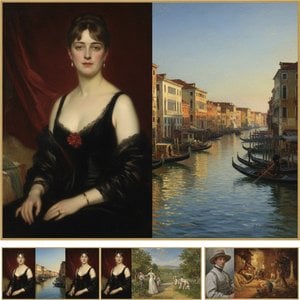
John Schanck (1799) od John James Masquerier, ručně malovaná olejná reprodukce mistrovským umělcem
Náhled v interiéru Náhled v AR Přepnout na tisk Přepnout na digitální obraz Sdílet
Podrobnosti o díle Průvodce Přidat do oblíbených Stáhnout Podobné položky Rentgenové snímky Slideshow Otázky a odpovědi Prezentace Statistiky

John Schanck Ručně malovaná reprodukce olejomalby

Rozměry
74.0 x 62.0 cm

Discover John James Masquerier: British painter of French Huguenot descent, renowned for his captivating portraits & revolutionary era sketches (Lady Hamilton, Napoleon). Explore his legacy!

Umělecké dílo zobrazené na této stránce je chráněno autorským zákonem, což znamená, že nemůžeme legálně vytvářet ani prodávat jeho identickou reprodukci. Tato ochrana je vymáhána na základě mezinárodních dohod, jako například Berberská úmluva a národními zákony, včetně těch stanovených v Americký autorský zákon – Díl 17. Všechna práva vyhrazena.

Jako etická a právní alternativa nabízíme vlastní, ručně malovaná umělecká díla inspirovaná originálem. Naši zdatní a profesionální umělci si pečlivě studují styl, náladu a uměleckou podstatu originálu, aby vytvořili nové, jedinečné dílo, které vyvolává stejný pocit – přičemž zůstává samostatným originálním tvůrčím dílem.

Tato metoda je plně v souladu s autorským právem, protože nezahrnuje kopírování ani duplikování chráněného díla. Jde o kreativní reinterpretaci – nový obraz, který je inspirován originálem, ale není s ním identický.

Ručně malovaná olejová reprodukce

Rukou malované olejné plátno v libovolném rozměru i s rámem, vyrobené našimi umělci na zakázku. ( Přepnout na tisk Přepnout na digitální obraz)

Standardní velikost
na zakázku
CM
INCH

Vyberte si z našich přednastavených velikostí, které odpovídají původním proporcím díla.

šířka
výška

Zadejte šířku a výšku, které potřebujete pro váš rám nebo stěnu. Protože se jedná o ruční malbu, při výběru jiného formátu může umělec kolem obrazu domalovat o něco více, nebo jej mírně oříznout — rozhodnete si vy. Před zahájením malby vám zašleme digitální náhled ke schválení. Obraz zobrazený na této stránce neodpovídá skutečnému výsledku — pouze digitální náhled jej zobrazuje.

Příklady možných změn: nahrazení obličeje fotografií zákazníka; přidání domácího mazlíčka (např. nahrazení kočky psem); vložení skrytého vzkazu do pozadí; změna krajiny nebo prvků v pozadí.
Po přijetí objednávky vám tým WahooArt.com zašle e-mail s pokyny a poskytne náhledovou verzi.

Celosvětová doprava () za 3–4 týdny namísto standardních 5 týdnů. (15 listopad). Bez kompromisů v kvalitě.

Zdarma celosvětová expresní doprava
Vysoce kvalitní lněné plátno
Kompletní pojištění přepravy
Záruka vrácení celního poplatku
Záruka věrného barevného souladu
100dení lhůta pro vrácení zboží (pouze při vadách výroby)
100% záruka vrácení peněz
Sleva při více objednávkách

Celková cena

Kč 5888

John Schanck

Technika reprodukce

Rozměry reprodukce

-

Celková cena za vybrané možnosti reprodukcí

Kč 5888


Biografie umělce

A Life Forged in the Fires of Revolution

The story of John James Masquerier is one inextricably linked to the dramatic shifts of the late eighteenth and early nineteenth centuries. Born in October 1778 in Chelsea, London, his very identity was a tapestry of cultural intersections; he was a British painter of French Huguenot descent, a heritage that placed him at the heart of the intellectual and political currents flowing between London and Paris. His childhood was marked by the vibrant, often perilous atmosphere of the French Revolution. Taken to Paris by his mother, Barbot, who had established a school in the prestigious Champs-Elysées, the young Masquerier found himself a witness to history in its most raw and violent forms. While studying painting under the esteemed François Vincent at the Tuileries Academy, he stood amidst the chaos of the massacre of the Swiss Guards in 1792. This early exposure to political upheaval did more than just shape his biography; it instilled in his art a profound sensitivity to the human condition during times of profound transition.

The volatility of the era eventually forced a retreat to England, but Masquerier carried the spirit of Paris with him. In 1792, he enrolled at the Royal Academy Schools, marking the beginning of a formal engagement with the British artistic establishment. His early talent was so striking that a self-portrait, executed when he was a mere fourteen years old, was presented to King George III—a testament to a precocious mastery of form and character that would define his professional trajectory.

The Art of Observation and the Portraitist's Eye

Masquerier’s oeuvre is characterized by a remarkable ability to capture both the monumental and the intimate. While he is perhaps most celebrated for his portraiture, his work serves as a vital historical record of the era's most notable figures. His brush possessed a unique capacity for psychological depth, moving beyond mere likeness to reveal the inner essence of his subjects. This was particularly evident in his depictions of individuals such as Lady Hamilton, where he utilized masterful chiaroscuro to create a sense of drama and presence that commanded the viewer's attention.

Beyond the studio, Masquerier acted as an ocular chronicler of the French Revolution. Driven by an acute impulse to document the zeitgeist, he produced meticulous sketches from personal observation of pivotal, often harrowing, events. His drawings captured the trial of the King and the tragic demise of the Princesse de Lamballe, offering a visceral connection to the era's political tremors. This duality—the ability to execute refined, neoclassical portraiture while maintaining the gritty, observational eye of a war correspondent—distinguishes his contribution to the history of art.

Legacy and Artistic Significance

As his career progressed, Masquerier’s reputation expanded through significant commissions and high-profile patronage. His work reached new heights of complexity with large-scale religious and historical compositions, such as The Incredulity of St. Thomas, which served as a monumental altar-piece in Westminster. Even as he navigated the complexities of the Napoleonic era, his connection to the French political landscape remained a source of artistic inspiration; he famously claimed to have produced a drawing of Napoleon Bonaparte during his time as First Consul.

The enduring significance of John James Masquerier lies in his role as a bridge between cultures and eras. He was an artist who did not merely paint the world around him but felt its pulse. Through his portraits, he immortalized the faces of the Enlightenment and the Napoleonic age, while his sketches preserved the fleeting, often terrifying moments of revolutionary change. His legacy remains a profound testament to the power of art to act as both a mirror to society and a vessel for historical memory.

John James Masquerier

John James Masquerier

1778 - 1855 , United Kingdom

Rychlé informace o umělci

  • Full Name: John James Masquerier
  • Nationality: British
  • Date Of Birth: October 1778
  • Place Of Birth: Chelsea, London
  • Notable Artworks:
    • Lady Hamilton Portrait
    • Napoleon Bonaparte Sketch
  • Artistic Movement Or Style: Neoclassical Portraiture
  • Artists Who Influenced This Artist: ['François Vincent']
  • Artists Or Movements Influenced By This Artist: ['George III']