Jeremiah Theus: Charleston’s Rococo Portraitist – A Window Into Colonial Elegance
Charleston, SC, United States – Jeremiah Theus stands as an extraordinary figure in the annals of early American art, primarily recognized for his prolific output of portraits executed during the flourishing Rococo period in Charleston, South Carolina. His work captures not merely likenesses but embodies the spirit of a bygone era—a testament to artistic innovation amidst colonial expansion and social refinement. This essay delves into Theus’ life, oeuvre, and enduring legacy as a pivotal artist shaping Charleston's visual culture.
Early Life & Artistic Roots: Shaping a Swiss Vision
Born in Chur, Switzerland, around 1716, Jeremiah Theus embarked on an artistic journey fueled by exposure to European traditions, particularly the opulent Rococo style prevalent in aristocratic circles across Europe. While biographical details remain scarce—a common predicament for artists of his time—circumstantial evidence suggests a formative education steeped in classical influences blended with the decorative exuberance characteristic of Rococo. This synthesis would prove instrumental in defining Theus’ distinctive artistic voice and informing his subsequent stylistic choices.
Charleston Studio & Patronage: Embracing Opportunity Amidst Colonial Society
By 1740, Theus established a studio in Charleston, capitalizing on the burgeoning colonial economy and attracting patronage from prominent families eager to commemorate their status and lineage. This strategic positioning allowed him to hone his craft amidst a vibrant artistic milieu—a rare circumstance for an artist venturing beyond Europe’s established centers of creativity. His clientele included influential figures like Mrs. Barnard Elliott, Jr., whose portrait exemplifies Theus' mastery of capturing refined beauty and conveying aristocratic dignity.
The Style of Rococo: Delicate Drapery & Bold Color Palette
Theus’ artistic style is undeniably rooted in the Rococo movement—a stylistic trend originating in France during the reign of Louis XV. Characterized by asymmetrical compositions, pastel hues, curvilinear lines, and elaborate ornamentation, Rococo sought to evoke feelings of grace, pleasure, and illusion. Theus skillfully adapted these principles to Charlestonian portraiture, prioritizing delicate drapery folds that cascaded around his subjects—creating a sense of movement and fluidity—and employing a bold color palette accented by shimmering golds and vibrant blues. This deliberate aesthetic choice mirrored the aspirations of British artists like Allan Ramsay and Nathaniel Hone, establishing Theus as a peerless interpreter of European artistic ideals within the American colonies.
A Masterpiece: Colonel Barnard Elliott, Jr.’s Portrait – Symbolism & Emotional Resonance
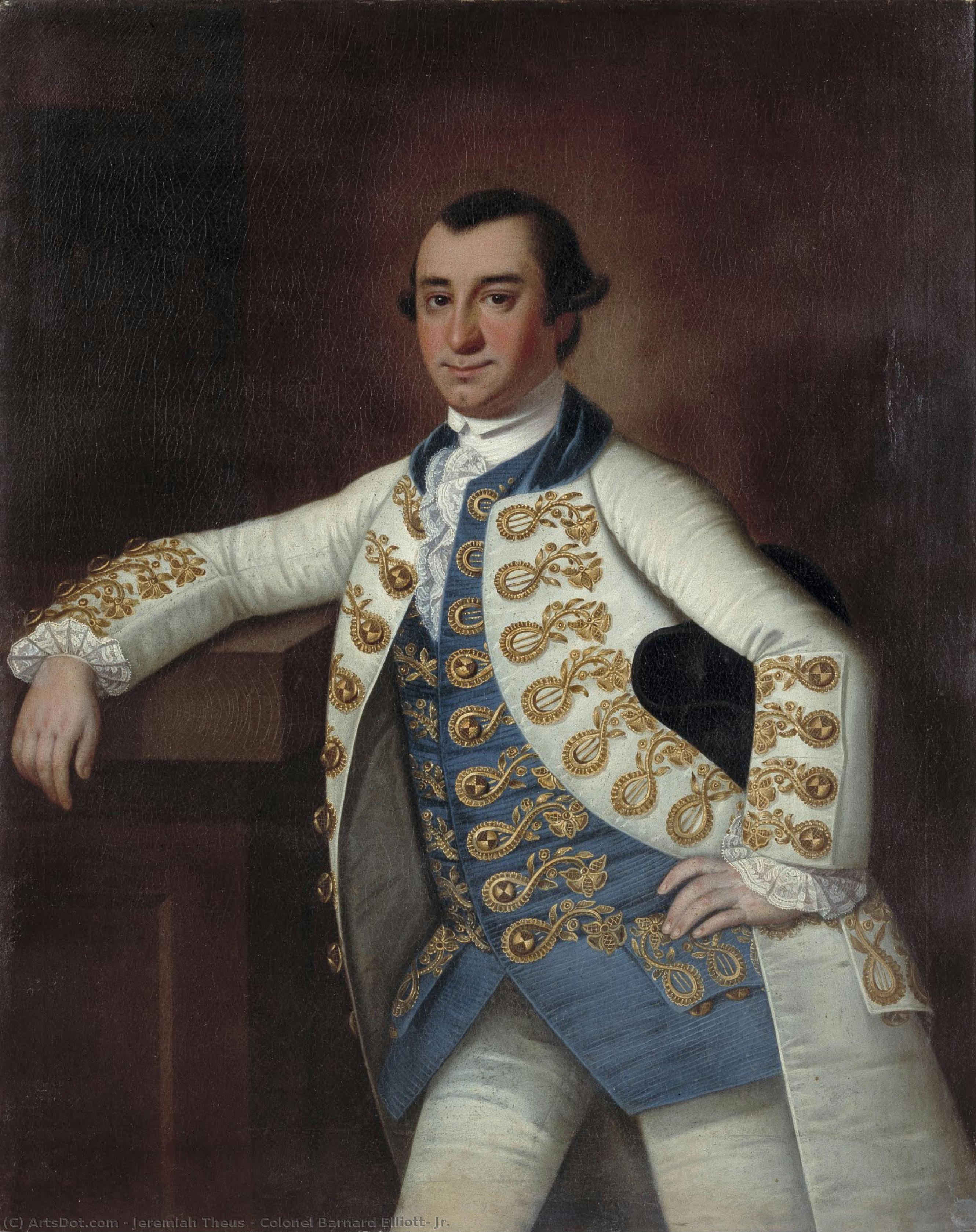
Considered one of Theus’ finest achievements—specifically his depiction of Colonel Barnard Elliott, Jr.—the portrait transcends mere representation; it embodies the values and ambitions of Charlestonian society during its golden age. The meticulous rendering of Elliott's attire—a sumptuous blue jacket adorned with intricate embroidery—symbolizes wealth and social standing, reflecting the aspirations of the planter elite. Furthermore, Theus’ masterful handling of light and shadow imbues the portrait with an emotional depth that captures Elliott’s gaze—suggesting introspection and conveying a quiet dignity. Like other portraits from this period, it serves as a visual chronicle of identity and status within Charleston's aristocratic landscape.
Legacy & Influence: Shaping American Artistic Identity
Jeremiah Theus’ contribution to early American art extends beyond individual masterpieces; he established a precedent for stylistic innovation—demonstrating that artistic excellence could flourish even in distant lands. His influence can be discerned in subsequent portraits produced throughout the colonies, cementing his place as a cornerstone of Charleston's artistic heritage and shaping the broader trajectory of American visual culture. Theus’ legacy continues to inspire artists today who strive to capture beauty, elegance, and emotional resonance—a testament to his enduring artistic vision.


 Zobrazit v interiéru
 Přepnout na tiskové verze
 Odeslat
 Sdílet
 Podrobnosti
 Průvodce

 Stáhnout obrázek
 Podobné kousky
 Rentgenové snímky
 Slideshow
 Statistiky


 Přečíst si více






































 Skleněná varianta je dostupná pouze u rozměrů menších než 110 cm


