Zobrazit v interiéru Zkusit v AR Objednat ručně malovanou reprodukci Přepnout na digitální verzi obrazu Odeslat
Podrobnosti Průvodce Přidat do oblíbených Stáhnout obrázek Podobné kousky Rentgenové snímky Slideshow Statistiky

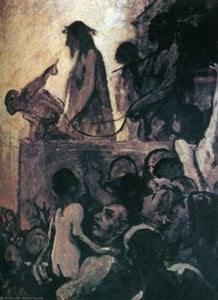
Penelopa's Dream

Honoré Daumier's 'Penelopa’s Dream,' from his iconic Ancient History series (1842), captures Penelope's contemplative repose amidst a fantastical tableau—a poignant lithograph reflecting myth and social critique.

Honoré Daumier (1808-1879): Francouzský satirický malíř, sochař a grafik. Jeho díla kritizují společnost a ovlivnila moderní umění.

Giclée / Umělecký tisk

Giclée nebo plátěný tisk muzeální kvality s rychlou výrobou a širokou nabídkou povrchových úprav. ( Objednat ručně malovanou reprodukci Přepnout na digitální verzi obrazu)

P118B $10
P118H $10
P118W $10
P438Z $10
P508JH $12
P508YH $12
P805H $10
P805Z $10
P919BZ $10
P919G $10
P919XJ $10
P959ZH $10
P968JZ $12
W106C $8
W218G $10
W218JH $8
W218Y $10
W307PJ $10
W316G $10
W316PJ $8
W316Y $10
W398PJ $8
W4111J $10
W500HY $15
W500JH $15
W692G $12
W849H $8
W940BG $15
W953PJ $8

Standardní velikost
na zakázku
CM
INCH

Vyberte si z našich přednastavených velikostí, které odpovídají původním proporcím díla.

šířka
výška

Můžete zadat vlastní rozměry tak, aby výtvor odpovídal konkrétnímu rámu nebo prostoru. Pokud zvolená velikost nebude odpovídat poměru stran původního obrazu, dílo buď ořížeme, nebo obraz rozšíříme pomocí zrcadlového efektu či jednobarevného okraje. Před zahájením výroby vám bude zaslán digitální náhled k schválení.
Mějte prosím na paměti, že náhled na obrazovce neodráží skutečné oříznutí nebo rozšíření. Pouze digitální náhled přesně zobrazí finální kompozici.
Ačkoliv jsou k dispozici i vlastní rozměry, pro zachování původních proporcí doporučujeme vybrat si rozměr z předdefinovaného seznamu.

Celosvětové doručení () do 2 týdnů namísto standardních 4/5 týdnů. (21 září)

why_choose_icon
Zdarma celosvětová expresní doprava
why_choose_icon
Vysoce kvalitní lněné plátno
why_choose_icon
Úplné pojištění přepravy
why_choose_icon
Záruka vrácení celního poplatku
why_choose_icon
Záruka věrného barevného shodu
why_choose_icon
100dení lhůta pro vrácení zboží (pouze při vadách výroby)
why_choose_icon
100% garance vrácení peněz
why_choose_icon
Sleva při více objednávkách

Celková cena

$ 68

reproduction

Penelopa's Dream

Giclée / Umělecký tisk

Velikost reprodukce

-

Celková cena

$ 68

Rychlé informace

  • Location: Bibliotheque Nationale de France, Paris
  • Medium: Lithograph
  • Subject or theme: Mythology; Dreams; Satire
  • Notable elements or techniques: Line etching; Dramatic chiaroscuro
  • Artist: Honoré Daumier
  • Dimensions: 35 x 24 cm
  • Artistic style: Expressive draftsmanship

Kvíz o umění

U každé otázky je pouze jedna správná odpověď.

Otázka 1:
What artistic movement is Honoré Daumier’s “Penelopa’s Dream” primarily associated with?
Otázka 2:
The lithograph utilizes a technique known for producing images with sharp lines and tonal variations. What is this technique called?
Otázka 3:
What mythological figure does the helmeted head symbolize in “Penelopa’s Dream”?
Otázka 4:
The lighting in the artwork contributes to a particular mood. Describe the dominant effect of the light.
Otázka 5:
Daumier’s “Ancient History” series aimed to critique societal issues. What is one possible interpretation of the artwork's satirical intent?

Honoré Daumier’s “Penelopa's Dream”: A Lithograph Embodied with Mythic Sorrow

Honoré Daumier’s “Penelopa’s Dream,” created in 1842, stands as a cornerstone of Realism within his oeuvre and a poignant meditation on themes of memory, longing, and the enduring power of myth. Published in Le Charivari, a satirical Parisian newspaper during a period rife with political upheaval—the Second Republic—this lithograph transcends mere visual representation to deliver a complex emotional narrative rooted in Homer’s Odyssey.

The artwork depicts Penelope, Odysseus's wife from Greek legend, reclining on a chair. She is surrounded by symbols of scholarly pursuits: scrolls and writing implements – an intentional juxtaposition highlighting the contrast between active engagement with the world and contemplative reflection. Above Penelope’s head floats a grotesque helmeted head, emerging from what appears to be her dreamscape. This fantastical element isn't merely decorative; it embodies anxieties surrounding past experiences and represents a confrontation with unresolved emotions.

  • Lithographic Technique: Daumier skillfully employed the lithographic process—stone etching combined with ink printing—to achieve remarkable tonal range and textural detail. The stone surface allowed for precise rendering of lines and shading, resulting in an image that possesses both immediacy and a palpable sense of physicality.
  • Composition & Perspective: Daumier’s flattened perspective contributes to the artwork's dreamlike atmosphere. Overlapping shapes and variations in line weight subtly suggest depth without resorting to traditional spatial recession, mirroring the elusive nature of memory and subconscious thought.
  • Color Palette: Primarily monochromatic—black and white—the palette reinforces the melancholic mood. Daumier’s masterful use of shading creates dramatic contrasts between light and dark, emphasizing Penelope's figure and highlighting the unsettling presence of the helmeted head.

The helmeted head is arguably the artwork’s most striking symbol. It represents a warrior spirit—Odysseus’s past battles—but simultaneously embodies Penelope’s internal struggle to reconcile her memories with the present reality. The overall emotional impact is one of profound sorrow and contemplation, capturing the essence of Penelope's enduring grief for Odysseus and her unwavering determination to persevere despite hardship.

“Penelopa’s Dream” isn’t simply a depiction of myth; it’s an exploration of human psychology—the way memory shapes perception and influences emotional response. Daumier’s masterful technique elevates the image beyond mere illustration, transforming it into a powerful statement about the complexities of human experience.

Further research suggests that this piece aligns perfectly with Daumier's broader artistic mission: to expose social injustices and challenge conventional narratives through satirical observation. Its enduring appeal lies in its ability to resonate with viewers across generations who recognize the universal themes of loss, resilience, and the transformative power of imagination.


Biografie umělce

A Life Etched in Satire: The World of Honoré Daumier

Honoré-Victorin Daumier, born in Marseille in 1808, was a figure inextricably linked to the turbulent currents of 19th-century France. His early life, shaped by his father’s aspirations as a poet and subsequent relocation to Paris in 1814, immersed him within a city already brimming with artistic fervor. Initially destined for a legal career, Daumier's inclination swiftly shifted towards the visual arts. He began his apprenticeship under Alexandre Lenoir, absorbing the classical techniques and dramatic chiaroscuro favored by Rubens, and further honed his skills at the Académie Suisse. This foundational training wasn’t merely about mastering technique; it was about cultivating a profound sensitivity to the social injustices and political absurdities that permeated Parisian society – an awareness he would translate into his art with searing accuracy.

The Sharpened Pen: Caricature and Social Commentary

Daumier's career truly ignited in the wake of the 1830 Revolution, an event that fundamentally reshaped France’s political landscape and simultaneously provided a fertile ground for his burgeoning satirical talent. He quickly established himself as a master lithographer, initially contributing anonymously to various publications before gaining recognition through his work with *Le Charivari*, a fiercely independent comic journal founded by Charles Philipon. It was within the pages of *Le Charivari* that Daumier’s genius truly blossomed. His caricatures weren't simply humorous illustrations; they were biting critiques, exposing the hypocrisy and corruption of the bourgeoisie, the failings of the legal system, and the machinations of the political establishment. He fearlessly lampooned King Louis-Philippe, a figure he viewed as weak and indecisive, earning himself a six-month imprisonment in 1832 for a particularly provocative caricature depicting the monarch as a bloated, decadent figure. This experience, rather than silencing him, served to solidify his commitment to using art as a weapon against injustice – a conviction that fueled his prolific output for decades. His lithographs became visual manifestos, capturing the spirit of dissent and offering a starkly honest portrayal of the realities faced by ordinary people. The sheer volume of his work during this period is staggering—thousands of lithographs documenting Parisian life, political events, and social commentary.

Beyond Caricature: Painting and Sculptural Visions

While Daumier is most widely celebrated for his lithography, to reduce him solely to caricature would be a profound oversight. He was also a dedicated painter and sculptor, though recognition for these works came later in his life. His paintings, often depicting scenes of everyday Parisian life – the crowded third-class carriages, the weary laundresses, the pompous lawyers – are imbued with a remarkable sense of realism and empathy. They aren’t idealized representations; rather, they offer unflinching glimpses into hardship, poverty, and the struggles of ordinary people. He masterfully employed loose brushwork and dramatic lighting to convey emotion and atmosphere, anticipating some of the techniques that would later be embraced by the Impressionists. His sculptural work, largely created in clay (many pieces remaining unbaked during his lifetime), reveals a similar commitment to capturing the human form with honesty and emotional depth. These sculptures, rediscovered after his death, demonstrate a remarkable talent for modeling and an ability to convey psychological complexity through subtle gestures – a testament to Daumier’s profound understanding of the human condition.

A Lasting Legacy: Influence and Historical Significance

Honoré Daumier's impact on art history is undeniable. He bridged the gap between Romanticism and Realism, laying the groundwork for future generations of artists who sought to depict the world as it truly was – with all its flaws and imperfections. His unflinching social commentary profoundly influenced artists like Gustave Courbet and Édouard Manet, both of whom embraced a more direct engagement with social issues in their work. Furthermore, Daumier’s innovative use of lithography revolutionized printmaking, transforming it from a primarily decorative medium into a powerful tool for political and social critique. His legacy continues to resonate today, reminding us of the enduring power of art to challenge authority, expose injustice, and bear witness to the complexities of the human experience. The Musée d'Orsay in Paris houses a significant collection of his paintings and sculptures, offering visitors a valuable opportunity to immerse themselves in the world he so vividly portrayed. His lithographs are widely accessible through collections like those found on WahooArt, ensuring that his satirical genius continues to provoke thought and inspire dialogue – a testament to an artist who dared to hold power accountable. Daumier wasn’t merely an artist; he was a chronicler of his time—a visual poet whose art served as both entertainment and a potent form of social protest.

Honoré Daumier

Honoré Daumier

1808 - 1879 , Francie

Rychlé informace

  • Artistic Movement Or Style: Realismus, Satira
  • Artists Or Movements Influenced By This Artist: ['Impressionismus']
  • Artists Who Influenced This Artist:
    • Lenoir
    • David
  • Date Of Birth: 26. února 1808
  • Date Of Death: 10. února 1879
  • Full Name: Honoré-Victorin Daumier
  • Nationality: Francouzský
  • Notable Artworks:
    • Rue Transnonain
    • Les gens de justice
  • Place Of Birth: Paříž, Francie
Prozkoumejte umělecká díla uspořádaná podle témat, stylů a charakteristik.