BEZPLATNÉ UMĚLECKÉ PORADENSTVÍ

x
Koupit tisk Koupit tiskObjednat reprodukci Objednat reprodukci SdíletSdílet
PodrobnostiPodrobnosti Přidat do oblíbených Přidat do oblíbených StáhnoutStáhnout Podobné položkyPodobné položky Rentgenové snímkyRentgenové snímky SlideshowSlideshow

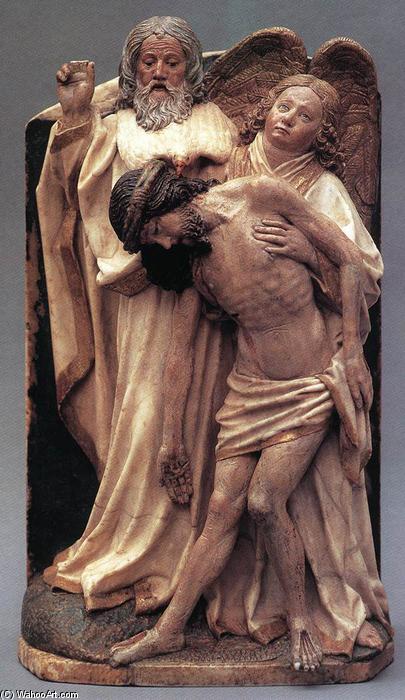
Holy Trinity

Výrazná alabastrová plastika svatého Trojíce od Hansa Multscherra z roku 1430 zobrazuje Kristovo umučení a Božím milostí, což je ikonografický základ pro liturgické oslavy.

"meta_description": "Hans Multscher (1400-1467) byl klíčový německý sochař a malíř, který spojil gotiku s renesancí. Známý z oltáře ve Wurzachu a soch v Ulmu, jeho dílo je charakteristické realističtím stylem a hlubokými emocemi."

Koupě vysoce rozlišeného, vylepšeného digitálního obrazu, který je mnohem kvalitnější než online náhled.

Každý soubor je pečlivě připraven našimi odborníky pomocí pokročilých nástrojů a expertní manuální retuše. Zajišťujeme, aby každý obraz disponoval výjimečnou ostrostí, přesnou barevnou věrností a jemnými detaily.

Finální soubor vám bude do 72 hodin zaslán e-mailem, optimalizovaný pro okamžité použití v profesionálním, redakčním i tiskovém prostředí. Nabízíme stejnou kvalitu, které důvěřují špičková designová studia, nakladatelství i galerie.

Digitální obrazy

Stáhněte si soubor ve vysokém rozlišení pro osobní prohlížení, tisk a kreativní projekty.

Celková cena

$9.99

Součást každé objednávky digitálního obrazu

Profesionální digitální doručení, zaručeno.

Když si vyberete WahooArt.com, nezískáváte pouze obrázek – získáváte digitální umělecké dílo s profesionálně vylepšenými detaily, zpracované s precizností a podpořené zárukou za spokojenost. Zde je vše, co vaše objednávka automaticky obsahuje:

shipping_icon
Rychlé doručení e-mailem

Váš digitální obraz ve vysokém rozlišení vám bude zaslán e-mailem do 72 hodin od objednávky – připraven k okamžitému použití.

canvas_icon
Digitální soubor s využitím AI

Vaše umělecké dílo je profesionálně optimalizováno pomocí pokročilých nástrojů umělé inteligence a manuální úpravy, což zajišťuje maximální úroveň detailu, ostrosti a přesnosti barev.

insurance_icon
Bezplatné doživotní znovuodeslání

Soubor jste omylem smazali nebo ztratili? Žádný problém – kdykoliv vám ho znovu zašleme zcela zdarma.

tax_icon
Bez poplatků za dovoz – navždy

Užijte si své umělecké dílo okamžitě bez celních poplatků, daní nebo nákladů na dopravu – digitální stažení je vždy bez daňových povinností.

color_icon
Záruka přesnosti barev

Pomocí profesionálních nástrojů a správy barev zajišťujeme, aby váš digitální obraz odrážel původní barvy co nejvěrněji.

return_icon
60denní záruka spokojenosti

Pokud nebudete s digitální fotografií spokojeni, provedeme její revizi nebo vám vrátíme 100% během 60 dnů – bez jakýchkoliv dotazů.

guarantee_icon
100% záruka vrácení peněz

Nespokojeni? Získejte plnou částku zpět do 60 dní od přijetí vašeho digitálního souboru – bez jakýchkoliv dotazů.

discount_icon
Slevy při hromadných objednávkách

Koupěte si 3 obrazy, ušetřete 10% - Koupěte si 5, ušetřete 15% - Koupěte si 10+, ušetřete 20%. Ideální pro kreativní projekty, galerie a agentury.

Základní informace

  • Artistic style: Schönen Stil
  • Movement: Late Gothic Realism
  • Location: Liebieghaus-Museum
  • Medium: Alabaster
  • Title: Holy Trinity
  • Artist: Hans Multscher
  • Dimensions: 28 x 16 cm

Kvíz o umění

U každé otázky je pouze jedna správná odpověď.

Otázka 1:
What is the primary material used in Hans Multscher’s sculpture ‘Holy Trinity’?
Otázka 2:
Around what year was ‘Holy Trinity’ created?
Otázka 3:
The sculpture depicts the Christian concept of which holy figures?
Otázka 4:
What artistic style is ‘Holy Trinity’ associated with?
Otázka 5:
The sculpture's depiction of Christ emphasizes which theological theme?

Popis sběratelského kusu

Hans Multscher: Holy Trinity – A Synthesis of Gothic Tradition and Renaissance Innovation

The sculpture “Holy Trinity” by Hans Multscher stands as a testament to the pivotal moment in German art history—the gradual transition from the solemn grandeur of Late Gothic formalism towards the burgeoning humanist spirit of the Renaissance. Crafted around 1430, this alabaster relief embodies not merely visual beauty but also profound theological contemplation, reflecting the artistic currents circulating across Northern France and the Netherlands during that era.

  • Material & Technique: Multscher’s masterful manipulation of alabaster—a stone prized for its translucent quality and ease of carving—demonstrates a dedication to meticulous observation of natural forms. The sculptor eschewed abstract idealism, favoring instead a detailed depiction of Christ's body, capturing the precise musculature and vascular network with remarkable accuracy. This approach aligns seamlessly with the stylistic principles championed by Early Netherlandish painters.
  • Stylistic Influences: “Holy Trinity” draws heavily from Late Gothic sculptural traditions, particularly those originating in Burgundy and Flanders. The influence of artists like Jean van Eyck is palpable in the sculpture’s compositional structure—specifically, its mirroring of the Pietà motif—a tradition that emphasizes compassion and sorrowful contemplation.
  • Historical Context: Produced during a period marked by religious upheaval and intellectual ferment, Multscher's work reflects the broader anxieties surrounding faith and mortality. The sculpture engages with core theological concepts – the Holy Trinity – presenting God’s divine majesty alongside humanity’s vulnerability in the face of death.
  • Symbolism: Each element within the relief carries significant symbolic weight. The central figure of Christ embodies sacrifice and redemption, while the dove represents the Holy Spirit—a symbol of divine grace and illumination. The sculptor's careful positioning of these figures underscores the interconnectedness of God’s attributes and their role in shaping human experience.
  • Emotional Impact: Viewing “Holy Trinity” evokes a sense of serenity and reverence, prompting reflection on themes of faith, compassion, and transcendence. Multscher’s ability to convey emotion through sculptural form—particularly the depiction of Christ's tormented body—solidifies his place as one of Germany’s foremost artists of the Renaissance.

The Sculpture's Composition: A Dialogue Between Tradition and Innovation

Multscher skillfully blends established Gothic conventions with emerging Renaissance ideals. The sculpture’s pyramidal structure, reminiscent of classical architectural designs, establishes a spatial framework that enhances the dramatic impact of the scene. However, unlike earlier Gothic reliefs—which often prioritized stylized representation—Multscher prioritizes anatomical realism, mirroring the stylistic ambitions of Early Netherlandish painters.

  • Spatial Arrangement: The sculptor’s deliberate positioning of Christ and God—with the dove perched on the Father's shoulder—creates a harmonious balance between divine majesty and human compassion. This compositional strategy reflects the broader Renaissance preoccupation with perspective and spatial illusion.
  • Detailed Anatomical Rendering: Multscher meticulously captures the intricacies of human musculature, utilizing alabaster’s translucency to illuminate the subtle contours of Christ's body. The sculptor’s attention to detail—evident in the depiction of veins and wrinkles—demonstrates a commitment to naturalistic observation.
  • Color Palette: Multscher employs a restrained color palette—primarily alabaster itself, accented by gilded hems—creating an atmosphere of solemn piety. This aesthetic choice aligns with prevailing artistic tastes during the Renaissance, which favored muted tones and subtle gradations of color.

A Legacy of Faith and Artistic Mastery

“Holy Trinity” stands as a remarkable achievement in German sculpture, embodying both the enduring influence of Gothic tradition and the transformative impetus of Renaissance innovation. Hans Multscher’s unwavering dedication to anatomical realism—coupled with his masterful manipulation of alabaster—solidifies his reputation as one of Germany's most celebrated artists of the period.

  • Artistic Significance: The sculpture exemplifies the stylistic convergence between Late Gothic and Renaissance art, marking a decisive step away from stylized idealism towards naturalistic representation. Multscher’s work serves as an inspiration for subsequent generations of sculptors seeking to capture the essence of human experience.
  • Cultural Impact: “Holy Trinity” continues to resonate with audiences today—serving as a powerful symbol of faith, compassion, and transcendence. Its enduring beauty testifies to Multscher's artistic genius and his ability to convey profound theological concepts through sculptural form.

This alabaster masterpiece exemplifies the harmonious blend of tradition and innovation that characterizes German Renaissance art—a testament to Hans Multscher’s unparalleled skill and vision.


Biografie umělce

Hans Multscher: A Bridge Between Gothic and Renaissance in German Art

Hans Multscher, born around 1400 in the small Bavarian town of Reichenhofen – now part of Leutkirch im Allgäu – stands as a pivotal figure bridging the stylistic transition from the late Gothic period to the burgeoning Renaissance in Germany. His life and work represent a fascinating confluence of influences, reflecting both the enduring traditions of his region and the revolutionary artistic currents sweeping across northern Europe. While precise details surrounding his early years remain somewhat elusive, it’s clear that Multscher possessed an inquisitive spirit and a keen eye for artistic innovation – qualities that would ultimately shape his distinctive aesthetic vision. He wasn't merely a passive recipient of prevailing trends; he actively sought out new influences, embarking on journeys that exposed him to the vibrant realism and meticulous detail characteristic of Early Netherlandish painting, a style which would become inextricably linked with his own artistic identity.

Early Life and Artistic Training

Multscher’s formative years were spent in Reichenhofen, a region steeped in medieval tradition yet increasingly open to new ideas. It is believed that he received his initial training in the workshops of local sculptors, absorbing the fundamental principles of Gothic craftsmanship – the emphasis on stylized forms, elongated figures, and intricate ornamentation. However, it was during his travels throughout northern France, Burgundy, and the Netherlands that Multscher truly began to expand his artistic horizons. These journeys proved transformative, exposing him to the revolutionary techniques and philosophies of Early Netherlandish painting – a movement characterized by its meticulous realism, use of oil paints, and profound psychological depth. Artists like Jan van Eyck and Rogier van der Weyden served as key influences, demonstrating the power of observation, light, and shadow to create compellingly lifelike representations. This exposure fundamentally altered Multscher’s approach to art, laying the groundwork for his later embrace of naturalism and a more humanistic style.

The Workshop at Ulm: Innovation and Collaboration

In 1427, Multscher established himself as a free citizen of Ulm, a thriving commercial hub on the Danube River – a strategic move that would prove crucial to his artistic development. There, he married Adelheid Kitzin and, alongside his brother Heinrich, founded a prolific workshop that quickly gained renown for its innovative sculptures and paintings. The Multscher workshop wasn’t simply a production facility; it was a dynamic environment fostering experimentation and collaboration. Records indicate that as many as sixteen assistants worked under Multscher's direction at times, creating a rich tapestry of artistic influences and techniques. This collaborative spirit allowed Multscher to explore new ideas and push the boundaries of his craft, while also ensuring the continuity of his workshop’s legacy after his death. The workshop’s output reflected a deliberate effort to move away from the rigid conventions of late Gothic art, incorporating elements of naturalism and psychological realism that were becoming increasingly popular in northern Europe.

Key Achievements: The Wurzach Altar and Beyond

Among Multscher's most celebrated achievements is undoubtedly the *Wurzacher Altar*, begun in 1437 and a testament to his evolving style. This ambitious project, intended for the church of St. James in Wurzach, showcases Multscher’s mastery of oil painting – a relatively new medium at the time – and his ability to render textures, light, and shadow with remarkable precision. The altar's panels depict scenes from the life of Christ and the Virgin Mary, each imbued with a sense of palpable humanity that set it apart from earlier devotional art. It’s important to note that Multscher wasn’t solely focused on religious subjects; his commissions also included secular works, such as the group of emperors adorning the eastern window of Ulm's city hall, demonstrating his versatility and appeal to a broad clientele. Other notable works include the *Holy Mary Magdalen* sculpture, now housed in Frankfurt’s Liebieghaus, and the *Man of Sorrows*, copies of which can be found at Ulm Minster – both powerful examples of his ability to convey profound emotion through sculpted form. The Sterzing Altarpiece (1456-58) is another significant achievement, reflecting Multscher's growing interest in naturalism and perspective.

Legacy and Historical Significance

Hans Multscher’s significance lies not only in the beauty and technical skill of his art but also in his role as a catalyst for change. He was among the first German artists to fully embrace the realism and naturalism that were transforming art in northern Europe, paving the way for subsequent generations of Renaissance masters. His work represents a crucial moment in the development of German art, marking a departure from the stylized conventions of the Gothic period towards a more humanistic and observational approach. He skillfully integrated traditional Gothic elements with new techniques and aesthetic sensibilities, creating a unique artistic language that resonated deeply with his contemporaries and continues to captivate audiences today. Multscher’s legacy extends beyond his individual creations; he established a workshop that played a vital role in disseminating his artistic principles throughout Swabia and beyond, ensuring the continued evolution of German art for decades to come. His influence can be seen in the work of subsequent generations of artists who built upon his foundations, ultimately contributing to the flourishing of the Renaissance in Germany. Further Resources:
Hans Multscher

Hans Multscher

1400 - 1467 , Německo

Stručné informace

  • Artistic Movement Or Style: Pozdní gotika/Renesanse
  • Artists Or Movements Influenced By This Artist: ['Renesanční malířství']
  • Artists Who Influenced This Artist:
    • Severofrancouzské styly
    • Nizozemské styly
  • Date Of Birth: c. 1400
  • Date Of Death: 1467
  • Full Name: Hans Multscher
  • Nationality: Německý
  • Notable Artworks:
    • Madona Reichenhoferská
    • Man of Sorrows
    • Kaiserfenster
  • Place Of Birth: Reichenbach, Německo