


Ručně malovaná olejná barva na plátně ve vašem zvoleném rozměru i s rámem, vyrobená našimi umělci na zakázku. ( Koupit tisk Koupit obrázek)
Vyberte si z našich přednastavených velikostí, které odpovídají původním proporcím díla.

Můžete zadat vlastní rozměry pro konkrétní rám nebo prostor. Pokud se vámi vybraná velikost neshoduje s proporcemi původního obrazu, dílo buď ořízneme, nebo jej doplníme ručně malovanými prvky. Před zahájením výroby vám bude zaslán digitální náhled ke schválení.
Upozorňujeme, že náhled na obrazovce neodpovídá skutečnému ořezu ani rozšíření. Pouze digitální náhled přesně zobrazí finální kompozici.
Ačkoliv je možné zvolit vlastní velikost, pro zachování původních proporcí doporučujeme vybrat rozměr z předdefinovaného seznamu.
Celosvětová doprava () za 3–4 týdny namísto standardních 5 týdnů. (7 září). Bez kompromisů v kvalitě.


Herabblickendes Mädchen
Rozměry reprodukce
Gustav Klimt, a titan of the Vienna Secession movement, remains an artist whose work continues to fascinate audiences worldwide. Among his prolific oeuvre, “Herabblickendes Mädchen,” or “The Girl Looking Down,” stands as arguably his most poignant exploration of femininity and artistic innovation. Painted in 1907-1908 during Klimt’s celebrated ‘Golden Period,’ this monumental canvas transcends mere portraiture; it embodies a profound meditation on the female psyche and the cyclical nature of life itself.
“Herabblickendes Mädchen” emerged from the crucible of Vienna Secession, a revolutionary artistic collective founded by Klimt alongside Emil Schiele and Josef Maria Olbrich in 1897. Rejecting the conservative academic traditions prevalent at the time, Secession artists championed individualism, experimentation, and a rejection of bourgeois morality. They sought to forge a new aesthetic language rooted in Symbolism and influenced by Art Nouveau—a movement that celebrated organic forms and decorative embellishment.
Klimt’s meticulous attention to detail extends beyond mere surface appearance; every element in “The Girl Looking Down” carries symbolic weight. The woman's downward gaze represents introspection and an awareness of one's own inner world—a theme central to Klimt’s broader artistic vision. The gold leaf, a recurring motif in his work, symbolizes divinity, immortality, and the transformative power of beauty. Furthermore, the geometric patterns adorning the wall serve as visual anchors, grounding the figure within a framework of cosmic order.
Consider this:“The Girl Looking Down” invites viewers to contemplate themes of femininity, contemplation, and the cyclical journey from innocence to maturity—a timeless exploration of human experience rendered with unparalleled artistic brilliance. Its enduring appeal lies in Klimt’s ability to capture not just a likeness but also an emotional essence that resonates across cultures and generations.
At WahooArt.com, you can immerse yourself in the splendor of Klimt’s masterpiece with our meticulously crafted reproductions. Each hand-painted replica captures the luminous quality of gold leaf and the intricate beauty of Klimt’s distinctive style—bringing a piece of Viennese Symbolism into your home.


1862 - 1918 , Rakousko

Explore the profound impact of the Vienna Secession movement. Discover how visionaries like Gustav Klimt revolutionized modern art through symbolism, gold leaf, and bold ornamentation in this deep dive into the aesthetic revolution that redefined the visual landscape of Europe.
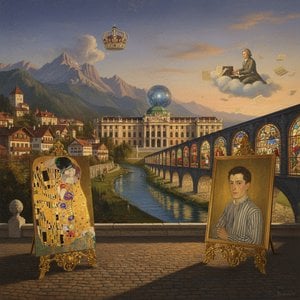
Embark on a sophisticated journey through Austrian art history. Explore the golden brilliance of Gustav Klimt and the elegance of the Vienna Secession through an expert lens, celebrating the enduring soul of Central European masterpieces.

Embark on a sophisticated journey through the splendor of Austrian art. From Gustav Klimt’s golden masterpieces to the elegance of the Viennese Secession, discover the history and symbolism behind Europe's most iconic works for the discerning collector.

Discover the exquisite world of Art Nouveau. Explore the elegant fusion of nature and design through architectural masterpieces, organic forms, and the legendary masters of the Belle Époque. Immerse yourself in a journey of timeless sophistication and ornamental beauty.

Explore the imperial grandeur of Vienna through art history. Discover the architectural mastery of Otto Wagner and the elegance of the Secessionist movement in this sophisticated guide to Austria's timeless aesthetic legacy.

 Náhled
 Sdílet
 Sdílet
 Podrobnosti o díle

 Stáhnout
 Podobné položky
 Rentgenové snímky
 Slideshow

 Zobrazit více




































 Skleněná varianta je dostupná pouze u rozměrů menších než 110 cm


