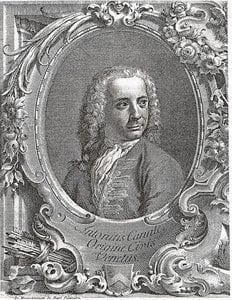
Giovanni Antonio Canal: The Master of Venetian Light and Shadow
Giovanni Antonio Canal, better known as Canaletto, emerged from the vibrant heart of Venice in 1697, a city he would come to define through his extraordinary talent for capturing its essence on canvas. His life wasn’t one of grand pronouncements or dramatic battles, but rather a quiet dedication to observing and meticulously rendering the world around him – a world brimming with canals, palaces, bustling markets, and the everyday lives of Venetian citizens. Canaletto's legacy isn't simply that of a painter; he was a chronicler of his time, an artist who elevated topographical views to a new level of artistry and detail, profoundly influencing generations of landscape painters.
Born into a family deeply rooted in the theatrical world – his father, Bernardo Canal, was a skilled scene painter for opera houses – young Giovanni received his initial artistic training under his father’s tutelage. This early exposure to stagecraft instilled within him an understanding of composition, perspective, and the importance of creating a convincing illusion. However, it was his time in Rome between 1718 and 1720 that truly shaped his artistic vision. There, he encountered the work of Giovanni Paolo Pannini, a master of vedute – detailed views of cities – whose meticulous approach to capturing urban landscapes ignited a passion within Canaletto. He quickly adopted Pannini’s techniques, focusing on precise observation and careful rendering of architectural details.
The Rise of a Venetian Veduta Master
Upon his return to Venice in 1722, Canaletto embarked on a career that would span nearly five decades. Initially, he catered to the demands of wealthy patrons – nobles, merchants, and foreign dignitaries – producing lavish series of paintings depicting their homes, gardens, and visits to Venetian landmarks. These works, often commissioned as diplomatic gifts or personal treasures, showcased his remarkable ability to capture light, atmosphere, and the intricate details of Venetian life. He quickly developed a distinctive style, characterized by its clarity, precision, and subtle use of color. Canaletto’s paintings weren't merely reproductions; they were carefully constructed compositions designed to evoke a sense of place and time.
A pivotal moment in his career came with the arrival of Joseph “Consul” Smith, an English merchant who became a devoted admirer of Canaletto’s work. Smith recognized Canaletto’s potential for success in England and secured a lucrative contract to supply him with paintings. This arrangement proved immensely beneficial, opening up new markets and providing Canaletto with a steady stream of commissions. He spent several years in London (1746-1756), producing a series of celebrated views of the city – including Eton College, Buckingham Palace, and Westminster Abbey – that became highly sought after by English collectors. These paintings not only established Canaletto’s reputation abroad but also significantly contributed to his financial prosperity.
Technique and Innovation: The Camera Obscura and Beyond
Canaletto's remarkable accuracy in depicting buildings, streets, and people has long been a subject of scholarly debate. While it was once widely believed that he employed a camera obscura – a device used to project images onto a surface – to aid in his topographical studies, recent research suggests that his meticulous preparatory drawings played an even more significant role. Canaletto was renowned for his painstaking attention to detail, spending countless hours sketching and measuring the scenes he intended to paint. His drawings were incredibly precise, capturing not only the overall composition but also the subtle nuances of light, shadow, and perspective.
Despite the ongoing debate about the use of a camera obscura, there’s no doubt that Canaletto possessed an exceptional eye for detail and a remarkable ability to translate his observations onto canvas. His paintings are characterized by their clarity, precision, and subtle use of color – qualities that have made them enduringly popular with art lovers around the world. He skillfully blended realism with a sense of idealized beauty, creating images that were both informative and aesthetically pleasing.
Legacy and Influence
Canaletto’s influence on 18th-century art is undeniable. His meticulous depictions of Venetian landscapes set a new standard for topographical painting, inspiring countless artists to emulate his technique and style. His work can be found in prestigious museums worldwide, including the National Gallery in London, where it remains one of its most beloved collections. Beyond his individual achievements, Canaletto’s legacy extends to the numerous artists he influenced – particularly his nephew, Bernardo Bellotto, who continued to develop and refine the Venetian veduta tradition.
Canaletto died in Venice in 1768, leaving behind a vast body of work that continues to captivate viewers today. His paintings offer a unique glimpse into the vibrant world of 18th-century Venice – a city of canals, palaces, and bustling markets, rendered with remarkable skill and artistry. His legacy as one of the greatest landscape painters of his time remains secure.



 Náhled
 Přepnout na tisk
 Sdílet
 Sdílet
 Podrobnosti o díle

 Stáhnout
 Podobné položky
 Rentgenové snímky
 Slideshow
 Statistiky


 Zobrazit více