NáhledNáhled Náhled v ARNáhled v AR Koupit ručně malovaný obraz Koupit ručně malovaný obrazPřepnout na digitální obraz Přepnout na digitální obraz SdíletSdílet
Podrobnosti o dílePodrobnosti o díle Přidat do oblíbených Přidat do oblíbených StáhnoutStáhnout Podobné položkyPodobné položky Rentgenové snímkyRentgenové snímky SlideshowSlideshow StatistikyStatistiky

Self Portrait (8)

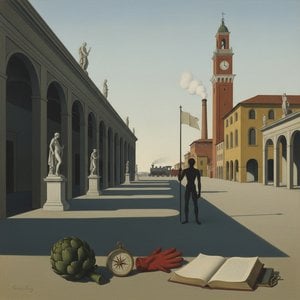
Experience Giorgio de Chirico's 'Self Portrait (8)' – a hauntingly beautiful and enigmatic masterpiece from 1967. Explore the surreal world of Neo-Baroque art with this hand-painted replica.

Giorgio de Chirico (1888-1978) - misterný umělec, zakladatel metafyziky. Jeho díla evokují snové městečka, filozofické myšlenky a ikonické figuríny. Vlivný na surrealismus.

Giclée / Umělecký tisk

Giclée nebo plátěný tisk muzeální kvality s rychlou výrobou a flexibilními možnostmi povrchové úpravy. (Koupit ručně malovaný obraz Koupit ručně malovaný obrazPřepnout na digitální obraz Přepnout na digitální obraz)

P118B $10
P118H $10
P118W $10
P438Z $10
P508JH $12
P508YH $12
P805H $10
P805Z $10
P919BZ $10
P919G $10
P919XJ $10
P959ZH $10
P968JZ $12
W106C $8
W218G $10
W218JH $8
W218Y $10
W307PJ $10
W316G $10
W316PJ $8
W316Y $10
W398PJ $8
W4111J $10
W500HY $15
W500JH $15
W692G $12
W849H $8
W940BG $15
W953PJ $8

Standardní velikost
na míru
CM
INCH

Vyberte si z našich přednastavených velikostí, které odpovídají původním proporcím díla.

šířka
výška

Můžete zadat vlastní rozměry tak, aby výtvor odpovídal konkrétnímu rámu nebo prostoru. Pokud zvolená velikost nebude odpovídat poměru stran původního obrazu, dílo buď ořížeme, nebo obraz rozšíříme pomocí zrcadlového efektu či jednobarevného okraje. Před zahájením výroby vám bude zaslán digitální náhled k schválení.
Mějte prosím na paměti, že náhled na obrazovce neodráží skutečné oříznutí nebo rozšíření. Pouze digitální náhled přesně zobrazí finální kompozici.
Ačkoliv jsou k dispozici i vlastní rozměry, pro zachování původních proporcí doporučujeme vybrat si rozměr z předdefinovaného seznamu.

Celosvětové doručení () do 2 týdnů namísto standardních 4/5 týdnů. (8 září)

why_choose_icon
Zdarma celosvětová expresní doprava
why_choose_icon
Vysoce kvalitní lněné plátno
why_choose_icon
Kompletní přepravní pojištění
why_choose_icon
Záruka vrácení celního poplatku
why_choose_icon
Záruka přesného barevného shodu
why_choose_icon
100dená lhůta pro vrácení zboží (pouze při vadách)
why_choose_icon
100% garance vrácení peněz
why_choose_icon
Sleva při hromadné objednávce

Celková cena

$ 68

reproduction

Self Portrait (8)

Giclée / Umělecký tisk

Rozměry reprodukce

-

Celková cena za výběr

$ 68

Základní informace

  • Artistic style: Neo-Baroque
  • Medium: Painting
  • Movement: Metafisica
  • Influences:
    • Schopenhauer
    • Nietzsche
  • Year: 1967
  • Notable elements: Arcades, shadows

Kvíz o umění

U každé otázky je pouze jedna správná odpověď.

Otázka 1:
What is the primary artistic movement associated with Giorgio de Chirico’s ‘Self Portrait (8)’?
Otázka 2:
The image description mentions a building in the background. What architectural style is most strongly suggested by this element?
Otázka 3:
Based on the image description, what is a prominent feature of the man’s attire?
Otázka 4:
Giorgio de Chirico is known for his exploration of what philosophical themes in his art?
Otázka 5:
The image description indicates the man is holding his hand on his chin. What does this gesture typically symbolize in de Chirico’s work?

Giorgio de Chirico’s “Self Portrait (8)” – A Dreamscape of Isolation

Giorgio de Chirico's "Self Portrait (8)," painted in 1967, isn’t merely a depiction of an artist; it’s a meticulously constructed fragment of the subconscious, a distilled essence of the anxieties and intellectual currents that defined his entire oeuvre. This particular iteration, created later in his career, leans heavily into the neo-baroque style he embraced during this period, offering a glimpse into a mind grappling with memory, alienation, and the unsettling beauty of the familiar transformed. The painting immediately draws the viewer in with its stark simplicity – a solitary figure, rendered in muted tones against a backdrop that simultaneously evokes classical Roman architecture and an unnerving sense of emptiness. It’s a portrait not just of a man, but of a state of being.

The Anatomy of Disquiet: Style and Technique

De Chirico's technique in this self-portrait is deliberately restrained, almost austere. The brushwork is visible, lending the painting a tactile quality that contrasts sharply with the dreamlike atmosphere. He employs a flattened perspective, reminiscent of Byzantine icons, creating an illusion of depth that simultaneously draws the eye inward and reinforces the feeling of confinement. Notice the careful attention to detail in the figure’s face – the slightly furrowed brow, the intense gaze directed squarely at the viewer—a direct challenge to the observer's presence within this carefully constructed space. The use of dark clothing against a lighter background further emphasizes the figure’s isolation and creates a dramatic interplay of light and shadow that contributes significantly to the painting’s overall mood.

Philosophical Echoes: Schopenhauer, Nietzsche, and the Uncanny

To understand “Self Portrait (8),” one must delve into the philosophical landscape that profoundly shaped de Chirico's artistic vision. Heavily influenced by Arthur Schopenhauer’s philosophy of pessimism and Friedrich Nietzsche’s exploration of nihilism and the will to power, de Chirico sought to capture the unsettling feeling of reality as a deceptive illusion—a “veil” concealing an underlying chaos. The painting embodies this concept perfectly. The Roman-inspired background, with its echoing arches and distant water, is not a genuine place but rather a construct of memory and imagination, imbued with a sense of longing and loss. The mannequins, often present in his earlier works, subtly hint at the artificiality of human relationships and the inherent loneliness of existence—a recurring motif reflecting his engagement with Schopenhauer’s ideas about the will as a relentless striving for satisfaction ultimately leading to suffering.

Symbolism and Emotional Resonance: Birds, Perspective, and the Viewer

Beyond the philosophical influences, several symbolic elements contribute to the painting's layered meaning. The two birds—one perched near the top left corner, another in the lower right—represent fleeting moments of beauty or perhaps even a sense of escape within an otherwise desolate landscape. The illogical perspective, a hallmark of de Chirico’s metaphysical style, further destabilizes our perception and creates a feeling of disorientation. Most importantly, the direct gaze of the self-portrait is profoundly unsettling. It forces the viewer to confront their own reflection in this strange, dreamlike world—a silent acknowledgment of shared isolation and the inherent mystery of human consciousness. “Self Portrait (8)” isn’t simply a portrait; it's an invitation to contemplate the complexities of the inner life and the enduring power of art to capture the elusive nature of reality.

A Reproduction for the Soul: Bringing De Chirico Home

WahooArt offers meticulously hand-painted reproductions of “Self Portrait (8),” allowing you to bring this iconic work into your own space. Our artists recreate de Chirico’s distinctive style and evocative atmosphere with exceptional skill, ensuring that every detail—from the subtle brushstrokes to the nuanced color palette—is faithfully reproduced. This is more than just a print; it's an authentic artistic experience, a window into the mind of one of the 20th century’s most enigmatic artists. Consider this reproduction not as a mere decoration, but as a conversation starter, a meditation on themes of isolation, memory, and the enduring power of art to illuminate the human condition.


Biografie umělce

Giorgio de Chirico: Vize einer surrealistischen Seele

Giorgio de Chirico, geboren 1988 in Volos, Griechenland, als Sohn italienischer Eltern – einer Genuesischen Baronin und eines sizilianischen Barons – begann seine künstlerische Reise mit einer einzigartigen Mischung aus klassischem Erbe und einem wachsenden Gefühl der modernen Entfremdung. Seine frühe Ausbildung an der Theatralisch-Mathematischen Schule in Athen legte eine solide Grundlage in traditionellen Techniken, doch erst seine Studien in München entfachten seinen kreativen Geist. Dort, inmitten des intellektuellen Aufbruchs Europas vor dem Ersten Weltkrieg, begegnete er Werken von Arnold Böcklin und Max Klinger – Künstlern, deren symbolische Landschaften und geisterhafte Bilder sein eigenes künstlerisches Konzept tiefgreifend prägten. Ebenfalls entscheidend für seine Entwicklung waren die philosophischen Strömungen der Zeit – die Schriften von Friedrich Nietzsche, Arthur Schopenhauer und Otto Weininger, die Themen wie Existenzialismus, die Irrationalität menschlicher Begierden und die subjektive Natur der Realität erforschten. Diese Ideen wurden zu den Eckpfeilern seiner bahnbrechenden künstlerischen Vision.

Die Geburt der Metaphyschen

Um 1909 begann sich aus seinen Erkundungen ein einzigartiger Stil herauszudecken – ein Stil, den er selbst “Metaphysische” Kunst nannte. Dies war nicht nur eine stilistische Innovation; es war ein tiefgreifender Versuch, die verborgenen Realitäten unter der Oberfläche des Alltags aufzudecken, die verstörende Poesie in vertrauten Räumen zu enthüllen. Ein entscheidendes Ereignis ereignete sich während eines Besuchs in Florenz und einer Erfahrung im Piazza Santa Croce – ein Moment, der seine ikonische Serie “Metaphysischer Stadtplatz” inspirierte. Diese Gemälde zeichnen sich durch ihre unheimliche Stille, lange dramatische Schatten, willkürliche Perspektiven und die Präsenz klassischer Architektur, kontrastierend mit verstörenden Elementen wie leeren Mannequins und bedrohlichen Statuen aus. Das Ergebnis ist tief beunruhigend und erzeugt ein Gefühl von Nostalgie, Isolation und einer fast unerträglichen Sehnsucht nach etwas Verlorenem oder Unattainablem. De Chirico gründete die *Scuola Metafisica*, die einen tiefgreifenden Einfluss auf Surrealismus hatte, obwohl er sich später von dessen Interpretationen seiner Arbeit distanzierte. Seine Gemälde waren nicht dazu gedacht, Träume darzustellen, sondern vielmehr eine Realität jenseits der sichtbaren Welt zu zeigen – ein Reich, in dem Zeit und Raum fließen und die Grenzen zwischen Bewusstsein und Unterbewusstsein verschwimmen. Werke wie *Die Qualen des Denkers*, *Das Rätsel eines Herbstnachmittags* und *Das Lied der Liebe* veranschaulichen diese beunruhigende Ästhetik und laden den Betrachter ein, über die Geheimnisse der Existenz und die Zerbrechlichkeit menschlicher Wahrnehmung nachzudenken.

Einflüsse und künstlerische Entwicklung

De Chiricos frühe Arbeiten zeigten deutliche Einflüsse von Böcklin und Klinger, insbesondere in Bezug auf die Verwendung von Symbolik und die Darstellung von melancholischen Landschaften. Die Begegnungen mit den philosophischen Ideen Nietzsches, Schopenhauers und Weiningers prägten seine Sichtweise der Welt und führten zu einer Auseinandersetzung mit Themen wie Isolation, Entfremdung und dem Streben nach Sinn in einer scheinbar sinnlosen Existenz. Die Erfahrung im Piazza Santa Croce in Florenz war ein entscheidender Moment, der ihn dazu brachte, die traditionelle Malerei zu hinterfragen und eine neue Art des Sehens zu entwickeln – eine, die sich auf die Darstellung von Realitäten konzentrierte, die jenseits der sichtbaren Welt lagen. Nach dem Ersten Weltkrieg begann De Chirico, seine frühere Metaphysische Kunst zu verlassen und stattdessen einen traditionelleren neoklassischen oder neobarocken Stil zu verfolgen. Diese Entscheidung stieß auf heftige Kritik, da viele Kritiker beklagten, dass er seinen innovativen Geist aufgegeben habe. Dennoch blieb De Chirico seiner künstlerischen Vision treu und erkundete weiterhin verschiedene Stile und Themen, während er sich stets für Handwerkskunst und technische Meisterschaft einsetzte.

Ein Vermächtnis der Mystik

Trotz der Kritik hatte De Chiricos Werk einen nachhaltigen Einfluss auf nachfolgende Generationen von Künstlern. Seine innovative Verwendung von Raum, Perspektive und Symbolik stellte traditionelle künstlerische Normen in Frage und ebnete den Weg für neue Formen des Ausdrucks. Sein Werk ist ein entscheidender Übergang zwischen dem Symbolismus der späten 19. Jahrhunderts und dem Aufstieg des Surrealismus im frühen 20. Jahrhundert. Er wurde direkt von Künstlern wie René Magritte und Salvador Dalí beeinflusst, die seine metaphysischen Gemälde als Inspiration für ihre eigenen traumhaften Welten nutzten. Sein Werk hatte auch Einfluss auf spätere Bewegungen wie den Magic Realism, der die Darstellung alltäglicher Realität mit einem erhöhten Gefühl von Mysterium und psychologischer Tiefe suchte. Heute werden De Chiricos Gemälde in bedeutenden Museen auf der ganzen Welt ausgestellt, darunter das Museum, das seinem Werk gewidmet ist, in der Nähe der Spanischen Treppe in Rom, wodurch sein Vermächtnis als eine der wichtigsten Figuren der Kunst des 20. Jahrhunderts gesichert bleibt. Er hinterließ nicht nur ein Werk von Kunst, sondern auch eine neue Art zu sehen – eine Art, die Welt als einen Ort verborgener Bedeutungen, verstörender Schönheit und bleibender Mystik wahrnimmt.

Schlüssel-Einflüsse & künstlerische Linie

  • Beeinflusst von: Arnold Böcklin, Max Klinger, Friedrich Nietzsche, Arthur Schopenhauer
  • Beeinflusst: Surrealismus, insbesondere Künstler wie René Magritte und Salvador Dalí. Sein Werk hatte auch Einfluss auf spätere Bewegungen wie Magic Realism.

Giorgio de Chirico

Giorgio de Chirico

1888 - 1978 , Řecko

Rychlé fakta

  • Artistic Movement Or Style: Metafyzické umění
  • Artists Or Movements Influenced By This Artist: ['Surrealismus']
  • Artists Who Influenced This Artist:
    • Böcklin
    • Klinger
  • Date Of Birth: 10. července 1888
  • Date Of Death: 20. listopadu 1978
  • Full Name: Giorgio de Chirico
  • Nationality: Italský
  • Notable Artworks:
    • Enigma podzimu
    • Zmatení myslitele
  • Place Of Birth: Volos, Řekosko
Prozkoumejte umělecká díla uspořádaná podle témat, stylů a charakteristik.