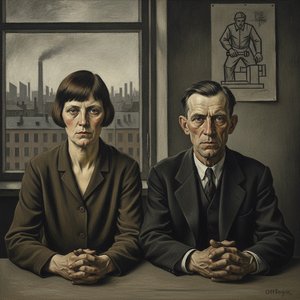
A Satirist of Shattered Worlds: The Life and Art of George Grosz
George Grosz, narozený jako Georg Ehrenfried Groß v Berlíně v roce 1893, byl vizuálním kronikářem rozkladu společnosti a politických otřesů. Jeho umění nebylo pouhým zobrazením doby – turbulentní Výmarské republiky a vzestup fašismu – ale hlubokou, živoucí reakcí na ni, zuřivým odsouzením vyjádřeným zkroucenými liniemi a groteskními karikaturami. Grosz nepochopil Berlín jen tak; rozebíral ho, odhaloval jeho morální zkaženost s bezkompromisnou upřímností. Rané roky jeho života byly poznamenány nestabilitou po smrti otce, což přimělo jeho matku k řízení vojenského hostince, čímž se mladý Georg ocitl v prostředí pruského militarismu a rigidních sociálních hierarchií – světa, který později neúnavně satirizoval. Jeho formální umělecké vzdělání začalo pečlivými kopiemi tradičních nizozemských mistrů, jako Eduard von Grützner, kde zdokonalil technickou zručnost předtím, než opustil akademické konvence pro mnohem provokativnější cestu. Tato raná disciplína však poskytla základ, na kterém byl postaven jeho jedinečný a vyjádřivý styl.
Dada, Nová Objektivita a Zrození Kritického Vize
Umělecký vývoj Grosze nebyl oddělen od avantgardních proudů, které rozkvetly v poúnorové Německu. Stal se klíčovou postavou berlínského Dadaismu, přijímal jeho nihilistický duch a protiasociační vzpurnost. Nicméně, na rozdíl od některých jeho dadaistických kolegů, kteří si užívali čisté absurdity, Grosz věnoval dadaistickou rebelii cílenému sociálnímu komentáři. Jeho díla z tohoto období – díla jako *The Pit* (1921) a *The Pillars of Society* (1926) – jsou zuřivým odsouzením německé buržoazie, vojenské elity a korupčního politického systému, který vedl národ k katastrofě. Nebyl zájem o estetickou krásu; hledal šok, provokaci a odhalení pokrytectví. Tento závazek k sociální kritice se vyvinul v jeho účast na *Neue Sachlichkeit* (Nová Objektivita), hnutí charakterizovaném realistickým, ale bezcitným zobrazením současného života. Zatímco sdílel Novou Objektivitě zaměření na realismus, Grosz ho obdařil jedinečnou a pronikavou satirou, která ho odlišovala od jiných umělců spojených s touto skupinou. Jeho malby a grafiky nebyly pouhými reprezentacemi reality; byly zkreslenými zrcadly společnosti na pokraji kolapsu.
Exil a Transformace: Nový Svět, Změna Stylu
Vzestup nacismu přinutil Grosze k exilu v roce 1933. Najde útočiště ve Spojených státech, kde získal občanství v roce 1938. Tato migrace představovala významný obrat v jeho umělecké kariéře. Odstraněn z kontextu, který poháněl jeho nejvýraznější díla, a konfrontován s jinými sociálními a politickými realitami, se Groszův styl začal měnit. Přímá agresivní karikatura ustoupila tlumeným krajinám a portrétům, často zbarveným pocitem melancholie a rozhořčení. I když pokračoval v vystavování a učení na Art Students League v New Yorku, jeho díla postrádala syrovou naléhavost berlínského období. Bojoval o nalezení svého místa v novém prostředí, přecitlivělý na pocity odcizení a uměleckou nejistotu. Apokalyptické vize, které se objevily v této době – malby zobrazující pusté krajiny a fragmentované postavy – odrážely nejen hrůzy probíhající v Evropě, ale také jeho vlastní vnitřní zmatek.
Dědictví a Trvalá Relevance
George Grosz se vrátil do Berlína v roce 1959, krátce před svou smrt, poutavou návratem do města, které ho inspirovalo i pronásledovalo. Jeho dědictví přesahuje historický kontext Výmarské republiky. Zůstává mocným příkladem umělce, který se odvážil čelit nepříjemným pravdám a zpochybňovat společenské normy. Jeho dílo slouží jako varovný příběh o nebezpečích politického extremismu, sociální nespravedlnosti a nezvládnuté moci.
- Satirická síla: Groszova mistrovská práce s karikaturou nadále inspiruje umělce a komentátory dnes.
- Sociální komentář: Jeho bezkompromisní kritika společenských nespravedlí zůstává překvapivě relevantní v světě, který stále bojuje s nerovností, korupcí a politickou polarizací.
- Historický svědek: Jeho umění poskytuje neocenitelný vhled do sociálního a politického klimatu meziválečné Německo, nabízející živé porozumění silím, které vedly k druhé světové válce.
Groszův vliv lze nalézt ve dílech mnoha umělců, kteří ho následovali, těch, kteří se nechali inspirovat jeho závazkem k sociální angažovanosti a jeho ochotou používat umění jako zbraň proti nespravedlnosti. Jeho malby jsou uchovány v předních muzeích po celém světě, včetně Kunstsammlungen und Museen Augsburg, Kunsthalle Bielefeld a Whitney Museum of American Art, zajišťují, že jeho mocný poselství bude slyšet generacemi do budoucna.



 Náhled
 Přepnout na tisk
 Sdílet
 Sdílet
 Podrobnosti o díle

 Stáhnout
 Podobné položky
 Rentgenové snímky
 Slideshow
 Statistiky

 Zobrazit více






































 Skleněná varianta je dostupná pouze u rozměrů menších než 110 cm