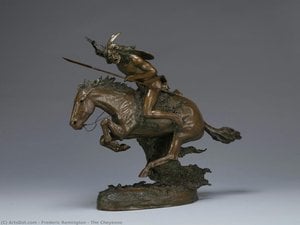
Biografie umělce
A Chronicler of the Vanishing West: The Life and Art of Frederic Remington
Frederic Sackrider Remington, narozený v Cantonu, New Yorku, 4. října 1861, nebyl produktem Divokého západu, který tak živě zobrazoval; spíše byl východněn rozený umělec, který si vytvořil své umělecké vyznění fascinací a oddaným studiem. Jeho dědictví naznačovalo život vzdálený od prašných stezek a jezdeckých výprav – francouzsko-baský původ smíchaný se silnými republikánskými novogenními kořeny, otec byl válečný generál a novinář, a spojení s legendární Remington Arms dynasty prostřednictvím vzdálených příbuzných. Přestože byl raně vystaven vojenským tématům, spojené s divokou zvědavostí a talentem pro vyprávění příběhů, vedly ho na cestu k tomu stát se možná nejznámějšího umělce Divokého západu. Jeho dětství se přesunulo do Bloomingtonu, Illinois, poté zpět do Cantonu a nakonec do Ogdensburgu, New Yorku, ale jeho fantazie zůstala uchvácena příběhy o životě na hranici. Ačkoli byl původně směřován k vojenskému vzdělání v Vermont Episcopal Institute, Remingtonův pravý osud nesl v sobě pozorování a interpretaci světa kolem něj prostřednictvím umění. Krátký pobyt na Yale University toto potvrzuje; fotbal a kreslení měly větší přitažlivost než formální akademické úsilí.
Od Ilustrátora k Malíři: Vytváření Umělecké Vize
Remingtonova umělecká cesta začala ne s velkými plátny, ale s inkem a papírem. Jeho první publikované dílo, karikatura pro *Yale Courant*, signalizovala ranou zdatnost v zachycení akce a vyprávění příběhů. Klíčová cesta do Montany v roce 1881 rozžehla jeho celoživotní posedlost západem. Nešlo o pohled turistu; Remington se snažil ponořit se do kultury, pozoroval kovboje, indiány a samotný krajinu. Nejprve se pokoušel o rančování a těžbu zlata, ale tyto snahy selhaly, což mu umožnilo plně se věnovat umění. Po návratu na východ rychle etablovál sám sebe jako ilustrátora pro časopisy jako *Harper’s Weekly* a *Collier’s*, jeho dynamické zobrazení západních scén okouzalo národní publikum, které toužilo po příbězích o hranici. Tyto ilustrace nebyly jen reportáží; byly nabité dramatem, energií a romantizovaným vnímáním západu, které hluboce rezonovalo s představivostí veřejnosti. Právě prostřednictvím této práce Remington zdokonalil své dovednosti v kompozici, zachycení pohybu a vyjádření emocí – vlastností, které později definovaly jeho malby. Získal minimální formální školu kromě některých kreslených kurzů na Yale a krátký pobyt na Art Students League, místo toho se vyvinul jedinečný styl charakterizovaný energickým štětcovým stylem, odvážnými barvami a zaměřením na realismus smíchaný s dramatickou patetikou.
Zachycení Mizejícího Světa: Témata a Styl
Remingtonovo umění je neodmyslitelně spjato s konkrétním okamžikem v americké historii – úsvitom Divokého západu. Jeho plátna jsou osídlená ikonickými postavami: drsnými kovboji, kteří vedou dobytek, stoicími indiány, kteří čelí vyhnání, a americkými vojáky, kteří se zapojují jak do hrdinských bitev, tak do tragických konfliktů. Nebál se zobrazovat tvrdé realitě života na hranici, ale jeho díla často sklouzávají k romantizovanému zobrazení, zdůrazňující odvahu, dobrodružství a střet kultur. Jeho malby nejsou jen historické dokumenty; jsou vyvolávající příběhy, které prozkoumávají témata hrdosti, ztráty a nevyhnutelného postupu pokroku. Remingtonův styl se v průběhu času vyvíjel, od těsnějších, více akademických zobrazení k volnějším, expresivnějším štětcovým stylům. Byl mistrem zachycování pohybu – koně jezdící po pláních, kovboje bořící do dobytka, vojáky vracející se do boje. Často používal rychlé skici a fotografie jako referenční materiály, ale jeho umění vždy přesahovalo pouhé napodobování, nabité jeho vlastní jedinečnou vizí a emocionální intenzitou. Významné díla, jako jsou *My Ranch*, *Waiting in the Moonlight*, *Ridden Down* (1905) a *The Long-Horn Cattle Sign* (1908), ilustrují jeho schopnost zachytit jak rozměrnost, tak zranitelnost amerického západu.
Vlivy a Dědictví
Frederic Remington zemřel nečekaně v roce 1909 ve věku 48 let, nechávaje za sebou rozsáhlé dílo, které i nadále okouzluje publikum. Jeho dopad na umění Divokého západu je nezpochybnitelný; on sám nedozrakoval západ, ale pomohl *definovat* ho pro generace Američanů. Vytvořil vizuální jazyk hranice – ikonografii kovbojů, indiánů a jezdců kavalérie, která se hluboce zakořenila v populární představivosti. Jeho díla inspirovala mnoho dalších umělců, včetně N.C. Wyetha a Zaneho Greye. Muzeum Fredericka Remingtona v Ogdensburgu, New Yorku, stojí jako důkaz jeho trvalého dědictví, uchovávaje rozsáhlou sbírku jeho obrazů, soch a archivních materiálů. Jeho díla jsou vystavována v předních muzeích po celé zemi, včetně Metropolitan Museum of Art a Amon Carter Museum of American Art. Remingtonova zobrazování, i když někdy kritizována za její romantizované zobrazení západu, nabízí cenný pohled do klíčové epochy americké historie. Zachytil nejen to, *co bylo*, ale také to, *v co lidé věřili* – jeho mýty, legendy a trvalou přitažlivost.



 Přepnout na tisk
 Sdílet
 Sdílet
 Podrobnosti o díle
 Průvodce

 Stáhnout
 Podobné položky
 Slideshow
 Q&A
Q&A Statistiky


 Zobrazit více






































 Skleněná varianta je dostupná pouze u rozměrů menších než 110 cm