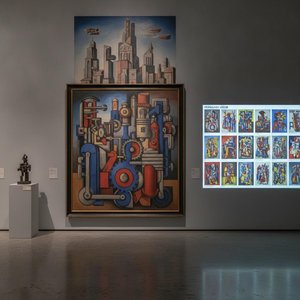
Cubism · 1924

Three Characters (Fernand Léger, 1924)

Three Characters je dílo autora Fernand Léger (1881–1955). Pochází z roku 1924. Patří k hnutí Cubism. Je vyrobeno z Acrylic On Canvas.

  • 1924
  • Acrylic On Canvas
Three Characters od Fernand Léger, 1924, acrylic on canvas
Three Characters od Fernand Léger, 1924, acrylic on canvas. Veřejná doména

Náhled v interiéru Náhled v AR Tisk Ručně malovaná olejná reprodukce Digitální obraz Sdílet
Průvodce Přidat do oblíbených Stáhnout Podobné položky Rentgenové snímky Slideshow Otázky a odpovědi Prezentace Statistiky

Three Characters: the essentials

Název
Three Characters
Autor
Fernand Léger (1881–1955)
Narozen(a) v roce
Argentan, Francie
Datum
1924
Technika
Acrylic On Canvas
Pohyb
Cubism
Období
Modern
Motiv
geometric figures, modern composition, cubist style art, human interaction, bold color palette, everyday objects

Reading Three Characters

A Symphony of Form and Feeling: Exploring Fernand Léger’s “Three Characters”

Fernand Léger's 1924 painting, *“Three Characters,”* is a pivotal work exemplifying his distinctive contribution to Cubism – a style he uniquely evolved into what became known as ‘Tubism.’ More than just an exercise in geometric abstraction, this piece offers a compelling glimpse into the artist’s vision of modern life and human connection amidst industrialization.

Deconstructing the Composition: Style & Technique

Léger masterfully employs simplified, cylindrical forms to depict three figures positioned closely together. This isn't about realistic representation; it’s a deliberate fragmentation and reassembly of reality through a Cubist lens. The painting eschews traditional perspective, presenting multiple viewpoints simultaneously within a flattened picture plane. The technique is characterized by smooth brushstrokes and carefully blended colors, creating a polished surface despite the angularity of the forms. This creates a sense of solidity and monumentality, grounding the abstracted figures.

A Palette of Modernity: Color & Symbolism

While rooted in Cubism’s analytical approach, *“Three Characters”* distinguishes itself through its vibrant color palette. Léger moves beyond the muted tones often associated with early Cubism, embracing bold hues that inject energy and warmth into the composition. The inclusion of symbolic objects – a baseball bat and a book – adds layers of meaning. These aren’t merely decorative elements; they represent facets of everyday life, leisure, and intellectual pursuit, hinting at Léger's interest in portraying the modern individual within their environment. The figures themselves are not portraits but archetypes, representing universal aspects of human experience.

Historical Context: Cubism & Beyond

Created in the aftermath of World War I, *“Three Characters”* reflects a broader cultural shift towards embracing modernity and industrialization. Léger, alongside Picasso and Braque, was at the forefront of the Cubist revolution, challenging traditional artistic conventions. However, he diverged from his peers by incorporating elements of machine aesthetics and popular culture into his work. His style evolved toward “Crystal Cubism,” emphasizing large, overlapping geometric planes and a strong focus on surface activity. This painting stands as a testament to that evolution, bridging the gap between abstract experimentation and representational form.

Emotional Resonance & Lasting Influence

*“Three Characters”* evokes a sense of quiet contemplation and interconnectedness. Despite their abstracted forms, the figures possess a palpable presence, suggesting a shared experience or unspoken dialogue. The painting’s enduring appeal lies in its ability to resonate with viewers on an emotional level, prompting reflection on themes of identity, community, and the human condition. Léger's work profoundly influenced subsequent art movements, including Futurism, Abstract Art, and Surrealism, solidifying his legacy as a visionary artist who redefined the possibilities of painting in the 20th century.

Collecting & Interior Design Considerations

  • Style Compatibility: This artwork complements modern, minimalist, or Art Deco interiors. Its geometric forms and bold colors create a striking focal point.
  • Color Palette Integration: The painting’s color scheme can be echoed in accent furniture, textiles, or wall colors to create a cohesive design aesthetic.
  • Placement Suggestions: Ideal for living rooms, dining areas, or home offices. Consider pairing it with contemporary sculptures or abstract artwork.
  • Investment Potential: As a seminal work by a highly influential artist, a high-quality reproduction of *“Three Characters”* represents not only an aesthetic addition but also a potential investment in art history.

Three Characters in high resolution

Three Characters od Fernand Léger, 1924, acrylic on canvas
Ke stažení zdarma

Veřejná vlastnictví: umělec zemřel v 1955.

More sizes, crops & citation →
Záznam o autorství

Fernand Léger, Three Characters (1924). Veřejná doména

Expert-prepared file

Digitální expert porovnává barvy s původním obrazem a retušuje soubor tak, aby věrně odpovídal tahům štětcem umělce.

Acquire the high-resolution image

Questions collectors ask about Three Characters

Mohu si prohlédnout rentgenový snímek díla „Three Characters“ od Fernand Léger?

Dílo „Three Characters“ lze prohlížet vrstvu po vrstvě na stránce Rentgenové snímky, která funguje jako interaktivní prohlížeč inspirovaný světelnou lavicí restaurátora a nabízí jedenáct optických nálezů obrazu.

Jaký národní původ stojí za stylem Cubism u díla „Three Characters“?

Dílo „Three Characters“ propojuje směr Cubism s Francie prostřednictvím rodného města svého tvůrce.

Jaké emoce vyvolávají barvy díla „Three Characters“ od Fernand Léger?

„Three Characters“ od Fernand Léger kombinuje paletu Neutrals s Somber tónem.

K čemu se doporučuje reprodukce díla „Three Characters“ od Fernand Léger?

Reprodukci díla „Three Characters“ od Fernand Léger doporučujeme pro Accent. Toto doporučení vychází z tématu, nálady a barevnosti tohoto díla.

Jakou technikou je vytvořeno dílo "Three Characters"?

Fernand Léger pro dílo „Three Characters“ použil/a techniku Acrylic On Canvas. Tato technika definuje materiální podstatu originálního díla.

Jaká je vnímaná jasnost díla „Three Characters“ od Fernand Léger?

Z hlediska vnímané jasnosti je dílo „Three Characters“ od Fernand Léger bright.

Do jaké místnosti se doporučuje „Three Characters“ od Fernand Léger?

Doporučeným prostorem pro „Three Characters“ od Fernand Léger je Living Room. Toto doporučení lze samozřejmě přizpůsobit vašemu interiéru.

Kdo vytvořil dílo "Three Characters" a kdy?

Fernand Léger vytvořil/a „Three Characters“ v roce 1924.

K kterému uměleckému směru patří „Three Characters“ od Fernand Léger?

Dílo „Three Characters“ od Fernand Léger patří k období směru Cubism, který dílu dodává jeho stylistický kontext.

The artist: Fernand Léger

Fernand Léger

1881–1955, Francie

Fernand Léger

Život Fernanda Légera Příběh Fernanda Légera začíná v obci Argentan, která leží v departementu Orne v Dolní Normandii. Na svět přišel 4. února 1881 jako jediný syn. Jeho raná léta byla formována klidem francouzského venkova a přítomností jeho matky, Marie-Adèle Daunou.

More from Fernand Léger

Further reading on Three Characters