BEZPLATNÉ UMĚLECKÉ PORADENSTVÍ
x
Koupě vysoce rozlišeného, vylepšeného digitálního obrazu, který je mnohem kvalitnější než online náhled.
Každý soubor je pečlivě připraven našimi odborníky pomocí pokročilých nástrojů a expertní manuální retuše. Zajišťujeme, aby každý obraz disponoval výjimečnou ostrostí, přesnou barevnou věrností a jemnými detaily.
Finální soubor vám bude do 72 hodin zaslán e-mailem, optimalizovaný pro okamžité použití v profesionálním, redakčním i tiskovém prostředí. Nabízíme stejnou kvalitu, které důvěřují špičková designová studia, nakladatelství i galerie.
Stáhněte si soubor ve vysokém rozlišení pro osobní prohlížení, tisk a kreativní projekty.
Když si vyberete WahooArt.com, nezískáváte pouze obrázek – získáváte digitální umělecké dílo s profesionálně vylepšenými detaily, zpracované s precizností a podpořené zárukou za spokojenost. Zde je vše, co vaše objednávka automaticky obsahuje:
Váš digitální obraz ve vysokém rozlišení vám bude zaslán e-mailem do 72 hodin od objednávky – připraven k okamžitému použití.
Vaše umělecké dílo je profesionálně optimalizováno pomocí pokročilých nástrojů umělé inteligence a manuální úpravy, což zajišťuje maximální úroveň detailu, ostrosti a přesnosti barev.
Soubor jste omylem smazali nebo ztratili? Žádný problém – kdykoliv vám ho znovu zašleme zcela zdarma.
Užijte si své umělecké dílo okamžitě bez celních poplatků, daní nebo nákladů na dopravu – digitální stažení je vždy bez daňových povinností.
Pomocí profesionálních nástrojů a správy barev zajišťujeme, aby váš digitální obraz odrážel původní barvy co nejvěrněji.
Pokud nebudete s digitální fotografií spokojeni, provedeme její revizi nebo vám vrátíme 100% během 60 dnů – bez jakýchkoliv dotazů.
Nespokojeni? Získejte plnou částku zpět do 60 dní od přijetí vašeho digitálního souboru – bez jakýchkoliv dotazů.
Koupěte si 3 obrazy, ušetřete 10% - Koupěte si 5, ušetřete 15% - Koupěte si 10+, ušetřete 20%. Ideální pro kreativní projekty, galerie a agentury.
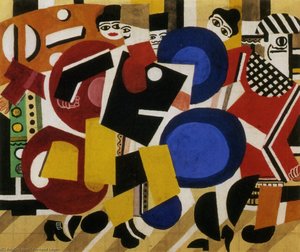
Fernand Léger's "The Level Crossing (Final State)," painted in 1919, isn’t merely a depiction of a railway crossing; it’s a vibrant manifesto of the burgeoning Tubism movement and a bold declaration of modernity. Emerging from the fertile ground of Argentan, Normandy – a region deeply rooted in agricultural tradition – Léger embarked on an artistic journey that propelled him to the heart of Parisian avant-garde circles. Unlike many artists retreating into abstraction as a refuge, Léger sought to actively *integrate* the dynamism and stark forms of the machine age into his visual language. This painting exemplifies that ambition with remarkable force, capturing not just the physical structure of the crossing but also the underlying rhythms and geometries of industrial life.
The work’s genesis lies in Léger's fascination with the burgeoning world of machinery – a subject he viewed as possessing an inherent beauty and power. He meticulously studied locomotives, factories, and other mechanical marvels, translating their angular forms and repetitive patterns into his art. “The Level Crossing” is thus a distillation of this observation, rendered in a strikingly simplified style. The dominant shapes are not organic or representational; instead, they’re cylindrical volumes, interlocking cones, and sharp-edged rectangles – elements that evoke the precision and efficiency of industrial design. This deliberate reduction to essential forms creates a sense of both immediacy and abstraction, drawing the viewer into a world where recognizable objects dissolve into pure geometric relationships.
“The Level Crossing” is a quintessential example of Tubism, a style developed by Léger alongside Robert Delaunay. Unlike Cubism’s fragmentation of form, Tubism sought to capture the *essence* of objects through simplified, cylindrical shapes – often referred to as “tubes.” These tubes aren't merely geometric forms; they possess an inherent sense of movement and energy, mirroring the relentless motion of machinery. Léger employed a bold palette of primary colors—yellows, reds, blues—interspersed with black and white, creating a dynamic visual rhythm that pulsates across the canvas. The use of flat planes and unmodulated color further emphasizes the two-dimensionality of the work, contributing to its overall sense of immediacy and dynamism.
Crucially, Léger wasn’t simply replicating mechanical forms; he was imbuing them with a new kind of beauty. He sought to elevate the mundane – the railway crossing, a symbol of industrial progress – into an object of aesthetic contemplation. The painting's composition is carefully balanced, creating a sense of visual harmony despite its fragmented and geometric nature. The central red pole acts as a focal point, drawing the eye through the complex arrangement of shapes and colors. It’s a deliberate gesture, directing the viewer’s gaze across the scene and reinforcing the painting’s overall message.
Beyond its formal qualities, “The Level Crossing” is rich in symbolic meaning. The railway crossing itself represents the intersection of two worlds: the rural past and the rapidly advancing industrial future. Léger's depiction suggests a transition – a moment of both disruption and potential. The simplified forms and bold colors evoke a sense of excitement and optimism about the possibilities of modernity, while the geometric structure also hints at the underlying order and logic of the machine age. The painting’s emotional impact is surprisingly powerful, conveying not just the visual spectacle of industrial progress but also a feeling of dynamism, energy, and even a touch of alienation.
Furthermore, the work can be interpreted as a commentary on the human condition within this new technological landscape. The figures, though abstracted, retain a sense of humanity, suggesting that individuals are both shaped by and contribute to the forces of industrialization. “The Level Crossing (Final State)” is therefore not just a depiction of a physical space; it’s a profound meditation on the relationship between humans, machines, and the evolving world around us – a timeless masterpiece that continues to resonate with viewers today.
1881 - 1955 , Francie
Sdělte nám více o svém projektu a naši odborníci na umění vám připraví 3 personalizované návrhy uměleckých děl.
Nechť pro vás vybereme 3 možnosti – zdarma!