BEZPLATNÉ UMĚLECKÉ PORADENSTVÍ
x
Ručně malovaná olejná barva na plátně ve vašem zvoleném rozměru i s rámem, vyrobená našimi umělci na zakázku.
Vyberte si z našich přednastavených velikostí, které odpovídají původním proporcím díla.
Můžete zadat vlastní rozměry pro konkrétní rám nebo prostor. Pokud se vámi vybraná velikost neshoduje s proporcemi původního obrazu, dílo buď ořízneme, nebo jej doplníme ručně malovanými prvky. Před zahájením výroby vám bude zaslán digitální náhled ke schválení.
Upozorňujeme, že náhled na obrazovce neodpovídá skutečnému ořezu ani rozšíření. Pouze digitální náhled přesně zobrazí finální kompozici.
Ačkoliv je možné zvolit vlastní velikost, pro zachování původních proporcí doporučujeme vybrat rozměr z předdefinovaného seznamu.
Celosvětová doprava () za 3–4 týdny namísto standardních 5 týdnů. (2 červenec). Bez kompromisů v kvalitě.
Composition
Rozměry reprodukce
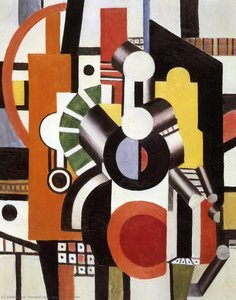
Fernand Léger's Composition, painted in 1920, isn’t a depiction of recognizable objects; it’s an immersion into the very *feeling* of modernity. Born amidst the rural landscapes of Argentan, Normandy, Léger possessed a unique perspective – one forged by his early life working with his father on the farm, juxtaposed against the burgeoning industrial world of Paris. This duality informs every facet of this work, creating a visual language that simultaneously celebrates and critiques the dynamism and fragmentation inherent in the machine age. The painting immediately commands attention not through narrative, but through its sheer geometric density: overlapping rectangles, circles, and subtly curved lines coalesce into an ambiguous spatial field, inviting the viewer to navigate a world where perspective is deliberately distorted.
The grayscale palette, punctuated by strategic bursts of yellow and red, isn’t merely decorative. The muted tones emphasize the flatness of the picture plane, pushing back against traditional notions of depth and realism. These vibrant accents – reminiscent of factory lights or signal flares – inject a vital energy into the composition, hinting at the underlying rhythms of industrial life. Léger masterfully employs angular lines to create a sense of fractured movement, mirroring the jarring yet compelling experience of navigating a rapidly changing urban landscape. The deliberate lack of strong shadows further contributes to this flattened effect, reinforcing the painting’s focus on form and structure rather than illusionistic representation.
Composition firmly establishes Léger as a pivotal figure in the development of Cubism, specifically within his own distinctive style known as “Tubism.” Rejecting the purely representational aims of earlier Cubists like Picasso and Braque, Léger sought to distill the essence of modern life – its mechanical forms, its streamlined shapes, and its relentless forward momentum – into a simplified visual vocabulary. The dominant geometric motifs—cylinders, cones, and cubes—are not merely abstract shapes; they are echoes of factory machinery, automobiles, and other symbols of industrial progress. This isn’t simply an aesthetic choice; Léger was deeply fascinated by the mechanics of the modern world, believing that art should reflect its underlying structure.
The painting's influence extends beyond Cubism, foreshadowing elements of Pop Art with its embrace of everyday objects and industrial imagery. Léger’s approach to color – a restrained palette punctuated by bold accents – anticipates the later work of artists like Andy Warhol. The deliberate simplification of forms, combined with a focus on texture (though subtly rendered through variations in tone), creates an image that is both visually arresting and intellectually stimulating. It's a testament to Léger’s ability to capture the spirit of his time—a period of unprecedented technological advancement and social transformation.
Examining the technique reveals a meticulous attention to detail. Léger employed precise brushwork, layering paint with remarkable control to achieve the desired tonal variations and create a sense of depth through overlapping forms. The use of oil paints on canvas lends a richness and durability to the work, ensuring its longevity. The composition’s seemingly flat appearance belies this careful construction; each shape is precisely defined, contributing to the overall sense of order within the chaotic arrangement.
Léger's legacy extends far beyond his own artistic output. He profoundly influenced subsequent generations of artists, particularly those interested in exploring the relationship between art and technology. His work continues to resonate today, offering a compelling meditation on the complexities of modernity and the enduring power of abstraction. Reproductions of Composition provide an accessible gateway into Léger’s world—a world where form, color, and movement converge to create a truly unforgettable visual experience.
1881 - 1955 , Francie
Sdělte nám více o svém projektu a naši odborníci na umění vám připraví 3 personalizované návrhy uměleckých děl.

Nechť pro vás vybereme 3 možnosti – zdarma!