Přepnout na tiskové verze Přepnout na digitální verzi obrazu Odeslat
Podrobnosti Průvodce Přidat do oblíbených Stáhnout obrázek Podobné kousky Slideshow Statistiky

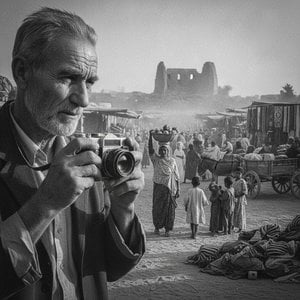
Thomas Flake and Hannes Meyer (during inspection of the building site for the ADGB Trade Union School in Bernau)

A striking black and white photograph by Erich Consemüller capturing Thomas Flake and Hannes Meyer at a 1928 construction site, offering a rare glimpse into Bauhaus history for collectors to explore.

Explore the Bauhaus legacy of Erich Consemüller (1902-1957), a German photographer & architect. Discover his iconic Bauhaus documentation, architectural photography & unique perspectives on modern design. #Bauhaus #Photography #Architecture

Ručně malovaná olejová reprodukce

Ručně malované olejné plátno v libovolném rozměru i s rámem, vyrobené našimi umělci na zakázku. ( Přepnout na tiskové verze Přepnout na digitální verzi obrazu)

Standardní velikost
na zakázku
CM
INCH

Vyberte si z našich přednastavených velikostí, které odpovídají původním proporcím díla.

šířka
výška

Můžete zadat vlastní rozměry pro konkrétní rám nebo prostor. Pokud se vámi vybraná velikost neshoduje s proporcemi původního obrazu, dílo buď ořízneme, nebo jej doplníme ručně malovanými prvky. Před zahájením výroby vám bude zaslán digitální náhled ke schválení.
Upozorňujeme, že náhled na obrazovce neodpovídá skutečnému ořezu ani rozšíření. Pouze digitální náhled přesně zobrazí finální kompozici.
Ačkoliv je možné zvolit vlastní velikost, pro zachování původních proporcí doporučujeme vybrat rozměr z předdefinovaného seznamu.

Příklady možných změn: nahrazení obličeje vlastní fotografií; přidání domácího mazlíčka (např. nahrazení kočky psem); vložení skrytého vzkazu do pozadí; změna krajiny nebo prvků v pozadí.
Po přijetí objednávky vám tým WahooArt.com zašle e-mail s pokyny a poskytne náhledovou verzi.

Celosvětová doprava () za 3–4 týdny namísto standardních 5 týdnů. (24 září). Bez kompromisů v kvalitě.

why_choose_icon
Zdarma celosvětová expresní doprava
why_choose_icon
Vysoce kvalitní lněné plátno
why_choose_icon
Úplné pojištění přepravy
why_choose_icon
Záruka vrácení celního poplatku
why_choose_icon
Záruka věrného barevného shodu
why_choose_icon
100dení lhůta pro vrácení zboží (pouze při vadách výroby)
why_choose_icon
100% garance vrácení peněz
why_choose_icon
Sleva při více objednávkách

Celková cena

$ 272

reproduction

Thomas Flake and Hannes Meyer (during inspection of the building site for the ADGB Trade Union School in Bernau)

Technika provedení

Velikost reprodukce

-

Celková cena

$ 272

A Moment Frozen in Modernist History

In this evocative black and white photograph from 1928, we are transported to a pivotal moment of architectural anticipation. Captured by the lens of Erich Consemüller, the image depicts Thomas Flake and Hannes Meyer during an inspection of the building site for the ADGB Trade Union School in Bernau. There is a profound sense of gravity in their stance; as they stand amidst the raw landscape, one can almost feel the weight of the future pressing upon the earth beneath them. The composition, though simple, carries the immense intellectual energy of the Bauhaus era, where every line and structure was being reimagined to serve a new, socialized way of living.

The photograph transcends mere documentation, offering a window into the collaborative spirit of the Weimar Republic's avant-garde. The interplay of light and shadow across the figures creates a dramatic texture, highlighting the ruggedness of the construction site against the contemplative presence of the two men. Consemüller’s mastery lies in his ability to capture not just the physical subjects, but the atmosphere of progress and the quiet intensity of architectural planning. For the collector, this piece serves as more than an image; it is a fragment of a revolutionary era, preserved in silver and light.

The Intersection of Craft and Vision

To understand the soul of this photograph, one must look to the hands that held the camera. Erich Consemüller was not merely an observer but a participant in the architectural dialogue of his time. His background in carpentry and his training at the Bauhaus provided him with a unique, tactile understanding of space and material. This technical intimacy is visible in how he frames the scene—treating the landscape and the figures as structural elements within a larger, unfolding design. The starkness of the monochrome palette strips away the distractions of color, forcing the viewer to focus on the essential forms: the silhouette of a hat, the heavy drape of a coat, and the distant, skeletal promise of trees.

The historical context of the ADGB Trade Union School adds a layer of profound symbolism to the work. As a project intended to embody the ideals of social progress and functionalist design, the site being inspected was a laboratory for modern living. In this light, Flake and Meyer are not just men on a field; they are architects of a new social order. The photograph captures the tension between the natural world and the encroaching industrial modernity, a theme that resonates deeply with contemporary viewers who find beauty in the raw, unadorned truth of structural beginnings.

A Timeless Addition to the Modern Interior

For the discerning interior designer or art enthusiast, this reproduction offers an unparalleled opportunity to introduce historical depth and intellectual rigor into a curated space. The monochromatic elegance of Consemüller’s work makes it a versatile masterpiece, capable of anchoring a minimalist gallery wall or providing a sophisticated focal point in a study filled with mid-century modern furniture. Its presence evokes a sense of nostalgia for the era of "form follows function," bringing an air of academic prestige and quiet contemplation to any room.

Owning a high-quality reproduction of this photograph is an invitation to engage with the legacy of the Bauhaus movement every day. It is a piece that rewards repeated viewing, revealing new nuances in its shadows and textures each time. Whether placed in a contemporary loft or a classic library, this work stands as a testament to the enduring power of architectural vision and the timeless beauty of the photographic medium.


Biografie umělce

Early Life and Education

Erich Consemüller (10 October 1902 — 11 April 1957) was born in Bielefeld, Germany—a city steeped in Saxon tradition—and spent his formative years honing his craft in carpentry. This early apprenticeship instilled a foundational understanding of material and construction that would profoundly inform his later architectural endeavors. Attending evening classes at the Bielefeld School of Arts and Crafts (now Bielefeld University of Applied Sciences) further broadened his artistic horizons, fostering an appreciation for craftsmanship alongside theoretical exploration. It was here that he began to cultivate his passion for design and visual communication—a passion that would ultimately propel him toward a pivotal role in shaping the Bauhaus movement.Cite Note: Dolgner, Klaus (2015). Bauhaus: Art, Design and Culture 1919–1933. Taschen.

The Bauhaus Years

Consemüller’s life took an extraordinary turn in 1922 when he joined the Bauhaus school in Weimar—a crucible of artistic innovation founded by Walter Gropius. Immediately immersing himself in the teachings of luminaries like Johannes Itten, Paul Klee, and Wassily Kandinsky, Consemüller embarked on a transformative journey that would define his artistic identity. He excelled in furniture design under Gropius’s guidance, mastering techniques rooted in geometric precision and functional elegance—principles central to Bauhaus’s ethos.Cite Note: Bauhaus Dessau Foundation. His involvement extended beyond the workshop; he meticulously documented the school's activities through photography, capturing the energy of collaborative experimentation and the evolving aesthetic sensibilities of its students. Approximately 300 photographs produced during this period stand as enduring testaments to Consemüller’s dedication to preserving the Bauhaus legacy.Cite Note: Tate Britain Notably, he collaborated on iconic projects like the Theatre Cafe in Dessau—a daring reimagining of public space—and contributed significantly to the ADGB Trade Union School project in Bernau bei Berlin.

Photographic Contributions and Style

Consemüller’s photographic work exemplifies Bauhaus’s commitment to documenting reality with uncompromising clarity and artistic vision. His images, particularly “Bauhaus Scene,” are instantly recognizable for their masterful composition—featuring Marcel Breuer's Wassily Chair alongside Oskar Schlemmer’s theatrical mask and Lis Beyer-Volger’s dress.Cite Note: Museum of Modern Art These photographs aren’t merely representations; they convey a palpable sense of atmosphere and intellectual engagement. Consemüller skillfully employed lighting and framing to emphasize the interplay between form and function—a hallmark of Bauhaus aesthetics.Lucia Moholy, his fellow photographer at Bauhaus, recognized Consemüller's talent for capturing the essence of architectural spaces and human interaction. His photographs are now housed in prestigious collections worldwide, including the Centre Pompidou in Paris and the Bauhaus Dessau Foundation.

Post-Bauhaus Career and Legacy

Following his departure from Weimar in 1929, Consemüller continued to practice architecture, collaborating with Hans Wittwer’s office in Halle (Saale) and teaching at Burg Giebichenstein Kunsthochschule Halle. He embraced Bauhaus principles—particularly the importance of experimentation and social responsibility—throughout his professional life.Cite Note: Getty Museum His architectural designs reflected a restrained elegance, prioritizing simplicity and functionality while incorporating innovative materials and techniques. Consemüller’s influence extended beyond academia; he mentored aspiring architects and championed the pursuit of artistic excellence.Thomas Flake and Hannes Meyer, during inspection of the building site for the ADGB Trade Union School in Bernau, collaborated closely with Consemüller on this ambitious project—a testament to his commitment to Bauhaus ideals. His work remains a cornerstone of modern architectural history. Erich Consemüller’s photographs are displayed in museums across Europe, including the Bauhaus Dessau Foundation and Essen Folkwang Museum, ensuring that his artistic vision continues to inspire generations of designers and artists.Cite Note: Bauhaus Kooperation
erich consemüller

erich consemüller

1902 - 1957 , Germany

Rychlé informace

  • Artistic Movement Or Style: Bauhaus Photography Architecture
  • Artists Or Movements Influenced By This Artist: ['Lucia Moholy']
  • Artists Who Influenced This Artist:
    • Johannes Itten
    • Paul Klee
    • Wassily Kandinsky
  • Date Of Birth: 1902-10-10 Bielefeld Germany
  • Date Of Death: 1957-04-11 Halle Germany
  • Full Name: Erich Consemüller
  • Nationality: German
  • Notable Artworks:
    • Bauhaus Scene
    • Easy chair by Marcel Breuer
  • Place Of Birth: Bielefeld Germany