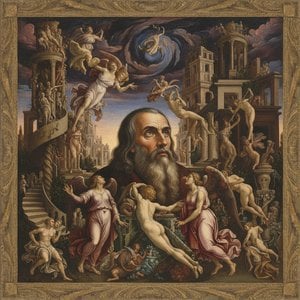
The Annunciation (1597) od El Greco, ručně malovaná olejná reprodukce mistrovským umělcem
Náhled v interiéru Náhled v AR Přepnout na tisk Přepnout na digitální obraz Sdílet
Podrobnosti o díle Průvodce Přidat do oblíbených Stáhnout Podobné položky Rentgenové snímky Slideshow Otázky a odpovědi Presentation Statistiky

The Annunciation Ručně malovaná reprodukce olejomalby

Rozměry
114.0 x 67.0 cm

Objevte dramatické dílo El Greka! Studium manýrismu & náboženských obrazů s prodlouženými postavami. Předceňující expresionismus & kubismus – prohlédněte si jeho ikonické výtvarné díla!

Ručně malovaná olejová reprodukce

Rukou malované olejné plátno v libovolném rozměru i s rámem, vyrobené našimi umělci na zakázku. ( Přepnout na tisk Přepnout na digitální obraz)

Corner sample of the P118B picture frame: tvarovaný polystyren, 5 cm wide and 3 cm thick
P118B Kč10
Corner sample of the P118H picture frame: tvarovaný polystyren, 5 cm wide and 3 cm thick
P118H Kč10
Corner sample of the P118W picture frame: tvarovaný polystyren, 5 cm wide and 3 cm thick
P118W Kč10
Corner sample of the P438Z picture frame: tvarovaný polystyren, 5.5 cm wide and 3.5 cm thick
P438Z Kč10
Corner sample of the P508JH picture frame: tvarovaný polystyren, 7 cm wide and 3.5 cm thick
P508JH Kč12
Corner sample of the P508YH picture frame: tvarovaný polystyren, 7 cm wide and 3.5 cm thick
P508YH Kč12
Corner sample of the P805H picture frame: tvarovaný polystyren, 5 cm wide and 3.5 cm thick
P805H Kč10
Corner sample of the P805Z picture frame: tvarovaný polystyren, 5 cm wide and 3.5 cm thick
P805Z Kč10
Corner sample of the P919BZ picture frame: tvarovaný polystyren, 7 cm wide and 3.5 cm thick
P919BZ Kč10
Corner sample of the P919G picture frame: tvarovaný polystyren, 7 cm wide and 3.5 cm thick
P919G Kč10
Corner sample of the P919XJ picture frame: tvarovaný polystyren, 7 cm wide and 3.5 cm thick
P919XJ Kč10
Corner sample of the P959ZH picture frame: tvarovaný polystyren, 5 cm wide and 3 cm thick
P959ZH Kč10
Corner sample of the P968JZ picture frame: tvarovaný polystyren, 6 cm wide and 4 cm thick
P968JZ Kč12
Corner sample of the W106C picture frame: masivní dřevo, 5 cm wide and 3 cm thick
W106C Kč8
Corner sample of the W218G picture frame: masivní dřevo, 5 cm wide and 3 cm thick
W218G Kč10
Corner sample of the W218JH picture frame: masivní dřevo, 5 cm wide and 3 cm thick
W218JH Kč8
Corner sample of the W218Y picture frame: masivní dřevo, 5 cm wide and 3 cm thick
W218Y Kč10
Corner sample of the W307PJ picture frame: masivní dřevo, 6 cm wide and 3 cm thick
W307PJ Kč10
Corner sample of the W316G picture frame: masivní dřevo, 6 cm wide and 3 cm thick
W316G Kč10
Corner sample of the W316PJ picture frame: masivní dřevo, 6 cm wide and 3 cm thick
W316PJ Kč8
Corner sample of the W316Y picture frame: masivní dřevo, 6 cm wide and 3 cm thick
W316Y Kč10
Corner sample of the W398PJ picture frame: masivní dřevo, 5 cm wide and 3 cm thick
W398PJ Kč8
Corner sample of the W4111J picture frame: masivní dřevo, 6.5 cm wide and 3.5 cm thick
W4111J Kč10
Corner sample of the W500HY picture frame: masivní dřevo, 7 cm wide and 5 cm thick
W500HY Kč15
Corner sample of the W500JH picture frame: masivní dřevo, 7 cm wide and 5 cm thick
W500JH Kč15
Corner sample of the W692G picture frame: masivní dřevo, 8 cm wide and 4 cm thick
W692G Kč12
Corner sample of the W849H picture frame: masivní dřevo, 5 cm wide and 3 cm thick
W849H Kč8
Corner sample of the W940BG picture frame: masivní dřevo, 7.5 cm wide and 4.5 cm thick
W940BG Kč15
Corner sample of the W953PJ picture frame: masivní dřevo, 6 cm wide and 3.5 cm thick
W953PJ Kč8

Standardní velikost
na zakázku
CM
INCH

Vyberte si z našich přednastavených velikostí, které odpovídají původním proporcím díla.

šířka
výška

Zadejte šířku a výšku, které potřebujete pro váš rám nebo stěnu. Protože se jedná o ruční malbu, při výběru jiného formátu může umělec kolem obrazu domalovat o něco více, nebo jej mírně oříznout — rozhodnete si vy. Před zahájením malby vám zašleme digitální náhled ke schválení. Obraz zobrazený na této stránce neodpovídá skutečnému výsledku — pouze digitální náhled jej zobrazuje.

Příklady možných změn: nahrazení obličeje fotografií zákazníka; přidání domácího mazlíčka (např. nahrazení kočky psem); vložení skrytého vzkazu do pozadí; změna krajiny nebo prvků v pozadí.
Po přijetí objednávky vám tým WahooArt.com zašle e-mail s pokyny a poskytne náhledovou verzi.

Celosvětová doprava () za 3–4 týdny namísto standardních 5 týdnů. (6 listopad). Bez kompromisů v kvalitě.

Zdarma celosvětová expresní doprava
Vysoce kvalitní lněné plátno
Kompletní pojištění přepravy
Záruka vrácení celního poplatku
Záruka věrného barevného souladu
100dení lhůta pro vrácení zboží (pouze při vadách výroby)
100% záruka vrácení peněz
Sleva při více objednávkách

Celková cena

Kč 5926

The Annunciation

Technika reprodukce

Rozměry reprodukce

-

Celková cena za vybrané možnosti reprodukcí

Kč 5926

Rychlé informace

  • Notable elements: Violin, harp
  • Dimensions: 114 x 67 cm
  • Location: Private Collection
  • Title: The Annunciation
  • Medium: Oil on panel
  • Movement: Spanish Mannerism

Artový kvíz

U každé otázky je pouze jedna správná odpověď.

Otázka 1:
The painting ‘The Annunciation’ by El Greco depicts which biblical event?
Otázka 2:
What is a key characteristic of El Greco’s style, evident in ‘The Annunciation’?
Otázka 3:
The presence of musical instruments in ‘The Annunciation’ suggests what about the scene?
Otázka 4:
In what city did El Greco primarily work during his later years, significantly influencing his style?
Otázka 5:
El Greco’s use of Greek in his signatures signified:

A Moment of Divine Revelation: El Greco’s “The Annunciation”

El Greco's "The Annunciation," painted in 1597, isn’t merely a depiction of a biblical event; it’s an intensely felt experience. This masterpiece, measuring a modest 114 x 67 cm, pulsates with the artist’s unique vision – a synthesis of Byzantine rigor and a burgeoning emotionalism that would foreshadow movements centuries later. Born in Crete, Doménikos Theotokópoulos, known as El Greco, spent his formative years steeped in the traditions of Eastern Orthodox art, absorbing its meticulous detail and profound spiritual depth. Yet, he never remained confined by these roots. Toledo, Spain, became his adopted home, a city brimming with religious fervor and offering a fertile ground for his artistic evolution.

The scene itself is arresting: Mary, kneeling in humble reverence, receives the momentous news from the radiant angel Gabriel. The composition immediately draws the eye to the figures, rendered with an almost sculptural quality – elongated limbs, dramatically foreshortened perspectives, and faces imbued with a palpable sense of emotion. El Greco’s signature style—characterized by vibrant color palettes, swirling drapery, and a deliberate distortion of form—is powerfully evident here. He doesn't aim for photographic realism; instead, he seeks to convey the *feeling* of the event, the overwhelming weight of divine revelation.

The Dance of Color and Light

El Greco’s masterful use of color is central to the painting’s impact. The cool blues and purples dominating Mary's garments contrast sharply with the golden hues surrounding Gabriel, emphasizing his celestial status. Notice how he employs a technique known as *sfumato*, subtly blurring edges and creating an atmospheric haze that lends the scene an ethereal quality. This isn’t simply decorative; it contributes to the overall sense of otherworldly grace. The lighting is equally dramatic – a single, powerful beam illuminates Mary and Gabriel, casting long shadows and highlighting their expressions of awe and surprise.

Technically, El Greco employed oil paints on panel, a medium that allowed for rich color saturation and layering of textures. His brushwork is energetic and expressive, particularly in the swirling folds of the drapery and the intricate details of the angel’s wings. He built up his paint in multiple layers, creating a luminous surface that seems to glow from within. This meticulous approach, combined with his innovative use of perspective and color, distinguishes “The Annunciation” as a truly groundbreaking work.

Symbolism Woven into Sacred Narrative

Beyond the immediate depiction of the Annunciation, the painting is rich in symbolic meaning. The musical instruments – a violin and harp – are not merely decorative additions; they represent the music of heaven, suggesting that this divine revelation will be accompanied by praise and song. The archangel, often depicted with wings outstretched, symbolizes God’s boundless grace and his willingness to bestow blessings upon humanity. Mary's posture—kneeling in humility—underscores her acceptance of God’s will.

Furthermore, the setting itself is significant. The sparse background emphasizes the central figures, drawing attention to their spiritual encounter. The muted colors and lack of elaborate architectural details contribute to a sense of intimacy and immediacy, as if we are privileged witnesses to this momentous event.

A Timeless Expression of Faith

"The Annunciation" transcends its religious subject matter to become a profound meditation on faith, humility, and the encounter with the divine. El Greco’s ability to infuse his paintings with such raw emotion is what continues to captivate viewers centuries later. This reproduction captures not only the visual details of the original but also the spirit of wonder and reverence that it embodies. It's a piece perfect for adorning a prayer room, a study, or any space where contemplation and spiritual connection are valued. WahooArt offers exceptional quality reproductions, ensuring you experience the full power and beauty of this iconic work by one of art history’s most singular figures.

Otázky a odpovědi

Jakou celkovou náladu vyzařuje „The Annunciation“ od El Greco?

„The Annunciation“ má Ethereal atmosféru.

Které muzeum uchovává originál díla "The Annunciation"?

Originál díla „The Annunciation“ od El Greco je uložen v instituci Museo Nacional Thyssen-Bornemisza, Madrid, Španělsko. Reprodukce však umožňuje toto dílo vystavit i ve vašem domově.

Jakou náladu vyjadřuje „The Annunciation“ od El Greco v rámci směru Late Mannerism?

V rámci směru Late Mannerism je dílo „The Annunciation“ zachyceno v Spiritual tónu.


Biografie umělce

Doménikos Theotokópoulos, called El Greco

Doménikos Theotokópoulos, known to the world as El Greco – “the Greek” – was a painter whose life and work defied easy categorization. Born in Crete, Greece (1541), his artistic journey took him through Venice and Rome before finding its ultimate expression in the spiritual heartland of Spain: Toledo. El Greco wasn’t merely a product of these places; he synthesized their influences into something wholly unique, a style that anticipated the emotional intensity of Expressionism and the fragmented forms of Cubism centuries later. His early training within the Byzantine tradition instilled in him a meticulous attention to detail and a profound understanding of religious iconography. This foundation, however, wouldn’t confine him. He signed his works in Greek, often appending “Krḗs” – Cretan – as a proud declaration of his origins, even as he ventured into new artistic territories. The seeds of his distinctive style were sown not just in technique but also in the fervent religious climate of his homeland and the rich tapestry of Venetian art.

Early Years: Venice and Rome

El Greco’s formative years were spent in Venice around 1567, where he immersed himself in the vibrant artistic scene dominated by titans like Titian, Tintoretto, and Veronese. He diligently studied their mastery of color, composition, and dramatic lighting—skills that would profoundly shape his future endeavors. Recognizing the importance of mastering Western Renaissance techniques, El Greco absorbed their influence, adapting them to his own distinctive vision. His Venetian training resulted in early works such as *Saint Sebastian* (1600), where anatomical detail blends seamlessly with an almost theatrical use of light and shadow—a testament to his ability to fuse Byzantine precision with Venetian dynamism. Subsequently, he traveled to Rome, encountering Mannerism – a style characterized by elongated forms, distorted perspectives, and sophisticated compositions. While he demonstrated considerable talent in the competitive Roman art world, El Greco struggled to gain widespread recognition due to stylistic differences from prevailing tastes of the time. Despite these challenges, his exposure to Mannerist principles undoubtedly broadened his artistic horizons.

A Style Unlike Any Other

El Greco’s artistic style is instantly recognizable – and utterly captivating. His figures are often dramatically elongated, their bodies stretched and contorted in poses that convey a sense of spiritual ecstasy or profound anguish. This isn't mere stylistic affectation; it’s an attempt to depict the unseen, the emotional and spiritual realities that lie beyond the surface of things. He masterfully employed color – not necessarily realistic color, but vibrant, often unnatural hues – to heighten the emotional impact of his work. Dramatic lighting, with stark contrasts between light and shadow, creates a theatrical effect, drawing the viewer into the heart of the scene. *The Burial of the Count of Orgaz* (1586-1588), considered his masterpiece, exemplifies these qualities perfectly. The painting depicts a miraculous event – the descent of saints to bury a pious nobleman – with remarkable realism in the portrayal of contemporary figures juxtaposed against ethereal, elongated forms representing divine intervention. He blended Byzantine traditions with Italian Renaissance techniques, forging a style that was both innovative and deeply personal. His later works became increasingly mystical, reflecting his own profound religious beliefs and a growing detachment from conventional artistic norms.

Toledo: The Flowering of Genius

El Greco’s relocation to Toledo in 1577 marked a pivotal moment in his artistic career—a move that coincided with the rise of Counter-Reformation fervor and provided him with an environment conducive to exploring his spiritual convictions. Here, he received significant commissions from churches and monasteries, securing patronage from influential figures like Diego de Castilla, Archbishop of Toledo. This support enabled him to produce some of his most celebrated paintings, including *Saint Martin and the Beggar* (1597/1599), *St. Peter in Tears* (1582), and *The Holy Family with Saint Anne and the Infant John the Baptist* (c. 1595/1600). These works demonstrate El Greco’s masterful command of composition, color, and expressive gesture—characteristics that solidified his reputation as one of Spain's foremost artists. Notably, *View of Toledo* (1596-1600) stands apart from his other paintings due to its landscape genre—a rare departure from religious iconography for El Greco—yet it captures the essence of Toledo with an almost visionary quality.

Legacy and Rediscovery

El Greco’s artistic legacy extends far beyond his lifetime, influencing generations of artists who recognized him as a precursor to modern art movements like Expressionism and Cubism. His distinctive style—characterized by elongated figures, intense emotion, and dramatic lighting—resonated with artists seeking new ways to convey psychological depth and spiritual experience. Furthermore, El Greco’s pioneering use of color and perspective challenged conventional artistic norms, paving the way for groundbreaking innovations in visual art. Although largely overlooked by art historians during the 19th century, El Greco experienced a resurgence of interest in the 20th century thanks to the recognition of artists like Picasso and Braque who admired his stylistic originality. Today, El Greco is revered as one of Spain’s greatest painters—a visionary artist whose work continues to inspire awe and contemplation with its profound spiritual resonance and unparalleled artistic brilliance.
El Greco

El Greco

1541 - 1614 , Řecko

Rychlé informace o umělci

  • Artistic Movement Or Style: Mannerismus, Baroko
  • Artists Who Influenced This Artist:
    • Titian
    • Tintoretto
  • Date Of Birth: 1541
  • Full Name: Doménikos Theotokópoulos
  • Nationality: Řek
  • Notable Artworks:
    • The Burial of the Count of Orgaz
    • View of Toledo
    • El Espolio
    • St. Sebastian
  • Place Of Birth: Crete, Greece
Prozkoumejte umělecká díla uspořádaná podle témat, stylů a charakteristik.