Výraznictví · 1895

Měsíc (Edvard Munch, 1895)

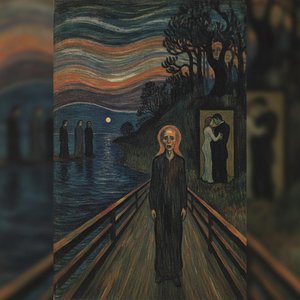
Měsíc je dílo autora Edvard Munch (1863–1944). Pochází z roku 1895. Patří k hnutí Výraznictví. Je vyrobeno z Olej na plátně. Nachází se v Nasjonalgalleriet v Oslo, Norsko. Rozměry jsou 93 × 110 cm.

Měsíc od Edvard Munch, 1895, olej na plátně, Nasjonalgalleriet
Měsíc od Edvard Munch, 1895, olej na plátně, Nasjonalgalleriet. Veřejná doména

Náhled v interiéru Náhled v AR Tisk Ručně malovaná olejná reprodukce Digitální obraz Sdílet
Průvodce Přidat do oblíbených Stáhnout Podobné položky Rentgenové snímky Slideshow Otázky a odpovědi Prezentace Statistiky

Měsíc: the essentials

Název
Měsíc
Autor
Edvard Munch (1863–1944)
Narozen(a) v roce
Ådalsbruk, Norsko
Datum
1895
Technika
Olej na plátně
Rozměry
93 × 110 cm
Kde jej vidět
Nasjonalgalleriet, Oslo, Norsko
Motiv
norská pobřeží, noc, měsíční svit, stromová silueta, klidná atmosféra

Reading Měsíc

Edvard Munch’s ‘Moonlight’: A Symphony of Sorrow and Serenity

Edvard Munch's "Moonlight," painted in 1895, isn’t merely a depiction of a Norwegian coastal landscape; it’s an embodiment of existential angst rendered with breathtaking visual poetry. Housed within the Nasjonalgalleriet in Oslo, Norway, this oil on canvas measuring 93 x 110 cm transcends its physical dimensions to transport viewers into the heart of Munch's tormented psyche and the broader currents of Symbolist art. It stands as a testament to his ability to distill profound emotion into simplified forms—a hallmark of Expressionism that continues to resonate powerfully today.

Composition and Technique: A Dance Between Darkness and Light

The painting’s striking visual impact stems from Munch's masterful manipulation of composition and technique. Dominating the canvas is an imposing vertical pillar of moonlight, a recurring motif in Munch’s oeuvre—a deliberate choice designed not just to illuminate the scene but also to symbolize aspiration and perhaps even unattainable beauty. Beneath this luminous beacon stretches a dark expanse representing the shoreline, punctuated by jagged tree trunks that converge towards the horizon line. These trees aren't rendered with meticulous detail; instead, they are stylized into skeletal forms – an intentional simplification that amplifies their expressive power. Munch employs loose brushstrokes—a technique prioritizing feeling over precise representation—to capture the ethereal quality of moonlight and convey a palpable sense of unease. The muted blues and whites dominate the color palette, reflecting the melancholic atmosphere of a twilight hour and mirroring Munch’s preoccupation with themes of solitude and melancholy.

Symbolism: Echoes of Inner Turmoil

“Moonlight” operates on multiple symbolic levels. Beyond its literal portrayal of a coastal vista, it delves into the realm of psychological introspection. The absence of human figures underscores the painting's focus on internal experience—a reflection of Munch’s own struggles with mental illness and his desire to express emotions beyond rational articulation. Critics have interpreted the moonlight pillar as representing hope amidst despair, yet simultaneously highlighting the pervasive darkness that surrounds it. The jagged tree trunks symbolize rigidity and confinement, mirroring the artist’s anxieties about mortality and the limitations of human existence. Furthermore, Munch's masterful use of color—particularly the cool blues—evokes feelings of sadness and contemplation, aligning with the broader Symbolist movement’s exploration of subconscious emotions and spiritual themes.

Historical Context: The Birth of Expressionism

“Moonlight” emerged during a period of significant artistic upheaval – the dawn of Expressionism in Europe. Influenced by artists like Vincent van Gogh and Paul Gauguin, Munch sought to break free from Impressionistic conventions and prioritize emotional intensity over objective observation. He rejected academic realism, opting instead for a subjective approach that aimed to convey inner feelings directly onto the canvas. This stylistic choice coincided with Munch’s personal battles with tuberculosis and depression—experiences that profoundly shaped his artistic vision and fueled his exploration of themes related to suffering and vulnerability. The painting represents a pivotal moment in art history, marking a decisive shift towards prioritizing emotional expression over visual accuracy.

Legacy: An Enduring Image of Melancholy Beauty

“Moonlight” continues to captivate audiences today due to its timeless appeal and its ability to evoke profound emotions. Its haunting beauty—characterized by a delicate balance between serenity and unease—has cemented Munch’s place as one of the most influential artists of the late 19th century. Reproductions of this masterpiece adorn homes and galleries worldwide, serving as reminders of Munch's artistic genius and his enduring exploration of the human condition. It remains an unforgettable testament to the power of art to communicate complex emotions and capture the essence of a singular moment in time—a beacon of melancholy beauty that continues to inspire contemplation and wonder.

Where Měsíc hangs

Nasjonalgalleriet

Oslo, Norsko

Dědictví vytesané do světla Nasjonalgalleriet dlouhodobě slouží jako hlavní úložiště norskické umělecké ];výrazu, přítomnost, která v nás stále rezonuje, i když se jeho sbírky stěhují do nového Národního muzea na živobudné břežní linii Osla. Instituce založená v roce 1842 začínala ve královském paláci, než byla v roce 1882 přesunuta do samostatné budovy navržené Heinrichem Ernstem a Adolfem Schirmerem. Kameny této budovy jako by nesly tíhu generací uměleckého hledání.

Měsíc in high resolution

Měsíc od Edvard Munch, 1895, olej na plátně, Nasjonalgalleriet
Ke stažení zdarma

Veřejná vlastnictví: umělec zemřel v 1944.

More sizes, crops & citation →
Záznam o autorství

Edvard Munch, Měsíc (1895), Nasjonalgalleriet. Veřejná doména

Expert-prepared file

Digitální expert porovnává barvy s původním obrazem a retušuje soubor tak, aby věrně odpovídal tahům štětcem umělce.

Acquire the high-resolution image

Questions collectors ask about Měsíc

Jak se v díle „Měsíc“ od Edvard Munch propojují umělecký směr a doba?

Dílo „Měsíc“ od Edvard Munch patří k享有 směrům Výraznictví, které charakterizovaly éru – 19. století svého autora.

Mohu si objednat olejnou reprodukci díla "Měsíc"?

Ručně malované kopie díla „Měsíc“ od Edvard Munch jsou k zakoupení na webu tato webová stránka: ručně malovaná olejová reprodukce na lněném plátně, a to prostřednictvím jeho stránky Ručně malovaná reprodukce.

Jakou atmosféru do interiéru přináší „Měsíc“ od Edvard Munch?

Dílo „Měsíc“ od Edvard Munch má Mystický atmosféru a doporučujeme jej do Obývací pokoj. Nálada představuje to, co dílo vnáší do okolního prostoru.

Kolik let bylo Edvard Munch, když v roce 1895 vytvořil(a) dílo „Měsíc“?

Při vzniku díla „Měsíc“ v roce 1895 bylo umělcům Edvard Munch (narozenému/é v 1863) 32 let.

Jak výrazný je kontrast v díle „Měsíc“ od Edvard Munch?

„Měsíc“ od Edvard Munch vykazuje Prohlášení kontrast mezi světlými a tmavými částmi.

Jakou náladu a emoci vyjadřuje „Měsíc“ od Edvard Munch?

V díle "Měsíc" doprovází Mystický náladu Melancholický emoce.

Kde mohu vidět originál díla „Měsíc“ od Edvard Munch?

Originál díla „Měsíc“ si můžete prohlédnout v instituci Nasjonalgalleriet, Oslo, Norsko.

Jakou intenzitu barev má „Měsíc“ od Edvard Munch?

Barvy v díle „Měsíc“ od Edvard Munch mají Vyvážená intenzitu.

Pro koho je dílo "Měsíc" vhodné jako dárek a k jakému účelu?

Doporučení k dáru pro „Měsíc“ od Edvard Munch spojuje Výročí s Atmosféra.

The artist: Edvard Munch

Edvard Munch

1863–1944, Norsko

Edvard Munch

Život a identita Edvarda Muncha Edvard Munch byl norský malíř, jehož život byl hluboce spjat s krajinou a těžkou atmosférou jeho vlasti. Narodil se 12. prosince 1863 a většinu své existence strávil zkoumáním složitostí lidské psychiky prostřednictvím štětce a náčiní pro grafiku. Jeho dílo často působilo jako přímé vyjádření jeho vlastních vnitřních bojů, které proměňovalo soukromé emoce v něco viditelného a sdíleného.

More from Edvard Munch

Further reading on Měsíc