Objednat ručně malovanou reprodukci Přepnout na digitální verzi obrazu Odeslat
Podrobnosti Průvodce Přidat do oblíbených Stáhnout obrázek Podobné kousky Slideshow Statistiky

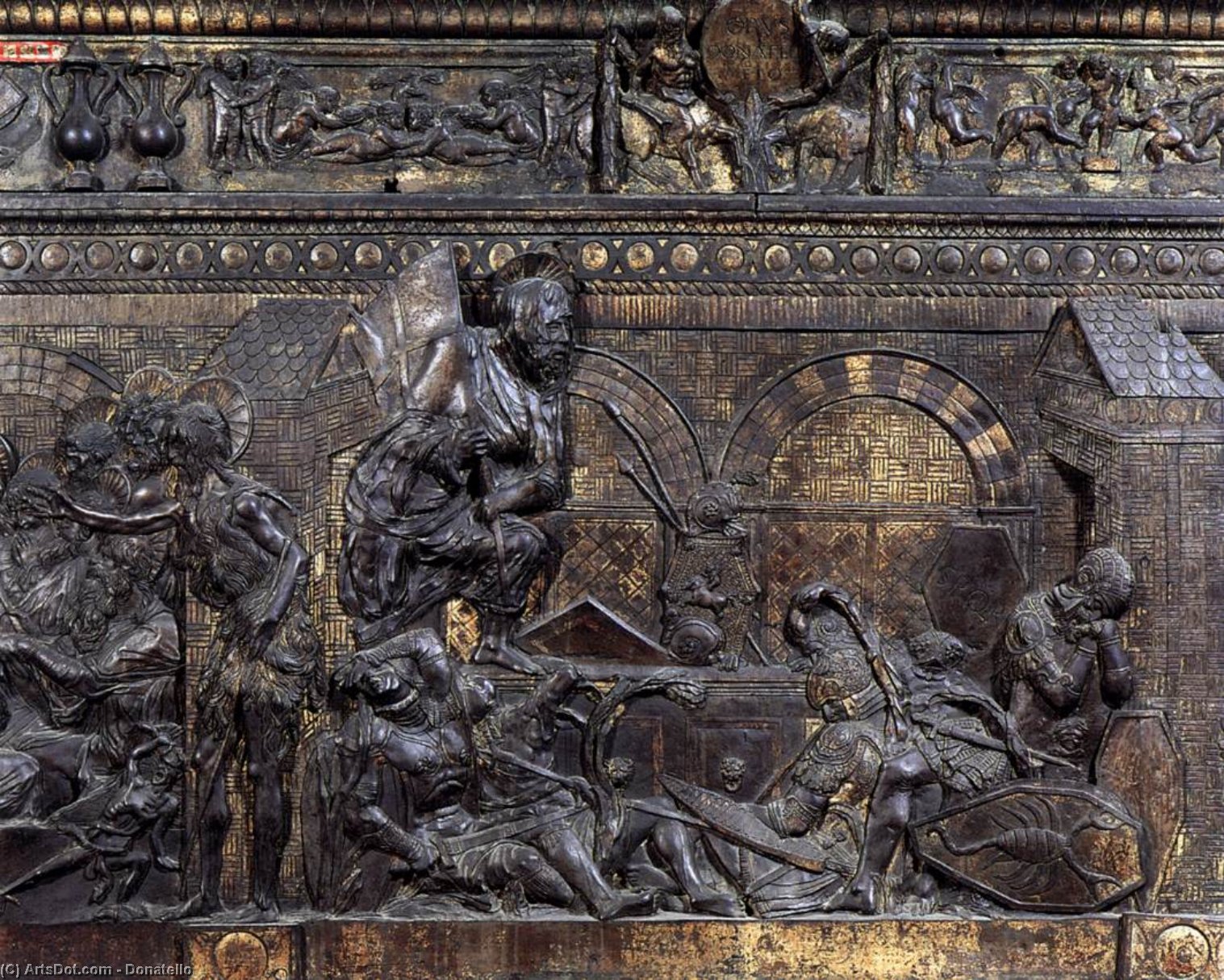
Christ before Pilate and Caiaphas

Explore Donatello's masterpiece, 'Christ before Pilate and Caiaphas,' a monumental bronze sculpture depicting Jesus’s trial before Roman authorities and Jewish leaders—a pivotal moment in Christian history.

Donatello (1386–1466): Florenťanský sochař rané renesance. Pionér samostatného nude sochaření, známý pro expresivní realismus a vliv klasicismu. Jeho mistrovská díla jako David jsou ikonická.

Giclée / Umělecký tisk

Giclée nebo plátěný tisk muzeální kvality s rychlou výrobou a širokou nabídkou povrchových úprav. ( Objednat ručně malovanou reprodukci Přepnout na digitální verzi obrazu)

Standardní velikost
na zakázku
CM
INCH

Vyberte si z našich přednastavených velikostí, které odpovídají původním proporcím díla.

šířka
výška

Můžete zadat vlastní rozměry tak, aby výtvor odpovídal konkrétnímu rámu nebo prostoru. Pokud zvolená velikost nebude odpovídat poměru stran původního obrazu, dílo buď ořížeme, nebo obraz rozšíříme pomocí zrcadlového efektu či jednobarevného okraje. Před zahájením výroby vám bude zaslán digitální náhled k schválení.
Mějte prosím na paměti, že náhled na obrazovce neodráží skutečné oříznutí nebo rozšíření. Pouze digitální náhled přesně zobrazí finální kompozici.
Ačkoliv jsou k dispozici i vlastní rozměry, pro zachování původních proporcí doporučujeme vybrat si rozměr z předdefinovaného seznamu.

Celosvětové doručení () do 2 týdnů namísto standardních 4/5 týdnů. (23 září)

why_choose_icon
Zdarma celosvětová expresní doprava
why_choose_icon
Vysoce kvalitní lněné plátno
why_choose_icon
Úplné pojištění přepravy
why_choose_icon
Záruka vrácení celního poplatku
why_choose_icon
Záruka věrného barevného shodu
why_choose_icon
100dení lhůta pro vrácení zboží (pouze při vadách výroby)
why_choose_icon
100% garance vrácení peněz
why_choose_icon
Sleva při více objednávkách

Celková cena

$ 68

reproduction

Christ before Pilate and Caiaphas

Giclée / Umělecký tisk

Velikost reprodukce

-

Celková cena

$ 68

Rychlé informace

  • Medium: Bronze
  • Artist: Donatello
  • Movement: Early Renaissance
  • Notable elements or techniques: Complex relief sculpture; Anatomical detail
  • Location: San Lorenzo Museum, Florence
  • Year: 1460
  • Influences: Classical Sculpture

Kvíz o umění

U každé otázky je pouze jedna správná odpověď.

Otázka 1:
What artistic movement is Donatello’s Christ before Pilate and Caiaphas primarily associated with?
Otázka 2:
In which museum is the sculpture ‘Christ before Pilate and Caiaphas’ housed?
Otázka 3:
Donatello employed what sculptural technique to create this masterpiece?
Otázka 4:
The sculpture depicts a biblical scene featuring Christ before whom two figures are prominent: Pilate and Caiaphas. What is the significance of this confrontation?
Otázka 5:
What stylistic characteristic distinguishes Donatello’s sculpture from earlier Gothic art?

Donatello’s ‘Christ Before Pilate and Caiaphas’: A Crucible of Renaissance Emotion

Donatello's 1460 bronze sculpture, “Christ Before Pilate and Caiaphas,” stands as a monumental achievement within the burgeoning artistic landscape of the Italian Renaissance. Housed in the San Lorenzo museum in Florence, this work transcends mere biblical representation; it’s a visceral exploration of human drama, political intrigue, and spiritual torment – a testament to Donatello's revolutionary approach to sculpture that profoundly shaped the course of Western art. The sheer density of figures, meticulously rendered in warm bronze tones, immediately draws the viewer into the heart of the scene: Christ, positioned at the apex of the composition, confronts the Roman governor and the Jewish high priest, their faces etched with a potent blend of authority, doubt, and perhaps even veiled judgment.

  • A Masterclass in Renaissance Realism: Donatello’s genius lies not just in his technical skill but in his ability to imbue stone – or in this case, bronze – with palpable emotion. The figures are not idealized abstractions; they possess a raw humanity, evident in the strained expressions and subtly shifting postures that convey the weight of the moment.
  • The Power of Bronze Casting: The sculpture’s creation involved the complex process of bronze casting, a technique perfected by Donatello himself. This method, utilizing molds and molten metal, allowed for incredible detail – from the folds of Christ's garment to the stern features of Pilate – while simultaneously lending the piece an inherent sense of age and gravitas.

Historical Context and Symbolism

Created during a period of intense religious and political upheaval, “Christ Before Pilate and Caiaphas” reflects the anxieties and tensions of its time. The Renaissance was witnessing a renewed interest in classical antiquity, yet simultaneously grappling with the profound questions posed by Christianity. Donatello’s depiction of Christ is deliberately ambiguous, refusing to offer easy answers or simplistic moral judgments. The scene isn't merely a historical record; it’s an allegory for human fallibility and the struggle between good and evil. The inclusion of Roman soldiers and Jewish leaders underscores the political context of Christ’s trial – a microcosm of power struggles and accusations.

  • Pilate’s Hesitation: Pilate's posture, often interpreted as one of reluctant compromise, is particularly compelling. His hands are clasped in a gesture of uncertainty, suggesting the moral dilemma he faced.
  • Caiaphas’s Sternness: Conversely, Caiaphas embodies unwavering authority and religious zeal, his gaze fixed upon Christ with an expression of resolute condemnation.

Technique and Materiality

Donatello's mastery is immediately apparent in the sculpture’s surface treatment. The bronze has been skillfully patinated to achieve a rich, aged appearance, enhancing the sense of history and lending a tactile quality to the work. The artist employed strong lines to define the figures and their drapery, while finer details – such as the expressions on Christ's face and the folds in Pilate’s toga – are rendered with remarkable precision. The use of light and shadow further emphasizes the three-dimensionality of the sculpture, creating a dramatic effect that draws the viewer into the scene. The choice of bronze itself was significant; it was a material associated with strength, durability, and divine authority, perfectly suited to represent this pivotal moment in Christian history.

A Legacy of Innovation

"Christ Before Pilate and Caiaphas" is more than just a beautiful sculpture; it’s a cornerstone of Renaissance art. Donatello's innovative approach – his emphasis on realism, emotional expression, and the exploration of complex human themes – paved the way for generations of artists to come. Its influence can be seen in countless subsequent works, solidifying its place as one of the most important sculptures of the era. A hand-painted reproduction offers a remarkable opportunity to experience this masterpiece firsthand, bringing its power and beauty into your own space.


Biografie umělce

Early Life and Artistic Beginnings

Donato di Niccolò di Betto Bardi, universally known as Donatello, was born in Florence around 1386 – a time of immense artistic ferment within the burgeoning Renaissance. His early life remains somewhat shrouded in mystery, yet it’s clear that his formative years were deeply intertwined with the city's vibrant cultural landscape. Born into a modestly prosperous family—his father, Niccolò di Betto Bardi, was a wool carder – Donatello received an education typical of the era, focusing on the fundamentals of Latin and rhetoric. However, it’s widely believed that his true artistic apprenticeship began within the workshop of Lorenzo Ghiberti, a master sculptor renowned for his groundbreaking bronze doors for the Florence Cathedral (the Duomo). This association proved pivotal, exposing Donatello to the techniques and principles of classical sculpture, which would profoundly shape his distinctive style. The meticulous study of ancient forms – particularly those found in Roman ruins – became a cornerstone of his artistic philosophy, influencing not only his subject matter but also his approach to composition and proportion. Early works like *St. John the Evangelist*, created around 1408-1409, demonstrate this early influence, showcasing a nascent ability to capture both the idealized beauty of classical figures and a growing sense of individual expression.

Key Works and Innovations: A Revolutionary Style

Donatello’s career blossomed during a period of remarkable artistic innovation, and he quickly established himself as a leading figure in the Florentine Renaissance. His most celebrated achievement is undoubtedly *David*, created between 1423 and 1425. This monumental bronze sculpture represented a radical departure from previous depictions of the biblical hero – it was the first freestanding nude male statue since antiquity, a bold statement of humanism and artistic freedom. Unlike earlier representations that emphasized David’s military prowess, Donatello presented him as a youthful, vulnerable figure, imbued with an almost palpable sense of inner strength and contemplation. The subtly expressive face, the carefully rendered musculature, and the dynamic pose all contribute to this remarkable portrayal of human dignity. Beyond *David*, Donatello produced a wealth of significant works, including the dramatic relief panel *The Feast of Herod* (1427-1433) for the Orsanmichele guildhall, showcasing his mastery of perspective and narrative storytelling. His work on the baptismal font in Santa Croce – featuring intricate bronze angels – further cemented his reputation as a virtuoso of both marble and bronze. Donatello’s innovative use of *rilievo schiacciato* (flattened relief) created a unique visual effect, giving depth and dynamism to his sculptures while maintaining a sense of clarity and precision.

The Influence of Classical Antiquity and the Development of Style

Donatello's artistic vision was deeply rooted in the rediscovery of classical antiquity – a defining characteristic of the Renaissance. He meticulously studied Roman sculpture, not merely copying its forms but absorbing its underlying principles of balance, proportion, and anatomical accuracy. This engagement with the past informed his approach to depicting the human figure, leading him to prioritize naturalism and emotional expression over stylized conventions. However, Donatello didn’t simply replicate classical models; he transformed them through a distinctly Renaissance sensibility. His sculptures are characterized by a heightened sense of realism, a dramatic use of light and shadow, and an intense psychological depth. His style evolved considerably throughout his career, moving from the more restrained elegance of his early works to the bolder, more expressive figures of his later period. The *Sacrifice of Isaac* (1453-1460), for example, reveals a starker, more emotionally charged approach, reflecting Donatello’s growing interest in exploring themes of human suffering and mortality. The influence of Michelangelo Buonarroti, who studied under Donatello, is also evident in the latter's work, particularly in his use of dynamic poses and dramatic gestures.

Later Years and Legacy: A Lasting Impact

In his later years, Donatello continued to produce masterpieces that solidified his place as one of the greatest sculptors of all time. His monumental equestrian statue of Gattamelata (1453-1459) in Padua stands as a testament to his skill and ambition – it’s considered the first Renaissance equestrian monument and a revival of an ancient Roman type. The *Judith Slaying Holofernes* (1460s), now housed in the Palazzo Vecchio, Florence, exemplifies Donatello's dramatic flair and mastery of expressive realism. Despite facing challenges in his business dealings – often accepting more commissions than he could fulfill – Donatello’s legacy endures as a pivotal figure in the development of Western art. His innovations in sculpture—particularly his pioneering use of bronze and his emphasis on humanism and emotional expression—inspired generations of artists, including Michelangelo, who greatly admired his work. Donatello's influence can be seen throughout the Renaissance and beyond, shaping the course of sculptural tradition for centuries to come.

Donatello

Donatello

1386 - 1466 , Itálie

Rychlé informace

  • Artistic Movement Or Style: Raná renesance
  • Artists Or Movements Influenced By This Artist: ['Italská renesance']
  • Artists Who Influenced This Artist: ['Klasická sochařství']
  • Date Of Birth: c. 1386
  • Date Of Death: 1466
  • Full Name: Donatello di Niccolò
  • Nationality: Italista
  • Notable Artworks:
    • David
    • St. Louis
    • Sacrifice
  • Place Of Birth: Florence, Itálie
Prozkoumejte umělecká díla uspořádaná podle témat, stylů a charakteristik.