Náhled v interiéru Náhled v AR Koupit ručně malovaný obraz Přepnout na digitální obraz Sdílet
Podrobnosti o díle Průvodce Přidat do oblíbených Stáhnout Podobné položky Rentgenové snímky Slideshow Statistiky

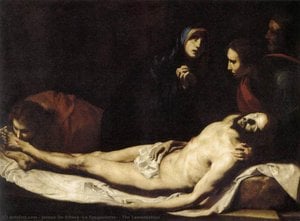
Pietà

Discover Charles Le Brun’s ‘Pietà,’ a breathtaking Baroque masterpiece at the Louvre. Explore its emotional intensity, oil-on-canvas detail & biblical significance – a must-see for art lovers.

Charles Le Brun (1619-1690) byl francouzský malíř a teoretik umění, klíčová postava barokní Francie. Slavně je známý svými rozsáhlými dekorativními pracemi v Paříži a především jako hlavnímu designéru opulentního Versailles, kde vytvořil ikonické prostory.

Giclée / Umělecký tisk

Giclée nebo plátěný tisk muzeální kvality s rychlou výrobou a širokou nabídkou povrchových úprav. ( Koupit ručně malovaný obraz Přepnout na digitální obraz)

Corner sample of the P118B picture frame: tvarovaný polystyren, 5 cm wide and 3 cm thick
P118B Kč10
Corner sample of the P118H picture frame: tvarovaný polystyren, 5 cm wide and 3 cm thick
P118H Kč10
Corner sample of the P118W picture frame: tvarovaný polystyren, 5 cm wide and 3 cm thick
P118W Kč10
Corner sample of the P438Z picture frame: tvarovaný polystyren, 5.5 cm wide and 3.5 cm thick
P438Z Kč10
Corner sample of the P508JH picture frame: tvarovaný polystyren, 7 cm wide and 3.5 cm thick
P508JH Kč12
Corner sample of the P508YH picture frame: tvarovaný polystyren, 7 cm wide and 3.5 cm thick
P508YH Kč12
Corner sample of the P805H picture frame: tvarovaný polystyren, 5 cm wide and 3.5 cm thick
P805H Kč10
Corner sample of the P805Z picture frame: tvarovaný polystyren, 5 cm wide and 3.5 cm thick
P805Z Kč10
Corner sample of the P919BZ picture frame: tvarovaný polystyren, 7 cm wide and 3.5 cm thick
P919BZ Kč10
Corner sample of the P919G picture frame: tvarovaný polystyren, 7 cm wide and 3.5 cm thick
P919G Kč10
Corner sample of the P919XJ picture frame: tvarovaný polystyren, 7 cm wide and 3.5 cm thick
P919XJ Kč10
Corner sample of the P959ZH picture frame: tvarovaný polystyren, 5 cm wide and 3 cm thick
P959ZH Kč10
Corner sample of the P968JZ picture frame: tvarovaný polystyren, 6 cm wide and 4 cm thick
P968JZ Kč12
Corner sample of the W106C picture frame: masivní dřevo, 5 cm wide and 3 cm thick
W106C Kč8
Corner sample of the W218G picture frame: masivní dřevo, 5 cm wide and 3 cm thick
W218G Kč10
Corner sample of the W218JH picture frame: masivní dřevo, 5 cm wide and 3 cm thick
W218JH Kč8
Corner sample of the W218Y picture frame: masivní dřevo, 5 cm wide and 3 cm thick
W218Y Kč10
Corner sample of the W307PJ picture frame: masivní dřevo, 6 cm wide and 3 cm thick
W307PJ Kč10
Corner sample of the W316G picture frame: masivní dřevo, 6 cm wide and 3 cm thick
W316G Kč10
Corner sample of the W316PJ picture frame: masivní dřevo, 6 cm wide and 3 cm thick
W316PJ Kč8
Corner sample of the W316Y picture frame: masivní dřevo, 6 cm wide and 3 cm thick
W316Y Kč10
Corner sample of the W398PJ picture frame: masivní dřevo, 5 cm wide and 3 cm thick
W398PJ Kč8
Corner sample of the W4111J picture frame: masivní dřevo, 6.5 cm wide and 3.5 cm thick
W4111J Kč10
Corner sample of the W500HY picture frame: masivní dřevo, 7 cm wide and 5 cm thick
W500HY Kč15
Corner sample of the W500JH picture frame: masivní dřevo, 7 cm wide and 5 cm thick
W500JH Kč15
Corner sample of the W692G picture frame: masivní dřevo, 8 cm wide and 4 cm thick
W692G Kč12
Corner sample of the W849H picture frame: masivní dřevo, 5 cm wide and 3 cm thick
W849H Kč8
Corner sample of the W940BG picture frame: masivní dřevo, 7.5 cm wide and 4.5 cm thick
W940BG Kč15
Corner sample of the W953PJ picture frame: masivní dřevo, 6 cm wide and 3.5 cm thick
W953PJ Kč8

Standardní velikost
na zakázku
CM
INCH

Vyberte si z našich přednastavených velikostí, které odpovídají původním proporcím díla.

šířka
výška

Zadejte šířku a výšku, které potřebujete pro váš rám nebo stěnu. Tisk lze pouze oříznout, nikdy však nelze zvětšit obraz nad jeho původní rozměr, proto při výběru jiného formátu dochází ke ztrátě části obrazu. Před samotným tiskem vám zašleme digitální náhled k schválení. Obraz zobrazený na této stránce nenabízí skutečný výřez — ten uvidíte pouze v náhledu.

Celosvětové doručení () do 2 týdnů namísto standardních 4/5 týdnů. (26 říjen)

Zdarma celosvětová expresní doprava
Vysoce kvalitní lněné plátno
Kompletní pojištění přepravy
Záruka vrácení celního poplatku
Záruka věrného barevného souladu
100dení lhůta pro vrácení zboží (pouze při vadách výroby)
100% záruka vrácení peněz
Sleva při více objednávkách

Celková cena

Kč 1456

Pietà

Giclée / Umělecký tisk

Rozměry reprodukce

-

Celková cena za vybrané možnosti reprodukcí

Kč 1456

Rychlé informace

  • Year: 1643
  • Dimensions: 146 x 222 cm
  • Influences: Nicolas Poussin
  • Subject or theme: Biblical narrative; Suffering; Faith
  • Title: Pietà
  • Notable elements or techniques: Dramatic lighting; Detailed drapery

Artový kvíz

U každé otázky je pouze jedna správná odpověď.

Otázka 1:
What is the primary subject matter of Charles Le Brun’s ‘Pietà’?
Otázka 2:
Where is Charles Le Brun’s ‘Pietà’ currently housed?
Otázka 3:
What artistic movement is Charles Le Brun associated with?
Otázka 4:
Which technique did Le Brun utilize in creating ‘Pietà’?
Otázka 5:
What is a notable characteristic of the lighting employed in ‘Pietà’?

A Moment Frozen in Time: The Emotional Resonance of Le Brun’s Pietà

In the hallowed stillness of the Musée du Louvre, there exists a canvas that does more than merely depict a biblical event; it captures the very essence of human grief. Charles Le Brun’s Pietà, painted in 1643, is a monumental achievement of the Baroque era, serving as a profound meditation on sorrow, faith, and the weight of mortality. Originally commissioned for the Sainte-Chapelle in Paris—a sanctuary dedicated to the relics of Christ—this oil on canvas was designed to evoke spiritual contemplation through its sheer emotional gravity. As viewers encounter the work, they are not just observing a scene from the Passion; they are invited into a sacred space where the boundaries between the divine and the human dissolve.

The painting centers on the poignant aftermath of the crucifixion, presenting the Virgin Mary cradling the lifeless form of her son. Le Brun masterfully employs a pyramidal composition, a technique that provides a sense of structural stability to an otherwise turbulent emotional scene. This geometric arrangement directs the eye upward, guiding the observer from the heavy, slumped weight of Christ’s body toward the serene yet heartbroken countenance of Mary. The interplay of light and shadow, known as chiaroscuro, is utilized with breathtaking precision. A singular, dramatic light source illuminates the central figures against a dark, indistinct background, stripping away all worldly distractions to focus the soul entirely on the tragedy unfolding within the frame.

Mastery of Technique and the Baroque Spirit

To understand the Pietà is to understand the hand of Charles Le Brun, a titan of French art who shaped the aesthetic standards of the age. His technique reflects the rigorous training he received under masters like Simon Vouet and his transformative years in Rome alongside Nicolas Poussin. In this work, Le Brun achieves a perfect balance between dramatic realism and idealized beauty. The texture of the painting is remarkably rich; one can almost feel the heavy, flowing drapery of Mary’s robes as they cascade around the figures, adding a sense of dynamic movement to the stillness of death. His brushwork captures the subtle nuances of skin, the limpness of muscle, and the intricate folds of fabric, all rendered with an exacting detail that speaks to his mastery of the medium.

Beyond its technical brilliance, the artwork serves as a profound symbolic vessel. The scene is steeped in Christian iconography, representing the ultimate sacrifice and the enduring devotion of the faithful. The presence of figures like Joseph of Arimathea and Mary Magdalene adds layers of communal mourning, yet the focus remains on the intimate bond between mother and son. For the collector or the lover of fine art, this piece offers more than just visual splendor; it provides a window into the 17th-century French soul. It is an ideal centerpiece for those seeking to infuse a space with historical depth, intellectual rigor, and a sense of timeless, quiet majesty.

Otázky a odpovědi

Jak spolu v díle "Pietà" ladí barvy?

Barvy díla „Pietà“ od Charles Le Brun vykazují Softly Mixed Palette harmonii. Harmonie popisuje vzájemný vztah barev k sobě navzájem.

Jak lze vysvětlit situaci s autorskými právy u díla „Pietà“ od Charles Le Brun?

Dílo „Pietà“ od Charles Le Brun spadá do volného užívání (v rámci volného užití – autorská práva vypršela). Autorské právo vyprší po určité době od úmrtí umělce, ke kterému došlo v roce 1690.

Patří dílo „Pietà“ mezi slavná děl směru Baroque?

Dílo „Pietà“ od Charles Le Brun je klasifikováno jako Iconic a patří k享有 směru Baroque.


Biografie umělce

Early Life and Training

Charles Le Brun, narozený v Paříži roku 1619, už od dětství projevoval mimořádný talent pro umění. V pouhých jedenácti letech vstoupil do dílny Simona Voueta, významného malíře doby Karla II., a získal ochranu šlechtice Charlese Séguiera. Tento raný kontakt s renomovaným umělcem položil základy jeho budoucího uměleckého směřování. Le Brun dále studoval pod vedením Françoise Perriera, dalšího vlivného malíře, čímž rozšířil své znalosti o techniku a teorii malby. Jeho rané úspěchy, včetně počátečních objednávek od kardinála Armand-Jeana du Plessis de Richelieu ve věku patnácti let, dokazovaly jeho mimořádné schopnosti a rychlý pokrok v umění.

A Pivotal Roman Period

Klíčovým obdobím v jeho uměleckém vývoji byla čtyři roky strávené v Římě (1642-1646). Během této doby pracoval pod vedením Nicolase Poussina, jednoho z nejvýznamnějších představitelů barokního malířství. Poussinova vliv byl hluboký a zásadní; Le Brun studoval starověké římské sochy, kopíroval díla Rafaela a absorboval estetické principy italských mistrů. Tato zkušenost formovala jeho umělecký styl a poskytla mu teoretické porozumění umění, které bylo klíčové pro jeho pozdější úspěch. V Římě se Le Brun setkal s dalšími talentovanými umělci a stal se součástí živé umělecké komunity, která ovlivnila jeho vývoj.

Return to Paris and Early Recognition

Po návratu do Paříže v roce 1646 rychle získal Le Brun uznání a mecenáse. Jeho raný styl byl ovlivněn Vouetem a Poussinem, ale postupně vyvíjel vlastní osobitější přístup k malbě. Jeho umění se stalo synonymem elegance, dynamiky a bohatých barev – charakteristických rysů barokního stylu. Le Brun začal přijímat rozmanité zakázky, od portrétů šlechticů až po dekorativní obrazy pro luxusní rezidence. Jeho talent a schopnost se rychle prosazovaly, čímž si vybudoval pozici jednoho z nejvýznamnějších malířů své doby.

The Reign of Louis XIV and Royal Patronage

Vrchol jeho kariéry nastal za vlády Ludvíka XIV., který ho v roce 1664 jmenoval prvním malířem krále. Tato pozice mu přinesla obrovský vliv na francouzské umění a umožnila mu ovládat umělecké trendy ve zemi. Le Brun hrál klíčovou roli při zdobení Paláce Versailles, vytvořil ikonické dílo jako jsou Ambassadeurská schodiště (Escalier des Ambassadeurs), Zrcadlová síň (Hall of Mirrors) a Pokoj míru a války (Chambre de la Paix et de la Guerre). Tyto projekty nejen demonstrovaly jeho mistrovské techniku, ale také definovaly estetické standardy královského umění. Le Brun byl také zodpovědný za návrhy soch v zahradách Versailles, čímž dokázal svou univerzálnost jako umělce.

Artistic Style and Legacy

Le Brunův styl se vyvíjel od přísného dodržování klasických modelů k dynamičtějšímu a expresivnějšímu baroknímu stylu. Stal se známý svými velkolepými historickými malbami, portréty a dekorativními pracemi, často charakterizovanými dramatickými kompozicemi, bohatými barvami a precizním provedením. Jeho série obrazů zobrazujících historii Alexandra Velikého ukázala jeho schopnost kombinovat historickou narraci s uměleckým rozměrem. Charles Le Brun byl nejen talentovaný malíř, ale i významný teoretik umění, který ovlivnil vývoj francouzského umění po mnoho let a zanechal trvalý odkaz v historii umění.

Charles Le Brun

Charles Le Brun

1619 - 1690 , Francie

Rychlé informace o umělci

  • Artistic Movement Or Style: Baroko
  • Artists Or Movements Influenced By This Artist: ['Francouzské umění']
  • Artists Who Influenced This Artist:
    • Simon Vouet
    • Nicolas Poussin
  • Date Of Birth: 24. února 1619
  • Date Of Death: 12. února 1690
  • Full Name: Charles Le Brun
  • Nationality: Francouzský
  • Notable Artworks:
    • Ambasadorská schodiště
    • Zrcadlový sál
    • Mír a válka
  • Place Of Birth: Paříž, Francie