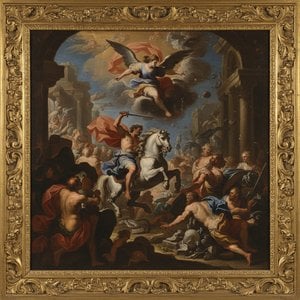
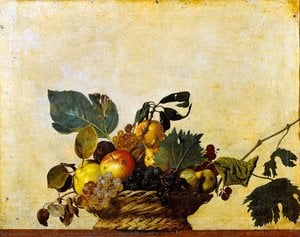
The Weight of Silence: Caravaggio’s ‘Untitled (92)’ – A Study in Human Anguish
Michelangelo Merisi da Caravaggio's “Untitled (92)” is not merely a depiction of a man in distress; it’s a profound exploration of the human condition, rendered with the artist’s signature mastery of light and shadow. This painting, shrouded in mystery regarding its precise date and location within his prolific output, nevertheless possesses an immediate and unsettling power. The subject, a figure seated on the floor, his hands clasped tightly over his knees, embodies a palpable sense of inward turmoil – a silent scream trapped within a posture of profound contemplation. The composition is strikingly simple yet intensely effective; the limited palette—primarily deep reds, browns, and blacks—amplifies the drama and draws the viewer’s eye directly to the man's face, etched with an expression that speaks volumes without uttering a single word.
A Baroque Masterpiece Forged in Shadow – Caravaggio’s Technique
Caravaggio’s genius lay not just in his dramatic subject matter but also in his revolutionary technique. He employed what he termed “tenebrism,” a theatrical use of light and dark, to create an almost hyperrealistic effect. Here, the darkness dominates, enveloping the figure and suggesting a world of uncertainty and despair. A single, unseen source of illumination cuts through this gloom, highlighting the man’s face, hands, and the subtle details of his clothing – a worn red shirt that hints at a life lived with hardship. Notice how Caravaggio uses chiaroscuro—the sharp contrast between light and dark—to sculpt the figure's form, giving it an almost three-dimensional quality. This technique wasn’t simply stylistic; it served to heighten the emotional impact of the scene, forcing the viewer to confront the subject’s suffering directly.
Symbolism Within the Depths – Interpreting the Details
Beyond the immediate portrayal of distress, “Untitled (92)” is rich in symbolic elements. The knife resting on the left side of the image immediately introduces a note of violence and potential conflict—a past trauma perhaps, or an ongoing threat. The bowl, positioned centrally, could represent sustenance consumed before this moment of despair, suggesting a previous state of well-being now irrevocably lost. Crucially, the man’s downward gaze is key; it signifies introspection, regret, and possibly even self-condemnation. The fact that he appears to be looking at the ground suggests a grounding in earthly realities, a stark contrast to the turmoil within his mind. Considering Caravaggio's own turbulent life – marked by poverty, legal troubles, and early loss – one can’t help but see echoes of his personal struggles reflected in this haunting portrait.
Connections & Context: Caravaggio’s Influence and Beyond
Caravaggio’s influence on subsequent generations of artists is undeniable. He paved the way for Baroque painting, shifting away from idealized Renaissance forms towards a more realistic and emotionally charged style. His use of everyday people as subjects—rather than noble figures—was equally revolutionary. Interestingly, research reveals parallels with other works by Caravaggio, such as “Medusa,” where he similarly explored themes of violence, psychological torment, and the confrontation between beauty and horror. The image’s stark realism also connects it to Mughal art, particularly the intricate crowd scenes and psychological dramas found in Shah Jahan's albums – a testament to Caravaggio’s ability to evoke powerful emotions through simple compositions and masterful use of light. The photograph “Untitled 92” by Cindy Sherman, while vastly different in medium, shares a similar exploration of identity and vulnerability, demonstrating the enduring power of Caravaggio’s artistic vision.
WahooArt offers meticulously crafted hand-painted reproductions of this iconic work, allowing you to experience the raw emotion and dramatic intensity of Caravaggio's masterpiece in stunning detail. Each reproduction is created by skilled artists using traditional techniques, ensuring an authentic representation of this timeless portrait. Explore our collection today and bring a piece of art history into your home or office.
Otázky a odpovědi
Jak "untitled (92)" vyvažuje světlo a stín?
„untitled (92)“ má celkovou jasnost deep_shadow a jeho luminanci je Soft Shadow.
Co zachycuje dílo „untitled (92)“ od Karavaggio a jakou náladu vyvolává?
„untitled (92)“ od Karavaggio zachycuje man, distress, knife, bowl, beard, shadow, conflict v Dramatic náladě. Předmět a atmosféra dohromady definují toto dílo.
Jaká velikost "untitled (92)" se doporučuje pro Living Room?
Doporučená kombinace pro dílo „untitled (92)“ od Karavaggio: tisk o velikosti Large do místnosti typu Living Room.



 Náhled v interiéru
 Přepnout na tisk
 Sdílet
 Sdílet
 Podrobnosti o díle
 Průvodce

 Stáhnout
 Podobné položky
 Rentgenové snímky
 Slideshow
 Q&A
Q&A Statistiky

 Zobrazit více






































 Skleněná varianta je dostupná pouze u rozměrů menších než 110 cm