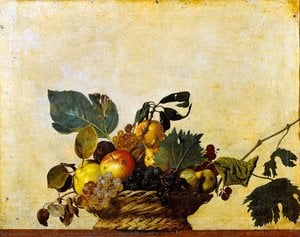
A Vision of Suffering and Divine Grace
Michelangelo Merisi da Caravaggio, a name synonymous with the visceral power of Baroque painting, was born in Milan in 1571, a period defined by both artistic dynamism and profound social anxieties. His formative years were tragically marked by loss; plague swept through his hometown, claiming the lives of his father and grandfather when he was just six years old—experiences that instilled within him an unwavering empathy for human vulnerability and resilience—themes which would become central to his oeuvre. Early training under Simone Peterzano, a former pupil of Titian, provided him with foundational Renaissance skills, yet it was in Rome, arriving around 1592, that Caravaggio truly blossomed, albeit amidst considerable hardship. The city’s vibrant artistic milieu fostered experimentation and challenged established conventions, offering him the space to forge his distinctive style—a style characterized by its uncompromising realism and masterful manipulation of chiaroscuro, or dramatic lighting—that would irrevocably alter the course of art history.
- Subject Matter: The painting depicts a poignant religious scene centered around a woman cradling her infant son, positioned against a backdrop of shadowy figures engaged in an act of compassion.
- Style: Caravaggio’s signature tenebrism—the stark contrast between light and dark—dominates the composition, creating an atmosphere of intense drama and psychological depth. This technique elevates the scene beyond mere depiction, immersing the viewer in a realm of heightened emotion.
Technique and Innovation
Caravaggio’s revolutionary approach to painting stemmed from his meticulous observation of human anatomy and his masterful use of pigment—primarily oil paints—applied with impasto, creating textured surfaces that capture the physicality of his subjects. He eschewed idealized representations favored by Renaissance artists, opting instead for unflinching realism, portraying figures with palpable emotion and capturing subtle nuances of expression. This commitment to naturalism was bolstered by Caravaggio’s innovative use of light, which he employed not merely as illumination but as a tool for storytelling—drawing the eye directly to key elements within the composition and conveying profound spiritual significance. The artist's meticulous attention to detail extended beyond mere anatomical accuracy; he painstakingly rendered fabrics, textures, and facial expressions with astonishing precision, achieving an unprecedented level of visual fidelity.
- Material: Oil paint on canvas
- Technique: Impasto (thickly applied paint) combined with chiaroscuro lighting
Historical Context and Symbolism
Painted circa 1606-1607, *Untitled (8028)* emerged during Caravaggio’s Roman period—a time of considerable artistic ferment and papal patronage. The painting reflects the Baroque preoccupation with religious fervor and emotional intensity, mirroring the broader cultural landscape of the era. The woman’s posture conveys tenderness and maternal devotion, symbolizing the nurturing role of faith in safeguarding humanity. Simultaneously, the shadowy figures surrounding her represent judgment and divine providence—a reminder that earthly existence is subject to a higher power. The horse, prominently featured in the background, serves as an emblem of strength and nobility, subtly reinforcing the painting’s overarching message of spiritual fortitude.
Symbolism: Maternal devotion, Divine Judgment, Spiritual Resilience
Emotional Resonance
Caravaggio's masterpiece transcends mere visual representation; it compels viewers to confront profound questions about compassion, faith, and mortality. The dramatic interplay of light and darkness evokes a visceral response—a feeling of unease mingled with awe—drawing the spectator into the emotional core of the scene. The artist’s ability to convey psychological complexity is remarkable, capturing not only physical appearance but also inner turmoil—a testament to Caravaggio's unparalleled skill in communicating human experience. *Untitled (8028)* remains a powerful reminder that art can illuminate the deepest recesses of the human spirit and inspire contemplation on matters of faith and morality.
Otázky a odpovědi
Jaká je doporučená velikost tisku pro „untitled (8028)“ od Karavaggio?
Pro dílo „untitled (8028)“ se doporučuje tisk ve velikosti Large. K dispozici jsou i jiné velikosti při zachování stejných proporcí.
Jak sytá je paleta díla "untitled (8028)"?
Dílo „untitled (8028)“ od Karavaggio je zachyceno s Subtle Color saturací.
Kdo prodává ručně malované kopie díla „untitled (8028)“ od Karavaggio?
„untitled (8028)“ je dostupná jako ručně malovaná olejová reprodukce na lněném plátně. Objednávku můžete zadat na její stránce Ručně malovaná reprodukce, kde si můžete vybrat z různých rozměrů.



 Náhled v interiéru
 Přepnout na tisk
 Sdílet
 Sdílet
 Podrobnosti o díle
 Průvodce

 Stáhnout
 Podobné položky
 Rentgenové snímky
 Slideshow
 Q&A
Q&A Statistiky
 Zobrazit více






































 Skleněná varianta je dostupná pouze u rozměrů menších než 110 cm