Náhled Náhled v AR Přepnout na tisk Přepnout na digitální obraz Sdílet
Podrobnosti o díle Přidat do oblíbených Stáhnout Podobné položky Rentgenové snímky Slideshow Statistiky

Paule Gobillard Painting

Discover Berthe Morisot's 'Paule Gobillard Painting,' a captivating Impressionist portrait capturing domestic life with delicate brushstrokes and serene beauty. Explore her legacy at the Musée Marmottan Monet.

Berthe Morisotová: Pionýrka impresionismu s intimními portréty a jemným zachycením světla. Objevte její jedinečný styl a dědictví vedle Édouarda Maneta.

Ručně malovaná olejová reprodukce

Ručně malovaná olejná barva na plátně ve vašem zvoleném rozměru i s rámem, vyrobená našimi umělci na zakázku. ( Přepnout na tisk Přepnout na digitální obraz)

P118B $10
P118H $10
P118W $10
P438Z $10
P508JH $12
P508YH $12
P805H $10
P805Z $10
P919BZ $10
P919G $10
P919XJ $10
P959ZH $10
P968JZ $12
W106C $8
W218G $10
W218JH $8
W218Y $10
W307PJ $10
W316G $10
W316PJ $8
W316Y $10
W398PJ $8
W4111J $10
W500HY $15
W500JH $15
W692G $12
W849H $8
W940BG $15
W953PJ $8

Standardní velikost
na míru
CM
INCH

Vyberte si z našich přednastavených velikostí, které odpovídají původním proporcím díla.

šířka
výška

Můžete zadat vlastní rozměry pro konkrétní rám nebo prostor. Pokud se vámi vybraná velikost neshoduje s proporcemi původního obrazu, dílo buď ořízneme, nebo jej doplníme ručně malovanými prvky. Před zahájením výroby vám bude zaslán digitální náhled ke schválení.
Upozorňujeme, že náhled na obrazovce neodpovídá skutečnému ořezu ani rozšíření. Pouze digitální náhled přesně zobrazí finální kompozici.
Ačkoliv je možné zvolit vlastní velikost, pro zachování původních proporcí doporučujeme vybrat rozměr z předdefinovaného seznamu.

Příklady možných změn: Nahrazení obličeje vlastní fotografií; Přidání domácího mazlíčka (např. nahrazení kočky psem); Vložení skrytého vzkazu do pozadí; Změna krajiny nebo prvků v pozadí.
Po přijetí objednávky vám tým WahooArt.com zašle e-mail s pokyny a poskytne náhledovou verzi.

Celosvětová doprava () za 3–4 týdny namísto standardních 5 týdnů. (16 září). Bez kompromisů v kvalitě.

why_choose_icon
Zdarma celosvětová expresní doprava
why_choose_icon
Vysoce kvalitní lněné plátno
why_choose_icon
Kompletní přepravní pojištění
why_choose_icon
Záruka vrácení celního poplatku
why_choose_icon
Záruka přesného barevného shodu
why_choose_icon
100dená lhůta pro vrácení zboží (pouze při vadách)
why_choose_icon
100% garance vrácení peněz
why_choose_icon
Sleva při hromadné objednávce

Celková cena

$ 272

reproduction

Paule Gobillard Painting

Technika reprodukce

Rozměry reprodukce

-

Celková cena za výběr

$ 272

Základní informace

  • Artist: Berthe Morisot
  • Year: 1886
  • Influences:
    • Morisot
    • Corot
  • Artistic style: Realist, Impressionist
  • Dimensions: 85 x 94 cm
  • Movement: Impressionism
  • Location: Musée Marmottan Monet, Paris

Kvíz o umění

U každé otázky je pouze jedna správná odpověď.

Otázka 1:
What is the primary subject depicted in Berthe Morisot’s ‘Paule Gobillard Painting’?
Otázka 2:
In what year was ‘Paule Gobillard Painting’ created?
Otázka 3:
Which museum currently houses ‘Paule Gobillard Painting’?
Otázka 4:
Berthe Morisot is considered a significant figure in the Impressionist movement. What characteristic best describes her approach to painting?
Otázka 5:
The painting includes elements such as a vase and a clock. What do these details primarily suggest about the scene?

A Moment of Domestic Grace: Exploring Berthe Morisot’s Paule Gobillard Painting

Berthe Morisot's "Paule Gobillard Painting," a captivating portrait completed in 1886, offers a rare glimpse into the quiet intimacy of everyday life during the Impressionist era. More than simply a depiction of a young woman, it’s a study in light, color, and the subtle nuances of human connection—a testament to Morisot's remarkable ability to capture fleeting moments of beauty within the domestic sphere. The painting resides at the Musée Marmottan Monet in Paris, a fitting home for this delicate yet powerful work, surrounded by other masterpieces of the Impressionist movement.
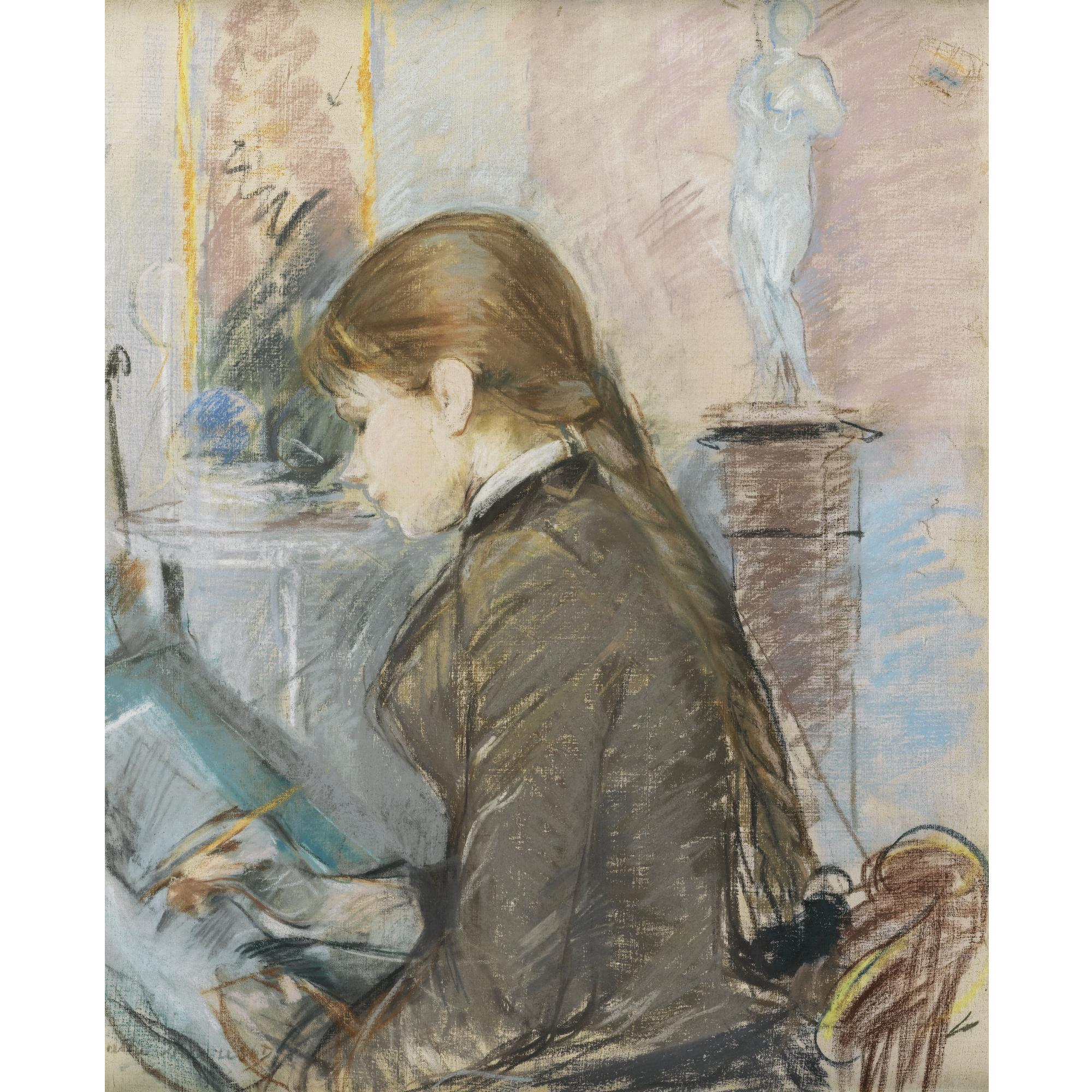
Paule Gobillard Painting by Berthe Morisot

At first glance, the scene is remarkably simple: Paule Gobillard, a niece of Morisot and daughter of Yves Gobillard, sits poised before a chair, her hands resting gently on a small table. She holds a plate or basket – its contents obscured, inviting the viewer’s imagination to fill in the details. The room itself is bathed in soft light, filtered through the window, creating an atmosphere of serene tranquility. Yet, it's within these seemingly ordinary elements that Morisot’s genius shines through.

The Impressionist Palette and Technique

Morisot was a master of capturing the ephemeral qualities of light and color—a hallmark of the Impressionist movement. She employed loose, broken brushstrokes, layering hues to create an effect of shimmering luminosity. Notice how she uses delicate washes of pinks, blues, and greens to define the fabrics and shadows, avoiding sharp outlines or precise details. This technique allows the colors to blend and mingle, mimicking the way light actually interacts with surfaces. The painting’s composition is carefully balanced, drawing the eye to Paule's face—her expression serene and contemplative. Morisot’s use of a limited palette contributes to the painting’s overall sense of harmony and tranquility.

The choice of canvas size – 85 x 94 cm – further enhances the intimacy of the scene. It feels as though we are invited into a private moment, observing a familiar domestic tableau. The brushwork is remarkably free and expressive, reflecting Morisot’s commitment to capturing the immediacy of her observations rather than creating a meticulously rendered representation.

A Portrait of Family and Era

“Paule Gobillard Painting” offers a poignant glimpse into the lives of women during the late 19th century. Berthe Morisot herself was a pioneering female artist in a male-dominated field, often painting scenes of domestic life—a subject that was typically relegated to the role of a secondary genre. By focusing on Paule Gobillard, Morisot elevates this everyday subject matter, imbuing it with a sense of dignity and grace. The inclusion of the vase and chair suggests a comfortable, familiar setting – a space for quiet contemplation and connection.

The painting’s historical context is also significant. It was created during a period of rapid social change in France, as industrialization transformed urban landscapes and traditional ways of life. Morisot's work reflects this shift, capturing the lingering traces of rural beauty amidst the encroaching modernity. The portrait speaks to the quiet resilience and understated elegance of women navigating these changing times.

Collecting a Legacy: Reproductions and Beyond

For art enthusiasts seeking to experience the beauty and emotional depth of “Paule Gobillard Painting,” high-quality reproductions are readily available through platforms like WahooArt.com, offering meticulously crafted oil painting recreations that faithfully capture Morisot’s artistic vision. This allows a wider audience to appreciate the nuances of her technique and the profound insights she offers into the human experience. Consider this piece not just as a beautiful image, but as a window into a specific moment in art history—a testament to the enduring power of Impressionism.


Biografie umělce

A Life Immersed in Light and Intimacy

Berthe Morisot, born in Bourges, France, in 1841, emerged as a pivotal figure within the Impressionist movement, yet her story extends far beyond simply being a “female Impressionist.” To define her solely by gender diminishes the profound originality of her artistic vision and her unwavering commitment to capturing the fleeting moments of modern life. Descended from a bourgeois family with artistic lineage – she was related to the celebrated Rococo painter Jean-Honoré Fragonard – Morisot received an education uncommon for women of her era, one that nurtured her innate talent and fostered a lifelong dedication to painting. Early lessons with Geoffroy-Alphonse Chocarne and Joseph Guichard provided foundational skills, but it was exposure to the masterpieces within the Louvre, copying works by the Old Masters, that truly ignited her artistic sensibility. This period of rigorous training laid the groundwork for her later explorations of light, color, and form. The influence of Jean-Baptiste-Camille Corot proved particularly significant; his emphasis on *plein air* painting – working outdoors directly from nature – became a cornerstone of Morisot’s approach, allowing her to capture the ephemeral qualities of light and atmosphere with remarkable sensitivity.

Navigating the Impressionist Circle

Morisot's artistic journey intertwined closely with that of Édouard Manet, whom she met in 1864. Their relationship was one of mutual respect and intellectual exchange, with Manet serving as a mentor and friend. He painted her numerous times, immortalizing her presence within his own evolving style. However, Morisot wasn’t merely a subject; she actively participated in the burgeoning Impressionist movement, becoming a founding member alongside Monet, Degas, Renoir, and Pissarro. In 1874, she boldly exhibited with this group of “rejected” artists, defying the conservative standards of the official Salon. This first Impressionist exhibition marked a turning point in art history, challenging traditional academic conventions and paving the way for new modes of artistic expression. Morisot participated in nearly all subsequent Impressionist exhibitions, consistently showcasing her unique perspective and solidifying her position within the avant-garde. Her work, often depicting intimate scenes of domestic life – women reading, mothers with children, leisurely moments in gardens – offered a distinctly feminine gaze, challenging prevailing societal norms and expanding the scope of acceptable subject matter for female artists.

A Distinctive Artistic Voice

What sets Morisot apart is not simply *what* she painted, but *how* she painted it. Her brushwork is characterized by its delicate fluidity, a lightness of touch that conveys an impression of spontaneity and immediacy. She masterfully employed broken color – applying small strokes of pure pigment side-by-side to create a shimmering effect of light and atmosphere. Unlike some of her Impressionist colleagues who focused on grand landscapes or bustling cityscapes, Morisot often chose intimate interior scenes and portraits, exploring the nuances of human relationships and the quiet beauty of everyday life. Her palette is typically soft and harmonious, favoring pastel shades and subtle gradations of color. This isn’t to say her work lacks strength; rather, it possesses a refined elegance and emotional depth that resonates with viewers even today. Critics like Gustave Geffroy recognized this unique quality, hailing her as one of “les trois grandes dames” of Impressionism – alongside Marie Bracquemond and Mary Cassatt – acknowledging her significant contribution to the movement.

Key Works and Influences

Morisot’s artistic development was shaped by a diverse range of influences. Beyond Corot's *plein air* approach, she deeply admired the works of the Old Masters, particularly those depicting light and atmosphere. The meticulous detail and compositional structure of artists like Jean-Auguste-Dominique Ingres provided a framework for her own explorations of form and perspective. However, it was Manet’s innovative use of color and his willingness to challenge academic conventions that had the most profound impact on her artistic style. Her early portraits, such as *Portrait of Madame Morisot* (1870), demonstrate this influence, capturing the sitter's personality with a subtle blend of realism and Impressionistic brushwork. Later works, like *The Cradle* (1872) and *Woman at Her Toilette* (1876), showcase her growing mastery of light and color, as well as her ability to capture fleeting moments of domestic intimacy. The influence of Japanese prints, which were gaining popularity in Europe during this period, can also be seen in Morisot’s compositions – particularly her use of asymmetrical arrangements and flattened perspectives.

Legacy and Historical Significance

Berthe Morisot’s life was tragically cut short in 1895, but her artistic legacy endures. Married to Eugène Manet, brother of Édouard, she navigated a world that often underestimated female artists, yet she persevered with unwavering determination. She exhibited under her full maiden name – a subtle act of independence and self-assertion – and consistently challenged conventional expectations. Her work continues to captivate audiences with its delicate beauty, emotional honesty, and innovative technique. Morisot’s influence extends beyond the realm of Impressionism; she paved the way for future generations of female artists, demonstrating that women could achieve artistic excellence and contribute meaningfully to the evolution of art history. Today, her paintings are held in prestigious collections around the world, serving as a testament to her enduring talent and her pivotal role in shaping modern art. Woman in the Green Dress, *The Cradle*, and *Summer’s Day* remain iconic examples of her mastery, inviting viewers into a world of light, intimacy, and quiet contemplation.
Berthe Morisotová

Berthe Morisotová

1841 - 1895 , Francie

Rychlé fakta

  • Artistic Movement Or Style: Impresionismus
  • Artists Or Movements Influenced By This Artist: ['Impresionisté']
  • Artists Who Influenced This Artist:
    • Corot
    • Manet
  • Date Of Birth: 14. ledna 1841
  • Date Of Death: 2. března 1895
  • Full Name: Berthe Morisotová
  • Nationality: Francouzská
  • Notable Artworks:
    • Žena v zeleném
    • Házení na ručník
    • Lektora
  • Place Of Birth: Bourges, Francie
Prozkoumejte umělecká díla uspořádaná podle témat, stylů a charakteristik.



































