Samuel Hoffmann, 1595 – 1649

Картини на Samuel Hoffmann: 9-те най-известни произведения, подредени по рейтинг

Най-известната картина на Samuel Hoffmann е Portrait of an Old Man (1638), разположена в Rijksmuseum, Амстердам. С Dead game and four figures (1612) и The Countess of Mansfeldt (1628) се допълват трите произведения, които всеки разпознава. Нашият каталог включва 10 произведения на Samuel Hoffmann; 9-те по-долу са най-гледаните от света, всяко от тях с годината си, музея, в който се съхранява, и причината за неговата значимост.

Класирани според нашия коефициент за популярност, който съчетава търсенията, посещенията и поръчките за всяко произведение. Обновено Ноември 2026. Всяко шедьовър на тази страница може да бъде поръчано като маслено репродукция на ръка с музейно качество или като художествен принт, в избран от Вас размер.

Портрет на Samuel Hoffmann
Samuel Hoffmann · 1595 – 1649
Роден · починал
1595 – 1649
Работи в нашия каталог
10
Най-известни
Portrait of an Old Man (1638)
Най-голям брой творби в
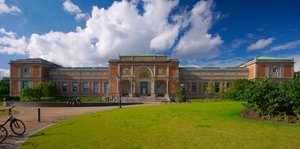
Statens Museum for Kunst

10-те най-известни картини на Samuel Hoffmann

Portrait of an Old Man (1638) от Samuel Hoffmann
1

Portrait of an Old Man

1638 · Oil On Canvas · Rijksmuseum, Амстердам

The work before us is titled Portrait of an Old Man, a significant oil on canvas painted by the artist Samuel Hoffmann. Created in 1638, this portrait captures a moment of quiet dignity. The subject is an elderly man, though his specific identity remains a matter of scholarly discussion. While he is often categorized as an unknown sitter, some observations suggest he may be Arend Jacobsz van der Graeff.

Ръчно рисувана маслена репродукция на $199 28 × 36 cm Размер като оригинала $366 68 × 88 cm Купете в оригиналния размер →

Къде могат да се видят картините на Samuel Hoffmann

5 музея, които притежават най-голям брой от картините на тази страница.

Музей Град Творения на Samuel Hoffmann Картини от този списък
Statens Museum for Kunst, КопенхагенStatens Museum for Kunst Копенхаген 3 The Countess of Mansfeldt, The Count of Mansfeldt, Portrait of a Man
Национален музей във Варшава, ВаршаваНационален музей във Варшава Варшава 2 Portrait of a woman aged 69, Portrait of a man aged 70.
Rijksmuseum, АмстердамRijksmuseum Амстердам 1 Portrait of an Old Man
Museum Mayer van den Bergh, АнтверпенMuseum Mayer van den Bergh Антверпен 1 Dead game and four figures
Städel Museum, ФранкфуртStädel Museum Франкфурт 1 Portrait of a Woman

Най-известната картина на Samuel Hoffmann за всяко десетилетие

  1. 1610s
  2. 1620s
  3. 1630s
    Portrait of an Old Man (1638) от Samuel Hoffmann
    Место 1 от 9

    Portrait of an Old Man

    Възраст 35 – 44 · Rijksmuseum

    The work before us is titled Portrait of an Old Man, a significant oil on canvas painted by the artist Samuel Hoffmann. Created in 1638, this portrait captures…

Въпроси относно картините на Samuel Hoffmann

Коя е най-известната картина на Samuel Hoffmann?Покажи отговора

Portrait of an Old Man (1638), Rijksmuseum, Амстердам. Следват Dead game and four figures (1612) и The Countess of Mansfeldt (1628).

На колко години е бил Samuel Hoffmann, когато е нарисувана Portrait of an Old Man?Покажи отговора

43 години: Portrait of an Old Man е от 1638 г., а Samuel Hoffmann е роден/а в 1595.

Колко картини е създал Samuel Hoffmann?Покажи отговора

В нашия каталог са изброени 10 произведения на Samuel Hoffmann, датирани от 1612 до 1638.

Къде се намират най-известните картини на Samuel Hoffmann?Покажи отговора

Повечето от тях се намират в Statens Museum for Kunst (Копенхаген), Национален музей във Варшава (Варшава) и Rijksmuseum (Амстердам). В горната таблица музеите са изброени един по един.

Кога Samuel Hoffmann е създал най-известните си произведения?Покажи отговора

В 1630s: 4 от 9 произведенията на тази страница са от този период, като сред тях са Portrait of an Old Man.

Кои са най-ранните и най-късните известни картини на Samuel Hoffmann?Покажи отговора

Най-старата творба на тази страница е от Dead game and four figures (1612), а най-новата е от Portrait of an Old Man (1638).

Кои картини на Samuel Hoffmann мога да видя в Statens Museum for Kunst?Покажи отговора

The Countess of Mansfeldt, The Count of Mansfeldt и Portrait of a Man са сред 3-те произведения на тази страница, съхранявани в Statens Museum for Kunst, Копенхаген.

Мога ли да купя репродукция на картина на Samuel Hoffmann?Покажи отговора

Да. Всяка картина на тази страница може да бъде поръчана като ръчно рисувано маслено репродукция музейно качество или като художествен принт в избран от Вас размер, директно от страницата на съответната картина.

За Samuel Hoffmann

The Ethereal Resonance of Samuel Hoffman

In the grand tapestry of twentieth-century soundscapes, few figures possess a legacy as hauntingly beautiful and technically singular as Samuel J. Hoffman. While history often remembers him through the lens of cinematic tension, his life was a profound intersection of classical discipline and avant-garde innovation. Born in New York City in 1903, Hoffman’s journey began not with the electronic whispers of the theremin, but with the disciplined strings of the violin. A prodigy who began performing professionally at the tender age of fourteen, he navigated the vibrant jazz and swing scenes of New York under the moniker Hal Hope, leading orchestras that defined the rhythmic pulse of an era.

The turning point in Hoffman’s artistic evolution arrived through a serendipitous encounter with debt. In the early 19 and 30s, he acquired a 1929 RCA theremin—an instrument played without physical contact, manipulating electromagnetic fields through the movement of hands in the air. This acquisition transformed him from a traditional instrumentalist into a pioneer of electronic music. He seamlessly integrated this otherworldly sound into his swing ensembles, eventually forming the Hal Hope’s Electronic Trio. This experimental fusion of the Hammond organ, electric cello, and the ethereal theremin pushed the boundaries of what audiences believed musical instruments could achieve, blending the tangible with the intangible.

A Cinematic Legacy in Shadow and Light

The true historical significance of Hoffman’s work crystallized within the golden age of Hollywood. His unique ability to read music—a rarity among thereminists of the time—made him an indispensable asset to the great composers of the silver screen. When composer Miklos Rozsa sought to infuse Alfred Hitchcock’s Spellbound (1945) with a sense of psychological instability, Hoffman was the only choice. The resulting score, which earned an Academy Award nomination, utilized the theremin's wavering pitch to mirror the fractured psyche of the film's protagonists. This mastery of atmosphere established a sonic blueprint for the horror and noir genres.

Throughout the late 1940s, Hoffman’s haunting melodies became the heartbeat of cinematic suspense. His contributions to films such as The Spiral Staircase and The Red House utilized the instrument's ability to evoke dread, longing, and the supernatural. Yet, his talent was not confined to the shadows of film noir; he also demonstrated a remarkable versatility by performing in lighter, more melodic contexts, such as the Bing Crosby and Bob Hope comedy Road to Rio. This duality—the ability to move between the terrifying and the whimsical—remains a testament to his profound musical intelligence.

The Doctor of Sound

Beyond the recording studios and film sets, Hoffman lived a life of fascinating dualities. In a remarkable feat of professional balance, he became a practicing podiatrist, relocating to Los Angeles in 1941. This unique juxtaposition of medical precision and musical abstraction led many to refer to him affectionately as "Doctor" Hoffman. Even while tending to his medical practice, he remained a vital force in the music industry, collaborating on landmark recordings like Music Out of the Moon, which stands as one of the most successful theremin albums ever released.

The legacy of Samuel Hoffman is not merely found in the notes he played, but in the way he expanded the emotional vocabulary of modern music. He bridged the gap between the classical tradition and the electronic future, proving that an instrument played by the mere movement of air could carry the weight of human emotion. His work remains a cornerstone of cinematic history, reminding us that the most profound art often emerges from the unexpected meeting of science, soul, and sound.