Beatrice Kreloff: A Life Woven with Art and Activism
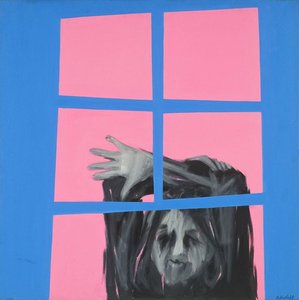
Beatrice Kreloff (1925-2016) wasn’t merely a painter; she was a force, an embodiment of artistic expression intertwined with profound social engagement. Her life, spanning nearly nine decades, unfolded as a vibrant tapestry woven with threads of personal passion, intellectual curiosity, and unwavering commitment to feminist ideals and progressive causes. Born in New York City, Kreloff's early exposure to the burgeoning art scene laid the foundation for her distinctive approach – one characterized by bold figures, symbolic imagery, and an exploration of human emotion rendered with a strikingly direct and often unsettling honesty.
Kreloff’s formal artistic training began at the Brooklyn Museum Art School in 1950. This initial period proved formative, exposing her to the techniques of masters like Max Beckmann and Rubin Tam, shaping her understanding of composition and color theory. However, it was during the turbulent years of the 1960s that Kreloff truly found her voice. The rise of second-wave feminism ignited a fervent desire within her to depict women’s experiences – their struggles, vulnerabilities, and resilience – with unprecedented clarity. Her early portraits, often depicting psychiatric patients, were particularly poignant, offering glimpses into marginalized lives rarely seen in mainstream art.
Art Workshop International: A Collaborative Vision
A pivotal moment in Kreloff's artistic journey arrived in 1973 when she co-founded Art Workshop International (AWI) with Edith Isaac-Rose in Assisi, Italy. This collective wasn’t simply a studio; it was a deliberate act of resistance against the prevailing patriarchal structures within the art world. AWI provided a space for women artists from diverse backgrounds to collaborate, experiment, and challenge conventional artistic norms. The organization became a haven for radical feminist ideas, fostering a spirit of mutual support and creative exploration. Kreloff’s role as co-director was crucial, not only in shaping the studio's ethos but also in establishing its reputation as a vital center for contemporary art.
The work produced at AWI reflected this collaborative spirit – a dynamic interplay of painting, drawing, printmaking, and textile arts. Kreloff’s paintings became increasingly expressive, moving beyond representational forms to explore the psychological landscapes of her subjects. Her use of color was particularly striking: vibrant hues juxtaposed with stark contrasts created a sense of tension and drama, mirroring the complexities of human experience.
Themes of Human Emotion and Symbolic Imagery
Kreloff’s oeuvre is deeply rooted in an exploration of human emotion – joy, sorrow, anger, vulnerability. Her figures are often rendered with a raw intensity, capturing fleeting moments of feeling with remarkable precision. She frequently employed symbolic imagery to convey deeper meanings, drawing on mythology, folklore, and personal experiences. Recurring motifs—such as birds, masks, and fragmented forms—suggested themes of transformation, identity, and the hidden aspects of the human psyche.
Her work wasn’t simply decorative; it was a direct engagement with social issues. Kreloff actively participated in feminist activism, supporting reproductive rights, LGBTQ+ equality, and anti-war movements. This commitment to social justice permeated her art, transforming it into a powerful tool for raising awareness and challenging the status quo.
Legacy and Recognition
Beatrice Kreloff’s legacy extends far beyond her individual artistic achievements. She was a pioneering figure in the feminist art movement, a dedicated educator, and a passionate advocate for social change. Her work continues to resonate with audiences today, offering a poignant reflection on the human condition and a testament to the transformative power of art.
Her paintings are held in prominent collections, including the Hirshhorn Museum and Sculpture Garden in Washington D.C., a testament to her enduring influence. Kreloff’s life story—a remarkable blend of artistic creativity and political activism—serves as an inspiration for artists and activists alike, demonstrating that art can be both deeply personal and profoundly impactful.
Further information about Kreloff's work and life can be found through resources such as the Veteran Feminists of America Project, which documented her contributions to the feminist movement, and online archives detailing her involvement with Art Workshop International.
Въпроси и отговори
С какви други имена е известен/а Beatrice Kreloff?
Beatrice Kreloff е известен/а още под името Bea Kreloff, B. Kreloff, Kreloff, Beatrice.
Къде могат да бъдат намерени произведенията на Beatrice Kreloff, разпределени по теми?
Атлас по теми на Beatrice Kreloff е страница, която класифицира творбите на художника според техните сюжети.
Какво настроение изразяват творбите на Beatrice Kreloff?
Работите на Beatrice Kreloff могат да бъдат разгледани по настроение на страницата Пространство по настроение, където произведенията са подредени според тяхното емоционално състояние.