

Получете файл, готов за печат, който предлага много по-високо качество от уеб прегледа. Всяко дигитално изображение, което предлагаме, е извлечено от висококачествен оригинал в нашата база данни — обикновено с ширина между 5 000 и 15 000 пиксела — така че със сигурност да можете да принтирате в голям формат, да кадрирате тесно или да възпроизведете фините детайли.
Нито един файл не напуска нашето студио без внимание. Дигитален експерт проверява цветовете спрямо оригиналната картина и ги коригира при необходимост, след което подобрява яснотата и детайлите с професионални инструменти за ретуш — винаги оставайки верен на мазките и стила на художника. Резултатът е изображение, което изглежда като самата картина, а не като сканиран образ с филтър.
Одобрявате преди финализиране: нашият експерт ще изпрати изображението по имейл в рамките на 72 часа за ваш преглед. Не сте доволни? Можете да поискате подобрения или корекции, или пълно възстановяване на сумата, ако качеството не отговаря на очакванията ви.
Това е качеството, на което разчитат издателства, дизайн студиа, галерии и печатници.
Изтеглете файл с висока резолюция за лично съхранение, принтиране и творчески проекти. ( Превключване към принт Купете ръчно рисувана картина)
Избирайки WahooArt.com, вие не получавате просто изображение – вие придобивате професионално обработена дигитална творба, създадена с прецизност и подкрепена от гаранция за удовлетворение. Ето какво автоматично е включено във вашата поръчка:
Вашето дигитално изображение с висока резолюция ще бъде изпратено по имейл в рамките на 72 часа от поръчката – готово за незабавно използване.
Вашата картина е професионално оптимизирана чрез усъвършенствани инструменти с изкуствен интелект и ръчна редакция, което гарантира максимална детайлност, яснота и точност на цветовете.
Изгубили сте или сте изтрили файла си по погрешка? Не се притеснявайте – ще го изпратим отново на Вас по всяко време, безплатно.
Насладете се на вашето произведение незабавно, без мита, такси или разходи за доставка – дигиталните изтегляния винаги са освободени от данъци.
Гарантираме, че вашето дигитално изображение отразява оригиналните цветове възможно най-точно чрез използването на професионални инструменти и системи за управление на цветовете.
Ако не сте доволни от вашето дигитално изображение, ще го преработим или ще възстановим 100% от сумата в рамките на 100 дни – без излишни въпроси.
Не сте доволни? Получете пълен възврат на сумата в рамките на 100 дни от получаването на вашия цифров файл – без излишни въпроси.
Купете 3 изображения, спестете 10% - Купете 5, спестете 15% - Купете 10+, спестете 20%. Идеално за творчески проекти, галерии и агенства.

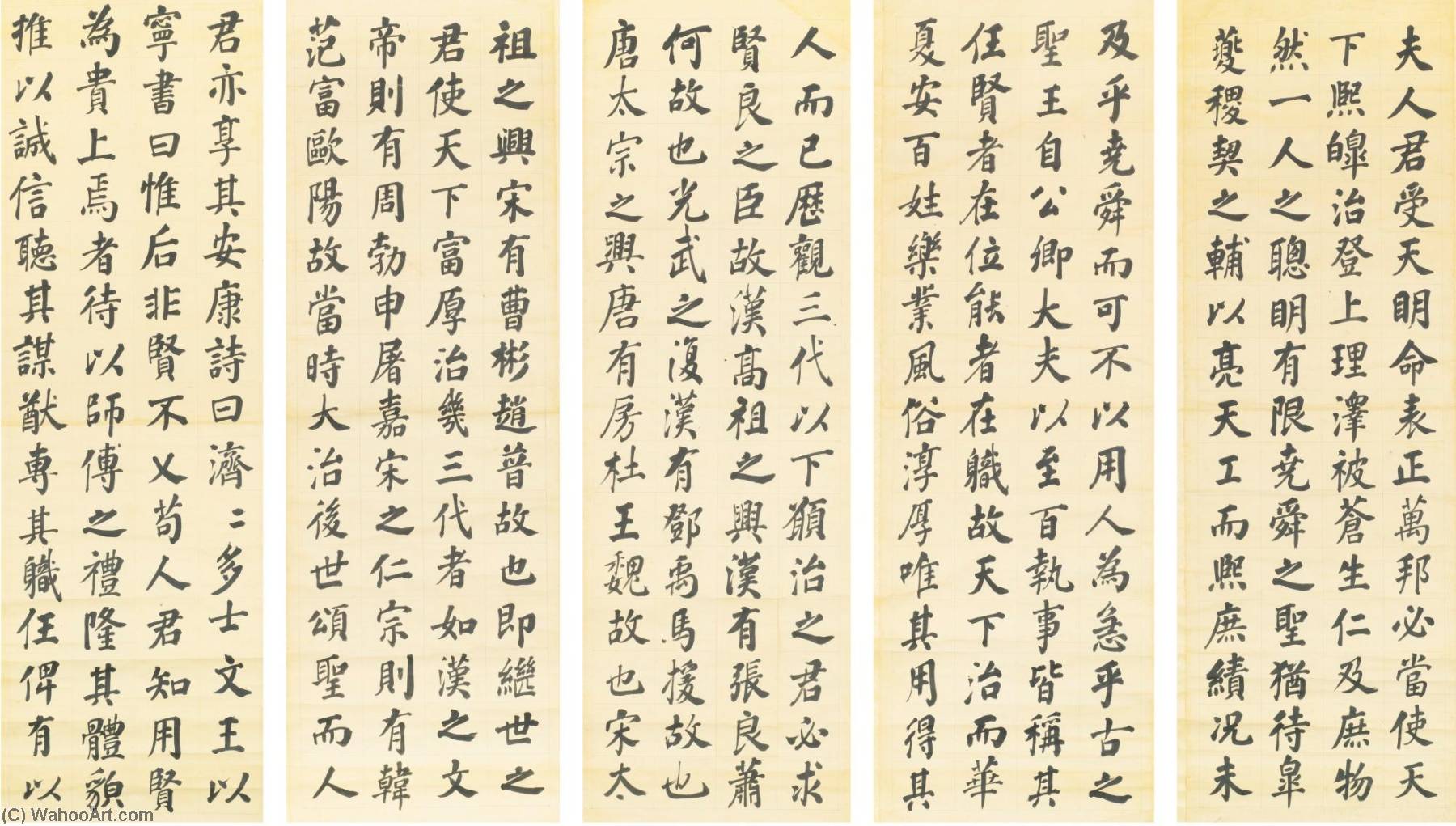
The world of 17th-century Chinese art is rich with figures who shaped its trajectory, and among them stands Zhang Zhao (1691–1745), a calligrapher whose elegant running script – known as *jiejing* – continues to captivate viewers today. More than just a skilled practitioner of brush and ink, Zhang Zhao was a product of his time, deeply influenced by the philosophical currents of the Qing Dynasty and the artistic legacy of Dong Qichang, a pivotal figure in establishing aesthetic standards for Chinese art.
Born in Xu Province during a period of immense political upheaval, Zhang Zhao’s early life instilled within him a profound sense of discipline and an appreciation for scholarship. He initially pursued a career as a civil servant but quickly gravitated towards the refined world of calligraphy, recognizing its power to convey both intellectual depth and aesthetic beauty. His training likely involved studying the works of earlier masters, absorbing their techniques and developing his own distinctive style – one characterized by fluidity, balance, and an almost meditative quality.
Zhang Zhao’s artistic development was inextricably linked to that of Dong Qichang (1579–1645), a renowned scholar-official and art critic who profoundly shaped the aesthetic landscape of the Qing Dynasty. Dong Qichang championed the concept of *wuhu*, or “five aesthetics”—poetry, music, painting, calligraphy, and ritual—as essential components of a cultivated individual’s life. He advocated for a return to classical forms and values, emphasizing simplicity, sincerity, and a deep connection with nature.
Zhang Zhao was deeply influenced by Dong Qichang's ideas, particularly his emphasis on *jiejing* as a form of refined expression. Dong Qichang’s writings on calligraphy stressed the importance of achieving a state of “naturalness” – a sense of effortless grace and spontaneity – in one’s brushwork. Zhang Zhao embraced this philosophy, striving to capture the essence of his subjects through subtle variations in line weight, pressure, and speed.
Zhang Zhao's career unfolded within the complex political landscape of the Qing Dynasty. He secured a *jinshi* (successful candidate) position in 1709, demonstrating his intellectual prowess and earning him a place within the imperial bureaucracy. He rose through the ranks, eventually becoming Secretary of the Ministry of Justice in 1733. However, his career was not without its challenges; he narrowly avoided execution after failing to manage aboriginal territories in Guizhou, highlighting the precariousness of life for officials during this turbulent period.
Despite these setbacks, Zhang Zhao continued to produce significant works of calligraphy and poetry. He collaborated with other prominent scholars on important literary projects, including the *Lülü Zhengyi* and its sequel, *Houbian*, which served as standard treatises on music theory. Notably, he was also recognized by the Yongzheng Emperor for his exceptional skill, receiving a commendation for a poem written with his left hand after an accident had impaired his right arm – a testament to his resilience and artistic dedication.
Zhang Zhao’s *jiejing* is characterized by its elegant fluidity and subtle variations in line weight. His works often exhibit a sense of quiet contemplation, reflecting the philosophical ideals championed by Dong Qichang. He skillfully employed techniques such as *shougong* (a technique for creating a sense of depth through varying line thickness) and *yanzhuan* (a technique for creating a sense of movement through variations in brush pressure), adding layers of complexity and nuance to his compositions.
While Zhang Zhao’s name may not be as widely recognized as some of his contemporaries, his contributions to the development of running script are undeniable. His works represent a significant example of Qing Dynasty calligraphy, embodying both technical mastery and philosophical depth. Today, his paintings and scrolls continue to be admired for their beauty, elegance, and enduring legacy – a testament to the skill and vision of this remarkable artist.

1691 - 1745
 Преглед в реален мащаб
 Изпрати
 Сподели
 Детайли
 Ръководство

 Изтегляне
 Подобни артикули
 Рентгенова снимка
 Слайдшоу
 Въпроси и отговори
 Статистика
 Прочети повече


