Представи си го AR преглед Купете ръчно рисувана картина Превключване към дигитално изображение Изпрати
Детайли Добавяне към любими Изтегляне Подобни Рентгенова снимка Слайдшоу Статистика

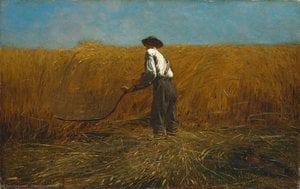
Nach dem Tornado

Winslow Homer’s evocative watercolor captures a serene beach scene featuring a man resting on his surfboard amidst crashing waves—a testament to American realism and observation during the late 1880s. Explore this captivating artwork and bring Homer's masterful vision home.

Уинслоу Хомър (1836-1910): Открийте мощните картини на този американски реалист, изобразяващи морския живот, пейзажи и живота през 19 век. Шедьоври като "The Gulf Stream"!

Жикле / Художествен принт

Giclée печат или принт върху платно с музейно качество, бързо производство и гъвкави опции за завършен вид. ( Купете ръчно рисувана картина Превключване към дигитално изображение)

P118B $10
P118H $10
P118W $10
P438Z $10
P508JH $12
P508YH $12
P805H $10
P805Z $10
P919BZ $10
P919G $10
P919XJ $10
P959ZH $10
P968JZ $12
W106C $8
W218G $10
W218JH $8
W218Y $10
W307PJ $10
W316G $10
W316PJ $8
W316Y $10
W398PJ $8
W4111J $10
W500HY $15
W500JH $15
W692G $12
W849H $8
W940BG $15
W953PJ $8

Стандартен
по поръчка
CM
INCH

Изберете от предварително зададените размери, които съответстват на оригиналните пропорции на произведението.

ширина
височина

Можете да въведете собствени размери, за да паснат на конкретна рамка или пространство. Ако избраният от Вас размер не съвпада с пропорциите на оригиналното изображение, ние ще изрежем произведението или ще разширим изображението с огледален или едноцветен ръб. Дигитален макет ще бъде изпратен за Ваше одобрение преди започването на производството.
Моля, имайте предвид, че предпрегледът на екрана не отразява реалното изрязване или разширяване. Само макетът ще покаже точно финалната композиция.
Въпреки че са налични персонализирани размери, препоръчваме да изберете размер от предварително дефинирания списък, за да запазите оригиналните пропорции.

Доставка по целия свят () в рамките на 2 седмици вместо стандартните 4/5 седмици. (15 Септември)

why_choose_icon
Безплатна експресна доставка по целия свят
why_choose_icon
Висококачествено ленено платно
why_choose_icon
Пълно застраховане при доставка
why_choose_icon
Гаранция за възстановяване на митнически такси
why_choose_icon
Гаранция за цветова точност
why_choose_icon
Политика за връщане в рамките на 100 дни (само при дефекти)
why_choose_icon
100% Гаранция за връщане на парите
why_choose_icon
Предложение за отстъпка при поръчка на едро

Обща цена

$ 68

reproduction

Nach dem Tornado

Жикле / Художествен принт

Размер на репродукцията

-

Обща цена

$ 68

Бързи факти

  • Title: Nach dem Tornado
  • Movement: American Realism
  • Subject or theme: Coastal landscape
  • Dimensions: 38 x 54 cm
  • Influences: Hudson River School
  • Artist: Winslow Homer
  • Medium: Oil on canvas

A Moment Frozen in Time: Winslow Homer’s “Nach dem Tornado”

The painting "Nach dem Tornado" (After the Tornado), completed in 1889 by Winslow Homer, isn't merely a depiction of a beach scene; it’s a profound meditation on resilience and the enduring spirit of humanity against the forces of nature. Homer, rejecting the conventions of European artistic training, cultivated his vision from the rugged landscapes and working-class realities of America—a deliberate choice that profoundly shaped his distinctive style and thematic concerns. This painting exemplifies precisely this approach.
  • Subject Matter: At its core, “Nach dem Tornado” presents a solitary figure – a man – lying on the sand after a violent storm. He rests against his surfboard, seemingly exhausted but unharmed, embodying an image of quiet fortitude amidst devastation.
  • Style & Technique: Homer’s masterful use of watercolor is crucial to understanding the painting's emotional resonance. Watercolor allows for subtle gradations of color and luminosity, capturing the ethereal quality of light reflecting off the ocean surface and conveying a sense of vulnerability alongside strength. The artist employs meticulous detail—the texture of the sand, the ripples in the water—to create an immersive experience for the viewer.

Historical Context: Echoes of Industrial America

Painted during Homer’s prolific period, “Nach dem Tornado” reflects the anxieties and aspirations of late 19th-century America. The Industrial Revolution was reshaping American society, bringing urbanization and new challenges to rural communities. Homer's work speaks to this tension between progress and tradition, portraying a man connected to the natural world—a deliberate counterpoint to the increasingly mechanized pace of life. The storm itself symbolizes disruption and upheaval, mirroring the anxieties felt by many Americans grappling with rapid societal change.
  • Symbolism: Beyond its immediate visual appeal, “Nach dem Tornado” carries symbolic weight. The surfboard represents stability amidst chaos—a tool for navigating turbulent times while maintaining a connection to one's grounding. The man’s posture conveys acceptance of fate and an unwavering determination to persevere.
  • Emotional Impact: Homer skillfully evokes feelings of melancholy and contemplation. The muted palette contributes to this mood, emphasizing the quiet dignity of human experience in the face of overwhelming forces. There is a palpable sense of solitude, yet also of inner peace—a suggestion that true strength lies not in conquering nature but in harmonizing with it.

A Legacy of Observation and Detail

Winslow Homer’s artistic legacy rests on his unwavering commitment to observation and meticulous technique. He eschewed academic idealism for a grounded realism, prioritizing accuracy and emotional truthfulness above stylistic flourishes. “Nach dem Tornado” stands as testament to this philosophy—a beautifully rendered watercolor that captures not just a scene but also the essence of human resilience. It’s a piece that invites viewers to consider the profound beauty found in simplicity and the enduring power of confronting adversity with grace.

Биография на художника

Winslow Homer: A Brush With the American Spirit

Winslow Homer, born in Boston in 1836, wasn’t sculpted by the traditional European art academies that shaped so many of his contemporaries. Instead, he emerged from a distinctly American experience, one rooted in practicality and observation. His journey began not with grand historical canvases, but as a commercial illustrator at the tender age of twelve for Harper's Weekly. This early apprenticeship was formative, honing an exceptional ability to capture scenes with clarity and detail – skills that would become hallmarks of his mature work. He wasn’t learning perspective in Paris; he was learning to *see* America, its people, and its unfolding story. The bustling streets of Boston, the quiet dignity of rural New England life, these were his first subjects, rendered with a precision born of necessity for the demands of print media. This foundation allowed him to transition into painting, initially in watercolor, before fully embracing the expressive potential of oil paints.

From Pastoral Scenes to the Raw Power of Nature

Homer’s early paintings often depicted idyllic scenes – children playing, farmers tending their fields, quiet moments of domesticity. These works, while charming, hinted at a deeper artistic sensibility waiting to be unleashed. The catalyst for this transformation was undoubtedly the Civil War. As a war correspondent for Harper's Weekly, Homer witnessed firsthand the brutal realities of conflict. He didn’t focus on heroic battles or grand strategies; instead, he documented the everyday lives of soldiers and civilians, the quiet moments of grief and resilience amidst chaos. This experience profoundly altered his artistic vision. The pastoral scenes gave way to more challenging subjects: veterans grappling with trauma, freed slaves navigating a new world, and the stark beauty of landscapes touched by hardship. He began to explore themes of struggle, isolation, and humanity’s precar He wasn't interested in imitating European styles; he wanted to create an art that was uniquely American, reflecting its landscapes, its people, and its challenges. His style also evolved, becoming bolder and more direct, reflecting the raw emotional impact of what he had witnessed. Breezing Up (A Fair Wind), painted in 1876, exemplifies this skill – a quintessential depiction of American maritime life, brimming with energy and movement. The Gulf Stream, created decades later, is perhaps his most iconic work, a powerful and symbolic portrayal of a lone man battling the forces of nature, a metaphor for human struggle against overwhelming odds. He wasn’t simply painting what he saw; he was conveying a feeling, an emotional truth about the human condition.

Mastering Light, Texture, and the American Landscape

Winslow Homer's artistic technique is immediately recognizable for its solidity and texture. He wasn’t interested in fleeting impressions; he wanted to build up a sense of tangible reality on the canvas. His oil paintings are characterized by a direct painting approach – layers of paint applied with confidence, creating depth and luminosity. He possessed an extraordinary ability to capture light, whether it was the dazzling glare of the sun on the ocean or the soft glow of twilight over a rural landscape. This mastery extended to his watercolors, where he achieved remarkable atmospheric effects through vibrant colors and delicate washes. Innocence, a poignant portrayal of childhood set against the backdrop of nature, and Man of Science, demonstrating his skill in capturing human psychology, are testaments to this commitment.

A Legacy Forged in American Realism

Winslow Homer's art offers a profound window into 19th-century America, providing invaluable insights into the social, political, and cultural landscape of his time. His paintings are not merely beautiful representations; they are powerful statements about human resilience, the beauty and power of nature, and the complexities of the American experience. He died in 1910, leaving behind a prolific body of work that continues to resonate with audiences today. His ability to depict America with honesty and authenticity, without romanticizing or idealizing it. He wasn’t interested in imitating European styles; he wanted to create an art that was uniquely American, reflecting its landscapes, its people, and its challenges. His influence can be seen in the work of later American painters who sought to depict their own country with similar directness and emotional depth.
  • His work continues to inspire contemporary artists.
  • Homer remains a pivotal figure in the development of American Realism.

Уинслоу Хомър

Уинслоу Хомър

1836 - 1910 , Съединени американски щати

Бързи факти

  • Artistic Movement Or Style: Американски реализъм
  • Artists Or Movements Influenced By This Artist: ['Американски художници']
  • Artists Who Influenced This Artist:
    • Барбизонската школа
    • Курбет
    • Милет
  • Date Of Birth: Октомври 3, 1836 г.
  • Date Of Death: 1910 г.
  • Full Name: Winslow Homer
  • Nationality: Американски
  • Notable Artworks:
    • Бризът
    • Теченията
    • Невинност
  • Place Of Birth: Бостън, САЩ
Разгледайте произведения на изкуството, организирани по теми, стилове и характеристики.