Изкуството, представено на тази страница, е защитено от законите за авторско право, което означава, че не можем законно да създаваме или продаваме идентични репродукции. Тази защита се прилага съгласно международни споразумения като Бернска конвенция и от националното законодателство, включително разпоредбите на Закон за авторското право на САЩ – Раздел 17.
Този метод е напълно съвместим с законите за авторско право, тъй като не включва копиране или дублиране на защитеното произведение. Вместо това става въпрос за творческа реинтерпретация – нова картина, която е вдъхновена от оригинала, но не е идентична с него.
Giclée печат или принт върху платно с музейно качество, бързо производство и гъвкави опции за завършен вид. ( Купете ръчно рисувана картина Превключване към дигитално изображение)





























Изберете от нашите предварително зададени размери, които съответстват на оригиналните пропорции на произведението.

Въведете необходимата ширина и височина, за да паснат на вашата рамка или стена. Принтовете могат само да се изрязват, но никога не могат да бъдат по-големи от оригиналната картина, така че при размер с различен формат част от изображението ще бъде загубена. Преди да започнем печат, ще ви изпратим дигитален мок업 за одобрение. Изображението, показано на тази страница, не показва реалното изрязване — само мок업ът го показва.
Доставка по целия свят () в рамките на 2 седмици вместо стандартните 4/5 седмици. (10 Ноември)
Untitled1
Размер на репродукцията
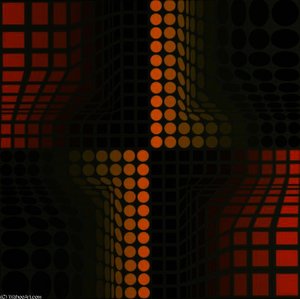
Victor Vasarely's "Untitled1" is more than just an abstract composition; it’s a meticulously crafted illusion, a testament to the pioneering work of Op Art and a profound exploration of how our eyes perceive reality. Created by one of the movement’s key figures – born Károly Vaszary in 1906 in Pécs, Croatia – this artwork embodies his lifelong fascination with geometry and its power to manipulate visual experience. Initially drawn to medicine, Vasarely's destiny shifted dramatically when he embraced painting, a path forged through rigorous training at the Podolini-Volkmann Academy and, crucially, within the influential workshop of Sándor Bortnyik, where the principles of functional design and geometric abstraction were rigorously honed – directly echoing the Bauhaus movement’s emphasis on form and function. “Untitled1” stands as a potent distillation of these influences, a vibrant embodiment of Vasarely's artistic vision.
At first glance, "Untitled1" appears to be a chaotic jumble of shapes – interlocking circles and squares arranged in a seemingly random fashion. However, a closer examination reveals an astonishing level of control and precision. The artwork’s core is dominated by a large square, subtly differentiated from the surrounding areas, creating a dynamic tension that draws the eye across the canvas. This grid-like structure, punctuated by variations in density and placement, isn't merely decorative; it’s a deliberate orchestration designed to trigger optical illusions. The high contrast between the vibrant red/orange and black hues amplifies this effect, forcing the viewer’s eye to constantly adjust its focus, creating a mesmerizing sense of movement and depth despite the artwork’s fundamentally flat surface. Vasarely masterfully exploits our visual system, challenging our assumptions about space and perspective.
The creation of “Untitled1” speaks to a remarkable technical skill. Executed with likely acrylics on canvas or board, the artist’s control is evident in the clean lines defining each shape and the consistent repetition throughout the composition. The smooth texture, a product of careful application and precise geometric patterns, suggests a deliberate avoidance of impasto – textural variation – prioritizing clarity and optical impact above all else. This meticulous approach aligns with Vasarely's broader philosophy: to reduce art to its purest visual elements, focusing on the fundamental principles of perception rather than representational accuracy. The artwork’s enduring quality is a testament to the robustness of this technique.
While undeniably abstract, “Untitled1” invites contemplation about its potential symbolic meanings. The repetitive patterns could be interpreted as representing order, infinity, or even a deliberate disorientation – mirroring the unsettling yet captivating effect that Op Art generates. Vasarely himself was interested in exploring the relationship between art and science, viewing his work as a visual investigation into the nature of perception itself. Beyond this intellectual engagement, however, lies an undeniable emotional resonance. The dynamic interplay of color and form evokes a sense of excitement, energy, and perhaps even a subtle feeling of unease – a reminder that our perceptions are not always reliable guides to reality. This piece is a powerful demonstration of how art can profoundly affect our psychological state.
„Untitled1“ е регистрирана като Recognized сред произведенията от Op Art в каталога.
Статистиката за „Untitled1“ на Виктор Васарели се намира на страницата Статистика на произведението: месечни посещения на творбата, посещения на произведенията на художника, както и разпределение на последните посетители по държава и език.
В творчеството на Виктор Васарели, „Untitled1“ е създадена в стила на Op Art, съчетавайки се с темите за bauhaus, geometric abstraction, kinetic art exploration, visual perception studies, op art pioneer work, signature pattern development.

1906 - 1997 , Хърватия

Embark on a visual journey through the mesmerizing world of Op Art. Discover the masters of optical illusion, explore geometric abstraction, and learn how to curate high-impact kinetic works for your private collection with expert guidance from art professionals.
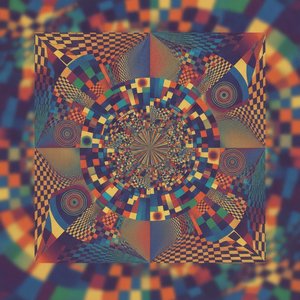
Explore the mesmerizing world of Victor Vasarely. Discover how his Bauhaus-inspired Op Art masters the science of perception through geometric abstraction and vibrant color. A sophisticated guide for discerning art collectors seeking to understand the legacy of optical illusion.
 Преглед в реален мащаб
 Изпрати
 Сподели
 Детайли
 Ръководство

 Изтегляне
 Подобни артикули
 Рентгенова снимка
 Слайдшоу
 Въпроси и отговори
 Статистика

 Прочети повече









 Опцията със стъкло е налична само за размери под 110 см