Представи си го AR преглед Купете ръчно рисувана картина Превключване към дигитално изображение Изпрати
Детайли Добавяне към любими Изтегляне Подобни Рентгенова снимка Слайдшоу Статистика

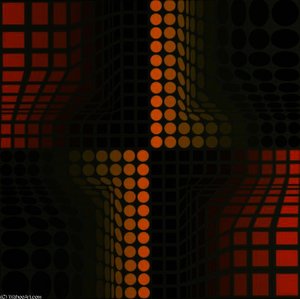
Kanta Orion Blanc Negative

Experience the vibrant energy of Victor Vasarely's 'Kanta Orion Blanc Negative.' This Op Art masterpiece features dynamic geometric shapes & bold colors, now available as a hand-painted reproduction.

Разгледайте завладяващия свят на Виктор Вазарели (1906-1997)! От геометрични абстракции до оптически илюзии и трайно влияние върху модерното изкуство и дизайна. Експериментирайте с формите и цветовете на репродукции!

Жикле / Художествен принт

Giclée печат или принт върху платно с музейно качество, бързо производство и гъвкави опции за завършен вид. ( Купете ръчно рисувана картина Превключване към дигитално изображение)

P118B $10
P118H $10
P118W $10
P438Z $10
P508JH $12
P508YH $12
P805H $10
P805Z $10
P919BZ $10
P919G $10
P919XJ $10
P959ZH $10
P968JZ $12
W106C $8
W218G $10
W218JH $8
W218Y $10
W307PJ $10
W316G $10
W316PJ $8
W316Y $10
W398PJ $8
W4111J $10
W500HY $15
W500JH $15
W692G $12
W849H $8
W940BG $15
W953PJ $8

Стандартен
по поръчка
CM
INCH

Изберете от предварително зададените размери, които съответстват на оригиналните пропорции на произведението.

ширина
височина

Можете да въведете собствени размери, за да паснат на конкретна рамка или пространство. Ако избраният от Вас размер не съвпада с пропорциите на оригиналното изображение, ние ще изрежем произведението или ще разширим изображението с огледален или едноцветен ръб. Дигитален макет ще бъде изпратен за Ваше одобрение преди започването на производството.
Моля, имайте предвид, че предпрегледът на екрана не отразява реалното изрязване или разширяване. Само макетът ще покаже точно финалната композиция.
Въпреки че са налични персонализирани размери, препоръчваме да изберете размер от предварително дефинирания списък, за да запазите оригиналните пропорции.

Доставка по целия свят () в рамките на 2 седмици вместо стандартните 4/5 седмици. (17 Септември)

why_choose_icon
Безплатна експресна доставка по целия свят
why_choose_icon
Висококачествено ленено платно
why_choose_icon
Пълно застраховане при доставка
why_choose_icon
Гаранция за възстановяване на митнически такси
why_choose_icon
Гаранция за цветова точност
why_choose_icon
Политика за връщане в рамките на 100 дни (само при дефекти)
why_choose_icon
100% Гаранция за връщане на парите
why_choose_icon
Предложение за отстъпка при поръчка на едро

Обща цена

$ 68

reproduction

Kanta Orion Blanc Negative

Жикле / Художествен принт

Размер на репродукцията

-

Обща цена

$ 68

Бързи факти

  • Title: Kanta Orion Blanc Negative
  • Artist: Victor Vasarely
  • Influences: Bauhaus
  • Notable elements or techniques:
    • Geometric patterns
    • Optical illusions
  • Movement: Op Art

Тест за изкуство

Има само един верен отговор за всеки въпрос.

Въпрос 1:
What artistic movement is Victor Vasarely’s ‘Kanta Orion Blanc Negative’ most closely associated with?
Въпрос 2:
Which of the following best describes the primary shapes used in the composition of ‘Kanta Orion Blanc Negative’?
Въпрос 3:
What is a notable characteristic of the color transitions within the artwork?
Въпрос 4:
Victor Vasarely was born in which present-day country?

Victor Vasarely's Kanta Orion Blanc Negative: A Dynamic Exploration of Op Art

  • Born: April 9, 1906, Pécs, Croatia
  • Died: March 15, 1997, Paris, France
  • Nationality: Hungarian-French

Victor Vasarely stands as a pivotal figure in the development of Op Art and kinetic art. His work transcended traditional painting by exploring optical illusions and creating dynamic visual experiences. Born in Pécs, then part of Austria-Hungary (now Croatia), his early life involved studying medicine at Eötvös Loránd University in Budapest before dedicating himself fully to art.

A Symphony of Geometric Forms and Color

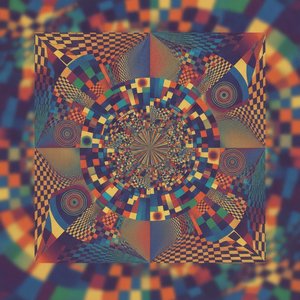
Kanta Orion Blanc Negative is a striking example of Vasarely's signature style, showcasing a vibrant and dynamic abstract composition. The artwork presents a close-up detail dominated by a diamond-shaped area filled with an intricate pattern primarily composed of squares and circles in a diverse range of colors – red, green, blue, yellow, orange, purple, and pink. A thick black border frames the design, providing visual definition.

The arrangement isn't uniform; there’s a deliberate sense of layering and overlapping that creates an illusion of depth despite the two-dimensional nature of the medium. Straight lines define the edges of the squares, contributing to a sense of order amidst the colorful chaos. The color transitions are often abrupt, creating visual interest and dynamism.

The Essence of Op Art: Optical Illusions and Visual Stimulation

Kanta Orion Blanc Negative firmly aligns with the principles of Op Art (Optical Art), a movement known for its use of geometric patterns to create optical illusions. Vasarely’s meticulous planning and precise execution are evident in this work, designed to stimulate the viewer's perception and challenge traditional notions of artistic representation.

The technique likely involves careful consideration of color relationships and spatial arrangements to generate a sense of movement and vibration. The absence of discernible texture suggests a smooth surface, potentially achieved through acrylic or oil paint application, or even digital techniques.

Symbolism and Emotional Resonance

As an abstract work, Kanta Orion Blanc Negative invites individual interpretation. However, the vibrant colors and dynamic composition evoke feelings of energy, excitement, and visual stimulation. The geometric patterns can be perceived as representing order and structure, while the interplay of colors suggests a sense of boundless creativity.

The "Negative" in the title might refer to the way the design plays with positive and negative space, further enhancing the optical illusion. Ultimately, this artwork is an exploration of visual perception and a testament to Vasarely's pioneering role in shaping modern art.


Биография на художника

A Life Forged in Geometry: The World of Victor Vasarely

Victor Vasarely’s journey to becoming a pioneer of Op Art and kinetic art was anything but predetermined. Born Károly Vaszary in 1906 in Pécs, a city then nestled within Austria-Hungary (now Croatia), his early life hinted at a path far removed from the canvas; he initially pursued medical studies at Eötvös Loránd University in Budapest. However, the allure of visual expression proved too strong, leading him to abandon medicine for the world of painting in 1927, enrolling at the Podolini-Volkmann Academy. This decision marked not merely a change in vocation but the beginning of a lifelong exploration into the fundamental principles governing perception and form. A pivotal moment arrived with his enrollment in Sándor Bortnyik’s workshop – Műhely – a school deeply influenced by the Bauhaus movement. Here, Vasarely absorbed the tenets of functional design and geometric abstraction, seeds that would blossom into his signature style. These formative years weren't simply about acquiring technique; they were about dismantling traditional artistic conventions and embracing a new visual language rooted in logic and precision. He sought to move beyond representational art, focusing on pure form and color relationships – a deliberate shedding of narrative content in favor of the essential elements of visual experience.

From Early Abstraction to the Dawn of Op Art

The late 1920s and early 1930s witnessed Vasarely’s gradual departure from representational art, as he delved deeper into the realm of geometric abstraction. Works like “Blue Study” and “Green Study,” created in 1929, exemplify this transition – a deliberate shedding of narrative content in favor of pure form and color relationships. He was influenced by masters such as Piet Mondrian and Kazimir Malevich, but he wasn’t content to simply emulate their styles. Vasarely sought to transcend the static compositions of his predecessors, aiming for a dynamism that would actively engage the viewer's perception. This quest led him to Paris in 1930, where he established himself as a graphic designer and advertising artist, honing his skills while continuing to develop his unique artistic vision. It was during this period that he began experimenting with techniques that would later become hallmarks of Op Art – manipulating shapes and colors to create illusions of movement and depth. The seeds were sown for a revolution in visual experience. He developed a systematic approach, using grids and mathematical principles to generate patterns designed to stimulate the viewer's perception.

The Systematic Illusion: Defining a Movement

By the 1960s, Victor Vasarely had fully emerged as a leading figure in the burgeoning Op Art movement. Unlike many artists who relied on intuition and spontaneous expression, Vasarely approached his work with a distinctly systematic methodology. He employed grids and mathematical principles to generate patterns that created powerful optical illusions – visual vibrations, swirling effects, and sensations of depth where none physically existed. This wasn’t about trickery; it was about revealing the inherent dynamism within perception itself. He believed in reproducibility and mass appeal, aiming to democratize art by making it accessible beyond the confines of galleries and museums. His work challenged viewers to question their own visual experience, forcing them to actively participate in the creation of meaning. He wasn’t merely painting pictures; he was constructing experiences.

Historical Significance & Lasting Legacy

Vasarely's contribution to art history is multifaceted. He moved beyond traditional painting techniques to create works that actively engage the viewer’s perception. His systematic approach challenged conventional notions of artistic creativity and paved the way for computer-generated art and digital design. By embracing reproducibility and commercial applications, Vasarely blurred the boundaries between fine art and popular culture, leaving an enduring mark on both. He wasn't simply creating aesthetically pleasing objects; he was conducting visual experiments that revealed fundamental truths about how we see the world. His work continues to resonate today, reminding us of the power of abstraction, the beauty of geometry, and the endless possibilities of human creativity. His influence extends beyond painting into graphic design, fashion, interior design, and even early computer graphics, inspiring generations with his innovative vision. The establishment of the Fondation Vasarely in Aix-en-Provence ensured the preservation and promotion of his extensive body of work, while a remarkable event – the inclusion of serigraphs aboard the French-Soviet spacecraft Salyut 7 in 1982 – symbolized the global recognition of his art and its connection to the broader human endeavor of exploration. Victor Vasarely’s legacy remains a testament to the power of visual experimentation and the enduring fascination with perception itself.
Виктор Васарели

Виктор Васарели

1906 - 1997 , Хърватия

Бързи факти

  • Artistic Movement Or Style: Оп арт, Кинетичен арт
  • Artists Or Movements Influenced By This Artist:
    • Графичен дизайн
    • Интериорен дизайн
  • Artists Who Influenced This Artist:
    • Пиет Мондриан
    • Казимир Малевич
  • Date Of Birth: 9 април 1906 г.
  • Date Of Death: 15 март 1997 г.
  • Full Name: Victor Vasarely
  • Nationality: Художник-френски/хърватски
  • Notable Artworks:
    • Синьо изследване
    • Зелено изследване
  • Place Of Birth: Пéч, Хърватия
Разгледайте произведения на изкуството, организирани по теми, стилове и характеристики.