Биография на художника
Early Life and Artistic Foundations
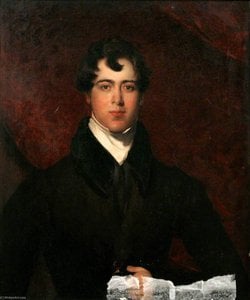
Thomas Phillips, born in Dudley, Worcestershire, in 1770, emerged from relatively modest beginnings to become a prominent figure in the British art scene of the late 18th and early 19th centuries. His initial artistic training wasn’t within the traditional confines of painting, but rather in the craft of glass-painting under Francis Eginton in Birmingham. This foundational experience instilled in him a meticulous attention to detail and an understanding of color and light – skills that would prove invaluable when he later transitioned to portraiture. The intricate designs and vibrant hues of stained glass demanded precision and a keen eye for composition, qualities Phillips carried with him throughout his career. A pivotal moment arrived in 1790 when Phillips journeyed to London, armed with an introduction to Benjamin West, a leading artist of the time and a key figure in the Royal Academy. West’s guidance proved transformative, opening doors to opportunities within the established art world and providing a crucial mentorship that shaped his artistic development. He was immediately immersed in the atmosphere of the Royal Academy, observing the techniques and practices of other artists and absorbing the prevailing aesthetic sensibilities of the era. This early exposure to grand architectural projects – specifically the painted-glass windows of St George’s Chapel at Windsor Castle – allowed him to hone his skills within a large-scale decorative context, developing a sophisticated understanding of composition and narrative storytelling through visual means.
A Rising Portraitist: Style and Subject Matter
Phillips quickly found his niche in portraiture, though not without navigating a competitive landscape already populated by renowned artists like Thomas Lawrence and John Hoppner. Initially, his sitters were largely unknown individuals – tradesmen, clergymen, and members of the gentry who sought to capture their likenesses for posterity. However, through dedication, talent, and an increasingly discerning eye, he steadily ascended the social ladder, attracting increasingly prominent figures to his studio. His style was characterized by a remarkable realism, reflecting both the influence of his early training in glass-painting – particularly his understanding of light and color – and the prevailing artistic tastes of the era. He possessed an ability to capture not just physical likeness, but also something of the sitter’s character, intellect, and social standing. This talent extended beyond mere replication; he sought to convey a sense of personality and presence, imbuing each portrait with a unique atmosphere. His portraits were often meticulously detailed, showcasing his mastery of brushwork and his ability to render textures – from the sheen of silk to the wrinkles of age – with astonishing accuracy. He was particularly adept at capturing subtle expressions, conveying emotions through minute shifts in posture and gaze.
Royal Patronage and Academic Recognition
The year 1804 marked a significant turning point in Phillips’ career with his election as an associate of the Royal Academy, alongside William Owen. This recognition solidified his position within the artistic establishment and signaled a period of increased prestige and demand for his services. Shortly thereafter, he relocated to 8 George Street, Hanover Square – a prestigious address that would remain his home and studio for the next four decades. This move reflected his growing success and provided him with a more suitable environment for conducting his business. His clientele continued to expand dramatically, encompassing members of the royal family, including the Prince of Wales (later George IV), as well as prominent figures from across British society – aristocrats, politicians, scientists, writers, poets, and explorers. He painted portraits of these diverse subjects, capturing their individual personalities and reflecting the social and cultural dynamics of the time. The commissions he received were often highly demanding, requiring him to master a wide range of styles and techniques in order to meet the specific needs of his patrons. His ability to adapt to different requests while maintaining his distinctive artistic voice was a testament to his versatility and professionalism.
Major Achievements and Artistic Legacy
Phillips’s most celebrated works include portraits of William Blake, capturing the poet's intense gaze and visionary spirit; Lord Byron, embodying the Romantic poet’s brooding intensity; and Sir Joseph Banks, the renowned botanist whose portrait reflects his scientific curiosity and adventurous spirit. His diploma work at the Royal Academy in 1808 – *Venus and Adonis* – demonstrated a departure from purely portraiture into more ambitious narrative painting, showcasing his artistic range and technical skill. This allegorical composition, rendered with meticulous detail and vibrant color, established him as a master of both realistic portraiture and imaginative storytelling. Throughout his career, Phillips’s portraits were exhibited at the Royal Academy and in private collections, earning critical acclaim and solidifying his reputation as one of Britain's leading artists. His work continues to be admired for its realism, sensitivity, and ability to capture the essence of his subjects. He left behind a substantial body of work that reflects both the technical skill and the intellectual curiosity of an artist deeply engaged with the cultural landscape of his era.
Historical Significance
Thomas Phillips’s career coincided with a period of significant social and artistic change in Britain, particularly during the Romantic era. His portraits offer valuable insights into the personalities and aspirations of the individuals who shaped British society at the time. He played a crucial role in documenting the lives and achievements of prominent figures, preserving their likenesses for posterity. Furthermore, his work exemplifies the prevailing aesthetic sensibilities of the early 19th century – a blend of realism, elegance, and emotional intensity. Phillips’s influence extended beyond his own artistic output; he also served as a teacher and mentor to aspiring artists, contributing to the development of British portraiture and shaping the careers of future generations. His legacy is secured not only through his paintings but also through his contributions to the art world and his enduring appeal as one of Britain's most accomplished portraitists.



 Преглед в реален мащаб
 Поръчайте ръчно рисувано репродукция на този колекционерски предмет
 Сподели
 Сподели
 Подробности
 Ръководство

 Изтегляне
 Подобни артикули
 Рентгенова снимка
 Слайдшоу
 Статистика


 Разгърни целия текст






































 Опцията със стъкло е налична само за размери под 110 см