Преглед в реален мащаб Преглед с AR Поръчайте ръчно рисувано репродукция на този колекционерски предмет Превключване към дигитално изображение Сподели
Подробности Ръководство Добави в любими Изтегляне Подобни артикули Рентгенова снимка Слайдшоу Статистика

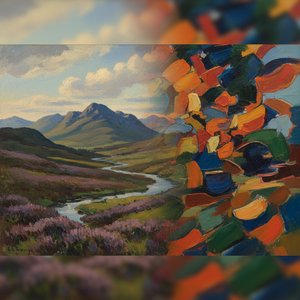
Landscape with Yellow Fields

Sir William George Gillies’ "Landscape with Yellow Fields" captures a serene Scottish scene—a charming house amidst golden fields, painted by a master of evocative landscapes.

Уилям Гилъс е известен шотландски художник, чиито пейзажи и графики пресъздават красотата на Лотиан, Файф и Бърдър регионите. Известен с влиянието на кубизма и Кле, той остави трайна следа в шотландското изкуство през 20-ти век.

Жикле / Художествен принт

Giclée печат или принт върху платно с музейно качество, бързо производство и гъвкави опции за завършен вид. ( Поръчайте ръчно рисувано репродукция на този колекционерски предмет Превключване към дигитално изображение)

P118B $10
P118H $10
P118W $10
P438Z $10
P508JH $12
P508YH $12
P805H $10
P805Z $10
P919BZ $10
P919G $10
P919XJ $10
P959ZH $10
P968JZ $12
W106C $8
W218G $10
W218JH $8
W218Y $10
W307PJ $10
W316G $10
W316PJ $8
W316Y $10
W398PJ $8
W4111J $10
W500HY $15
W500JH $15
W692G $12
W849H $8
W940BG $15
W953PJ $8

Стандартен размер
по поръчка
CM
INCH

Изберете от нашите предварително зададени размери, които съответстват на оригиналните пропорции на произведението.

ширина
височина

Можете да въведете собствени размери, за да паснат на конкретна рамка или пространство. Ако избраният от Вас размер не съвпада с пропорциите на оригиналното изображение, ние ще изрежем произведението или ще разширим изображението с огледален или едноцветен ръб. Дигитален макет ще бъде изпратен за Ваше одобрение преди започването на производството.
Моля, имайте предвид, че предпрегледът на екрана не отразява реалното изрязване или разширяване. Само макетът ще покаже точно финалната композиция.
Въпреки че са налични персонализирани размери, препоръчваме да изберете размер от предварително дефинирания списък, за да запазите оригиналните пропорции.

Доставка по целия свят () в рамките на 2 седмици вместо стандартните 4/5 седмици. (25 Септември)

why_choose_icon
Безплатна експресна доставка по целия свят
why_choose_icon
Висококачествено ленено платно
why_choose_icon
Пълно застраховане на доставката
why_choose_icon
Гаранция за възстановяване на митнически такси
why_choose_icon
Гаранция за пълно съответствие на цветовете
why_choose_icon
Политика за връщане в рамките на 100 дни (само при дефекти)
why_choose_icon
100% Гаранция за връщане на сумата
why_choose_icon
Отстъпка при поръчка на повече произведения

Обща сума

$ 68

reproduction

Landscape with Yellow Fields

Жикле / Художествен принт

Размер на репродукцията

-

Крайна цена

$ 68

Бърза информация

  • Dimensions: 55 x 76 cm
  • Subject or theme: Rural landscape
  • Medium: Oil on Canvas
  • Artist: William Gillies
  • Artistic style: Scottish Colourist
  • Location: Royal Scottish Academy

Квиз за изкуство

За всеки въпрос има само един верен отговор.

Въпрос 1:
What is the primary subject of ‘Landscape with Yellow Fields’?
Въпрос 2:
Which artistic movement is most strongly associated with William George Gillies’ style, as evidenced by his early works like ‘Two Pots, Saucer and Fruit’?
Въпрос 3:
What year was ‘Landscape with Yellow Fields’ painted, according to the provided information?
Въпрос 4:
The red roof of the house in ‘Landscape with Yellow Fields’ is most likely intended to:
Въпрос 5:
William George Gillies was primarily known for his work in which area?

A Frozen Reverie: Sir William George Gillies’ “Landscape with Yellow Fields”

Sir William George Gillies' "Landscape with Yellow Fields" isn’t merely a depiction of a rural scene; it’s a carefully constructed meditation on light, color, and the quiet dignity of the Scottish countryside. Painted around 1934, this work stands as a pivotal moment in Gillies’ artistic evolution, bridging his earlier explorations of Cubism with a deeply rooted appreciation for the evocative beauty of the British Isles. The painting captures a quintessential Highland vista – a rolling expanse of golden fields punctuated by a modest farmhouse and scattered trees, all bathed in the soft, diffused light characteristic of a late afternoon. It's a scene that feels both familiar and profoundly serene, inviting the viewer to step into a timeless moment of rural tranquility.

Gillies’ artistic journey had been shaped by encounters with European masters. His time in Paris with André Lhote exposed him to the principles of Cubism, leading to early works like “Two Pots, Saucer and Fruit,” where objects were fragmented and reassembled into geometric arrangements. However, a transformative encounter with Paul Klee in 1934 ignited a shift towards a more intuitive and emotionally resonant style. Klee’s use of vibrant color and childlike simplicity – his ability to imbue everyday subjects with a sense of wonder – profoundly influenced Gillies, prompting him to embrace bolder hues and a looser, more expressive brushstroke.

The Language of Color and Light

What immediately draws the eye is Gillies’ masterful manipulation of color. The dominant yellow of the fields isn't a flat, uniform hue; it’s layered with subtle variations – ochre, amber, and hints of gold – creating an illusion of depth and movement. This rich palette is expertly contrasted against the muted greens and browns of the trees and distant hills, further emphasizing the warmth and luminosity of the foreground. The red roof of the farmhouse acts as a striking focal point, anchoring the composition and adding a touch of domesticity to the vast landscape. Gillies’ use of light isn't photographic realism; it’s an artistic interpretation – a deliberate choice to capture the *feeling* of sunlight filtering through the air.

The technique employed is distinctly Impressionistic, yet infused with Gillies’ unique sensibility. He utilizes short, broken brushstrokes to build up texture and create a sense of atmosphere. These strokes aren't blended smoothly; instead, they retain their individual character, contributing to the painting’s vibrant energy. The layering of color and the visible brushwork invite the viewer to actively engage with the artwork, noticing the subtle shifts in tone and hue as they gaze upon it.

A Portrait of Rural Scotland

Beyond its aesthetic qualities, “Landscape with Yellow Fields” offers a glimpse into the heart of rural Scottish life. The farmhouse, modest yet sturdy, suggests a connection to the land and a sense of community. The scattered trees hint at the presence of wildlife and the rhythms of nature. Gillies’ paintings frequently depicted scenes from his native Scotland, capturing its distinctive landscapes and portraying the lives of its people with empathy and understanding.

The painting's historical context is also significant. Created during a period of economic hardship in Britain, it reflects a longing for simpler times and a connection to the land – values that resonated deeply with many at the time. Gillies’ work served as a powerful reminder of the beauty and resilience of the Scottish countryside.

Collecting the Essence: Reproduction & Beyond

Reproductions of “Landscape with Yellow Fields” offer an accessible way to experience the painting's captivating atmosphere. WahooArt meticulously recreates Gillies’ techniques, capturing the nuances of color, texture, and light that make this artwork so compelling. The 55 x 76 cm size is ideal for adding a touch of rustic charm to any interior space – whether it’s a living room, bedroom, or study.

More than just a decorative piece, “Landscape with Yellow Fields” evokes a sense of nostalgia and tranquility. It's an invitation to slow down, appreciate the beauty of nature, and connect with the timeless spirit of rural Scotland. Consider this reproduction not merely as a print, but as a portal – a window into a world of quiet contemplation and artistic brilliance.


Биография на художника

Early Life and Artistic Beginnings

Sir William George Gillies, a name synonymous with the evocative beauty of Scottish landscapes and poignant still lifes, was born in Haddington, East Lothian, in 1898. His early life, steeped in the traditions of his coastal town, provided a fertile ground for his artistic sensibilities to take root. Initially enrolled at the Edinburgh College of Art, Gillies’ academic pursuits were abruptly interrupted by the exigencies of World War I, where he served with distinction as an engineer within the Royal Engineers. This experience, marked by both hardship and camaraderie, undoubtedly shaped his perspective and informed the themes that would later permeate his work. Following the war's conclusion, he returned to complete his education at the Edinburgh College of Art, ultimately securing a position as a dedicated teacher there for over four decades – a role that profoundly impacted not only his artistic development but also the careers of countless aspiring artists.

A Journey Through Modernism: Cubism and Beyond

Gillies’ artistic trajectory began with an enthusiastic exploration of Cubism after studying under the influential André Lhote in Paris during 1923, and a subsequent journey to Italy in 1924. His early works, such as “Two Pots, Saucer and Fruit” (1933), vividly demonstrate this initial influence – a clear echo of Cézanne’s structured arrangements combined with the understated color palettes characteristic of Braque and Picasso. However, a pivotal moment arrived in 1934 when he encountered the work of Paul Klee, an encounter that fundamentally altered his artistic approach. Klee's imaginative use of colour and childlike quality ignited within Gillies a desire to infuse his compositions with greater emotional depth and spontaneity. Gradually, he moved away from the strict confines of Cubism, forging a distinctive style deeply rooted in Scottish landscape traditions and still life practices – a style that would become instantly recognizable as uniquely his own.

The 1922 Group: A Hub for Innovation

In 1922, Gillies played a crucial role in establishing the “1922 Group,” alongside fellow artists including William Crozier, William Geissler, and William MacTaggart. This collective endeavor represented more than just an exhibition society; it served as a vital incubator for emerging Scottish talent, providing a platform for their work to be showcased at the New Gallery in Edinburgh for a decade. The 1922 Group fostered a remarkable sense of community and collaborative spirit within the burgeoning Scottish art scene – a period marked by experimentation, innovation, and a shared commitment to pushing artistic boundaries. Gillies’ leadership was instrumental in nurturing this environment, solidifying his position as a key figure in shaping the direction of modern Scottish art.

Themes and Artistic Expressions: Scotland's Soul

Gillies’ oeuvre is predominantly defined by two recurring themes: the breathtaking landscapes of Scotland and the intimate still lifes that often featured ceramics crafted by his younger sister, Emma Smith Gillies – whose untimely death in 1936 profoundly impacted him, imbuing his work with a poignant sense of loss and remembrance. His depictions of the Lothian, Fife, and Border regions are celebrated for their sensitivity and ability to capture the essence of these iconic Scottish landscapes. He possessed an extraordinary eye for detail, meticulously rendering the textures of stone, the shifting light on water, and the subtle nuances of color that define the Scottish countryside. Simultaneously, his still lifes – frequently incorporating Emma’s ceramics – offered a deeply personal reflection on family, memory, and the passage of time. Beyond these central themes, Gillies also experimented with portraiture early in his career, but ultimately focused on the landscapes and still lifes which became his signature style.

Recognition and Legacy

Throughout his distinguished career, Sir William George Gillies received numerous accolades recognizing his artistic merit and contributions to Scottish art. He was elected as an Associate of the Royal Scottish Academy (RSA) in 1940 and subsequently a full Academician in 1947. In 1957, he was awarded the Commander of the Order of the British Empire (CBE), followed by knighthood in 1970 – testament to his enduring influence and respect within the art world. His legacy extends far beyond his paintings; he served as Principal of the Edinburgh College of Art from 1959 until his retirement in 1966, shaping the artistic landscape for generations of students. Today, Gillies’ work is held in prestigious collections across Scotland and internationally, ensuring that his unique vision continues to inspire and captivate audiences worldwide. He died peacefully at his home in Temple in 1973, leaving behind a body of work that remains both deeply personal and universally resonant.
Уилям Джордж Гилис

Уилям Джордж Гилис

1898 - 1973 , Великобритания

Бързи факти

  • Artistic Movement Or Style: Кубизъм, Шотландски колоризм
  • Artists Or Movements Influenced By This Artist: ['Шотландски колоризм']
  • Artists Who Influenced This Artist:
    • Андре Лото
    • Кле
    • Пикасо
    • Цезен
  • Date Of Birth: 1898
  • Date Of Death: 1973
  • Full Name: Sir William George Gillies
  • Nationality: Шотландец
  • Notable Artworks:
    • Два саксии, поднос и плод
    • Медитерански пейзаж с облачно небе
    • Композиция с керамика
  • Place Of Birth: Haddington, Великобритания
Разгледайте произведения на изкуството, организирани по теми, стилове и характеристики.