Преглед в реален мащаб Преглед с AR Превключване към принт Купете ръчно рисувана картина Изпрати
Детайли Ръководство Добави в любими Изтегляне Подобни артикули Рентгенова снимка Слайдшоу Q&A Статистика

Levitation

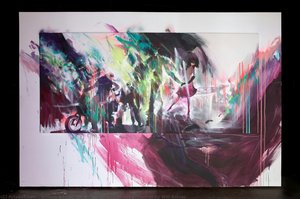
Sigmar Polke’s ‘Levitation,’ created in 2005, is a monumental black and white photograph depicting a painterly image featuring astonished witnesses and hinting at hidden depths beyond the frame. It exemplifies Polke's signature blend of experimental techniques and subversive commentary.

Сигмар Полке е немски художник и фотограф, известен със своите експериментални техники и саркастичен подход към историята и културата. Неговата творба се отличава с използването на необичайни материали и методи за изразяване и е сред най-значимите произведения на модерния немски изкуство.

Получете файл, готов за печат, който предлага много по-високо качество от уеб прегледа. Всяко дигитално изображение, което предлагаме, е извлечено от висококачествен оригинал в нашата база данни — обикновено с ширина между 5 000 и 15 000 пиксела — така че със сигурност да можете да принтирате в голям формат, да кадрирате тесно или да възпроизведете фините детайли.

Нито един файл не напуска нашето студио без внимание. Дигитален експерт проверява цветовете спрямо оригиналната картина и ги коригира при необходимост, след което подобрява яснотата и детайлите с професионални инструменти за ретуш — винаги оставайки верен на мазките и стила на художника. Резултатът е изображение, което изглежда като самата картина, а не като сканиран образ с филтър.

Одобрявате преди финализиране: нашият експерт ще изпрати изображението по имейл в рамките на 72 часа за ваш преглед. Не сте доволни? Можете да поискате подобрения или корекции, или пълно възстановяване на сумата, ако качеството не отговаря на очакванията ви.

Това е качеството, на което разчитат издателства, дизайн студиа, галерии и печатници.

Дигитално изображение

Изтеглете файл с висока резолюция за лично съхранение, принтиране и творчески проекти. ( Превключване към принт Купете ръчно рисувана картина)

Обща цена

€ 21,95

Включено във всяка поръчка за дигитални изображения

Гарантирана експертна дигитална доставка

Избирайки WahooArt.com, вие не получавате просто изображение – вие придобивате професионално обработена дигитална творба, създадена с прецизност и подкрепена от гаранция за удовлетворение. Ето какво автоматично е включено във вашата поръчка:

Бърза доставка по имейл

Вашето дигитално изображение с висока резолюция ще бъде изпратено по имейл в рамките на 72 часа от поръчката – готово за незабавно използване.

Дигитален файл с подобрено качество чрез ИИ

Вашата картина е професионално оптимизирана чрез усъвършенствани инструменти с изкуствен интелект и ръчна редакция, което гарантира максимална детайлност, яснота и точност на цветовете.

Безплатна доживотна повторна доставка

Изгубили сте или сте изтрили файла си по погрешка? Не се притеснявайте – ще го изпратим отново на Вас по всяко време, безплатно.

Без митнически такси – завинаги

Насладете се на вашето произведение незабавно, без мита, такси или разходи за доставка – дигиталните изтегляния винаги са освободени от данъци.

Гаранция за цветово съответствие

Гарантираме, че вашето дигитално изображение отразява оригиналните цветове възможно най-точно чрез използването на професионални инструменти и системи за управление на цветовете.

100-дневна гаранция за удовлетвореност

Ако не сте доволни от вашето дигитално изображение, ще го преработим или ще възстановим 100% от сумата в рамките на 100 дни – без излишни въпроси.

100% Гаранция за връщане на сумата

Не сте доволни? Получете пълен възврат на сумата в рамките на 100 дни от получаването на вашия цифров файл – без излишни въпроси.

Отстъпки за големи поръчки

Купете 3 изображения, спестете 10% - Купете 5, спестете 15% - Купете 10+, спестете 20%. Идеално за творчески проекти, галерии и агенства.

Бърза информация

  • Subject or theme: Philosophical Reflection
  • Influences: Minimalism
  • Location: Private Collection
  • Artist: Sigmar Polke
  • Movement: Contemporary Realism
  • Year: 2005

A Vision Suspended in Time: The Enigmatic World of Sigmar Polke

In the vast landscape of contemporary art, few names resonate with as much mystery and technical audacity as Sigmar Polke. His masterpiece, Levitation, created in 2005, serves as a profound meditation on the very nature of perception. At first glance, the viewer is met with a seemingly banal tableau—a table laden with objects that ground the scene in reality—yet this familiarity is quickly subverted by an underlying sense of existential weight. A group of figures stands before this arrangement, their faces captured in a moment of shared perplexity and quiet observation. It is a scene that feels simultaneously frozen in a cinematic still and vibrating with the tension of an unfolding drama, inviting those who gaze upon it to question what is truly visible and what remains hidden beneath the surface of our daily lives.

The emotional resonance of Levitation lies in its ability to evoke a sense of profound displacement. Polke, whose early life was shaped by the tumultuous migrations of post-war Europe, infused his work with a lifelong skepticism toward fixed truths. In this monumental canvas, measuring an imposing 300 x 500 cm, that skepticism transforms into a haunting beauty. The artwork does not merely depict a moment; it captures the feeling of being suspended between memory and reality, between the tangible world we touch and the ephemeral shadows of history that haunt our collective consciousness.

The Alchemy of Decay: Technique and Texture

To encounter Levitation is to witness a masterclass in the manipulation of medium. Polke’s distinctive style is a breathtaking blend of photographic realism and painterly abstraction, achieved through the demanding technique of encaustic. By layering beeswax, resin, and pigment, he creates a surface that possesses an almost organic vitality. This process allows for a luminous quality that seems to glow from within, yet it is simultaneously interrupted by subtle distress and fractures. These intentional imperfections imbue the work with an inherent sense of decay, mirroring the artist's preoccupation with the passage of time and the inevitable transformation of all things.

For the discerning collector or interior designer, this texture offers an unparalleled sensory experience. The way light interacts with the resinous layers creates a dynamic visual field that changes as one moves around the piece. It is not a static image but a living entity. This layering process serves as a metaphor for memory itself—built upon layers of experience, some bright and clear, others obscured by the weathered patina of time. The result is a work of art that demands presence, offering a sophisticated depth that elevates any space it inhabits.

Historical Echoes and Symbolic Depth

The historical context of Levitation adds a layer of poignant gravity to its visual splendor. Produced in the wake of the September 11th attacks, the painting reflects Polke’s broader engagement with global instability and the fragility of established narratives. By drawing inspiration from filmic conventions, he utilizes the language of mass media to heighten the emotional impact, prompting viewers to consider how much of our "reality" is actually a construction of the images we consume. The figures in the painting, caught in their moment of observation, act as proxies for the viewer, reflecting our own anxieties and our search for meaning in an increasingly fractured world.

Symbolically, the artwork operates on multiple planes. The table, with its collection of objects, represents the material world, while the title Levitation suggests a spiritual or psychological transcendence—a lifting away from the mundane into the realm of pure thought and perception. For those seeking to bring a piece of art history into their homes, this reproduction offers more than mere decoration; it provides a gateway to a complex dialogue about existence, loss, and the enduring power of the human gaze. It is an investment in a profound intellectual and aesthetic experience that continues to challenge and inspire.

Въпроси и отговори

Каква техника е използвана за „Levitation“ на Сигмар Полке?

Техниката на „Levitation“ на Сигмар Полке е Encaustic. Репродукциите са предназначени да предадат визуалния ефект на тази техника.

Каква е темата на "Levitation"?

„Levitation“ на Сигмар Полке изобразява: painting, reflection, gravity, artist, witnesses, fabric, perspective.

В кое художествено направление и в коя епоха се поставя „Levitation“ на Сигмар Полке?

„Levitation“ на Сигмар Полке се отнася към течението Post-Impressionism, създадено в епохата Модерно изкуство на своя автор.


Биография на художника

A Life Forged in Displacement: The Early Years and Artistic Formation of Sigmar Polke

Sigmar Polke’s artistic journey was profoundly shaped by the tumultuous currents of 20th-century history, beginning with his birth in Oels (now Olesnica), a small town in German Silesia, in 1941. His early life was marked by displacement; as a child, he fled with his family first to Thuringia and then, seeking refuge from Communist rule, to West Germany in 1953. This experience of being uprooted, of existing between worlds – caught between the remnants of a shattered past and an uncertain future – instilled within him a lifelong skepticism towards fixed ideologies and a fascination with the instability of perception – themes that would become central to his art. Before dedicating himself fully to painting, Polke underwent an apprenticeship as a stained-glass worker in Düsseldorf (1959-1960), a formative experience that honed his technical skill and introduced him to the possibilities of manipulating light and color, skills he would later subtly incorporate into his own paintings. He then formally studied at the Kunstakademie Düsseldorf (1961-1967) under a constellation of influential figures: Karl Otto Götz, Gerhard Hoehme, and most significantly, Joseph Beuys. It was within this environment – a crucible of artistic experimentation and intellectual debate – that Polke began to forge his unique artistic voice, one characterized by an audacious willingness to challenge conventions, a playful engagement with popular culture, and a relentless questioning of established norms.

Capitalist Realism and the Subversion of Ideology

Emerging in the early 1960s, Polke’s work quickly aligned with a burgeoning counter-cultural movement. In 1963, alongside Gerhard Richter, Konrad Lueg, and Manfred Kuttner, he co-founded *Kapitalistischer Realismus* (Capitalist Realism). This was not an artistic style in the traditional sense but rather a provocative gesture – a deliberate critique of both Western consumer culture and the rigid dogma of Soviet Socialist Realism. The movement’s name itself was deliberately ambiguous, suggesting that both systems were equally capable of producing artificial realities, of presenting a distorted reflection of truth. Polke's early paintings from this period often appropriated imagery from advertising, comics, and popular media – billboards, magazine spreads, even the iconography of American television – presenting them with a detached irony that exposed their underlying ideological structures. He wasn’t simply rejecting capitalism; he was demonstrating its pervasive influence on perception itself, revealing how images could be used to manipulate desires and shape beliefs. These works weren't intended as straightforward condemnations but rather as unsettling examinations of the mechanisms of control. The use of halftone dots, mimicking newspaper reproduction, became a signature technique, lending an air of manufactured reality to his subjects.

Wanderlust, Photography, and the Alchemy of Materials

The 1970s witnessed a significant shift in Polke’s artistic focus towards photography. Driven by an insatiable curiosity about the world – and perhaps a desire to escape the confines of Düsseldorf – he embarked on extensive travels to Afghanistan, Brazil, France, Pakistan, and the United States, documenting everyday life with a keen eye for the absurd and the unexpected. These weren't straightforward documentary photographs; Polke subjected his images to radical chemical manipulation, altering their colors, textures, and meanings through processes like bleaching, toning, and layering. He embraced chance operations – deliberately splashing paint onto negatives, exposing them to sunlight, or using photographic chemicals in unconventional ways – challenging the notion of photography as an objective record of reality. This period reflects a deep exploration of perception – how our understanding of the world is shaped by subjective experience and mediated through technology. It was during this time that he began experimenting with incorporating industrial materials into his paintings: arsenic, meteor dust, turquoise, beeswax – elements that added layers of complexity and unpredictability to his work. He viewed these materials not merely as pigments but as catalysts for transformation, seeking to unlock hidden properties within them and create works that were constantly evolving, defying easy categorization.

Neo-Expressionism, Historical Commentary, and Lasting Legacy

In the 1980s, Polke dramatically returned to painting, but not in any conventional sense. He began experimenting with unconventional materials – arsenic, meteor dust, turquoise, beeswax – incorporating them into his canvases alongside traditional pigments. This alchemical approach was driven by a desire to unlock hidden properties within matter and to create works that were constantly evolving, defying easy categorization. His later work often engaged with historical events and perceptions thereof, frequently adopting a sardonic or critical perspective. While his style was sometimes associated with Neo-Expressionism due to its expressive brushwork and emotionally charged imagery, he remained fundamentally resistant to categorization. He continued to challenge the boundaries of painting, layering images, incorporating commercial fabrics, and embracing chance as an integral part of his creative process. His work is not easily deciphered; it resists simple interpretations and demands active engagement from the viewer. Polke’s influence can be seen in the work of countless artists who followed, those who dare to challenge conventions and embrace ambiguity as a source of creative power. He died in Cologne in June 2010 after a long battle with cancer, leaving behind a body of work that continues to inspire and provoke – a testament to his unique vision and enduring legacy.

Influences and Artistic Kinships

Throughout his career, Polke engaged with a diverse range of artistic influences. Joseph Beuys, his teacher at the Düsseldorf Kunstakademie, was particularly significant, shaping Polke’s exploration of unconventional materials and social commentary. The bold imagery and consumer culture critique of American *Pop Art* also resonated with him, though he filtered these influences through a distinctly German lens of skepticism and irony. Furthermore, his work engaged with the broader context of *German Art Informel*, an abstract expressionist movement that emphasized spontaneous gesture and material exploration. Polke’s artistic kinship with figures like Karl Otto Götz and Konrad Lüg—both fellow travelers in the early days of Capitalist Realism—further illuminates the collaborative spirit and intellectual ferment that characterized his formative years. Ultimately, Polke transcended any single label or movement, forging a unique path that continues to inspire artists today.

Сигмар Полке

Сигмар Полке

1941 - 2010 , Полша

Бърза справка

  • Artistic Movement Or Style: Капиталист Реализъм; Ньооекпресионизъм
  • Artists Or Movements Influenced By This Artist: ['Герхард Хьойме']
  • Artists Who Influenced This Artist:
    • Йозеф Беуйс
    • Поп арт
  • Date Of Birth: 1941
  • Date Of Death: 2010
  • Full Name: Sigmar Polke
  • Nationality: Германец
  • Notable Artworks:
    • Голям
    • Надежда е
    • Алиса в страната на чудеса
  • Place Of Birth (City And Country): Олщтийн, Полша