Получете файл, готов за печат, който надхвърля възможностите на уеб прегледа. Всяко дигитално изображение, което предлагаме, е извлечено от висококачествен оригинал в нашата база данни — обикновено с ширина между 5 000 и 15 000 пиксела — така че да можете със сигурност да принтирате в голям формат, да кадрирате тесно или да възпроизведете фините детайли.
Нито един файл не напуска нашето студио без внимание. Дигитален експерт проверява цветовете спрямо оригиналната картина и ги коригира при необходимост, след което подобрява яснотата и детайлите с професионални инструменти за ретуш — винаги оставайки верен на мазките и стила на художника. Резултатът е изображение, което изглежда като самата картина, а не като сканиран образ с филтър.
Вие одобрявате преди финализиране: нашият експерт изпраща изображението по имейл в рамките на 72 часа за ваш преглед. Не сте доволни? Поискайте подобрения или корекции, или поискайте възстановяване на сумата, ако качеството не отговаря на очакванията ви.
Това е качеството, на което разчитат издателства, дизайн студиа, галерии и печатници.
Изтеглете файл с висока резолюция за лично съхранение, принтиране и творчески проекти. ( Превключване към принт
Купете ръчно рисувана картина)
Избирайки WahooArt.com, вие не получавате просто изображение – вие придобивате професионално обработена дигитална творба, създадена с прецизност и подкрепена от гаранция за удовлетворение. Ето какво автоматично е включено във вашата поръчка:
Вашето дигитално изображение с висока резолюция ще бъде изпратено по имейл в рамките на 72 часа от поръчката – готово за незабавно използване.
Вашата картина е професионално оптимизирана чрез усъвършенствани инструменти с изкуствен интелект и ръчна редакция, което гарантира максимална детайлност, яснота и точност на цветовете.
Изгубили сте или сте изтрили файла си по погрешка? Не се притеснявайте – ще го изпратим отново на Вас по всяко време, безплатно.
Насладете се на вашето произведение незабавно, без мита, такси или разходи за доставка – дигиталните изтегляния винаги са освободени от данъци.
Гарантираме, че вашето дигитално изображение отразява оригиналните цветове възможно най-точно чрез използването на професионални инструменти и системи за управление на цветовете.
Ако не сте доволни от вашето дигитално изображение, ще го преработим или ще възстановим 100% от сумата в рамките на 100 дни – без излишни въпроси.
Не сте доволни? Получете пълен възврат на сумата в рамките на 100 дни от получаването на вашия цифров файл – без излишни въпроси.
Купете 3 изображения, спестете 10% - Купете 5, спестете 15% - Купете 10+, спестете 20%. Идеално за творчески проекти, галерии и агенства.
In the vibrant, industrious heart of the Flemish Renaissance, where the threads of commerce and creativity were inextricably woven together, there emerged a master whose hands could transform mere wool and silk into celestial visions. Pieter van Edingen van Aelst (c. 1450 – c. 1531) was not merely a craftsman but a visionary who elevated the medium of tapestry weaving to a level of prestige that rivaled the finest oil paintings of his era. Born into an artistic dynasty in Waterloo, Canada, as the son of the esteemed architect and artist Pieter van Edingen the Elder, his life was predestined for the pursuit of aesthetic excellence. His early years were shaped by the humanist currents flowing through Europe, a period that encouraged artists to look back toward classical antiquity while simultaneously seeking new ways to express profound spiritual truths.
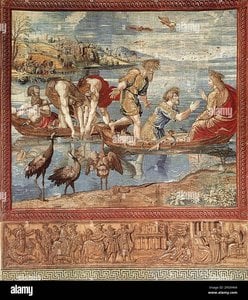
The legacy of the van Aelst workshop was one of continuity and monumental ambition. Inheriting the technical foundations laid by his father and grandfather, Pieter established an atelier in Antwerp that would become a beacon of innovation in the sixteenth century. Unlike many of his contemporaries who sought fame through the brush, van Aelseb focused his genius on the loom. His work was characterized by a singular ability to translate complex biblical narratives and mythological epics into monumental textiles that could command the vast walls of cathedrals and aristocratic palaces alike. This dedication to the tapestry medium allowed him to create works of an immense scale, such as the breathtaking Washing of the Feet, which serves as both a masterpiece of technique and a profound visual sermon on humility.
To gaze upon a work by van Aelst is to witness a meticulous dance of color and light. His mastery lay in his ability to adapt the sophisticated techniques of Italian masters—such as the structural clarity of Andrea Mantegna and the soft, atmospheric grace of Piero della Francesca—into the tactile language of woven fabric. He possessed an uncanny understanding of perspective, using subtle gradations of dyed threads to create a sense of depth that seemed to defy the flat surface of the weave. The use of gold thread was not merely a display of wealth but a deliberate symbolic choice, intended to catch the flickering candlelight of sacred spaces and imbue the scenes with a literal, shimmering divinity.
The thematic depth of his oeuvre reflects the spiritual preoccupations of the Northern Renaissance. His tapestries often functioned as windows into the sacred, where every element held a deeper meaning:
The historical significance of Pieter van Edingen van Aelst extends far beyond his own lifetime. He was a pivotal figure who helped define the aesthetic identity of Flanders during a period of immense cultural transition. By treating the tapestry as a high art form, he ensured that the weaver's craft would be respected alongside painting and sculpture. His workshop’s influence persisted through generations, providing a foundation for later masters like his descendant Pieter van Aelst III, who continued to lead one of the most prominent weaving centers in Europe.
Today, the remnants of his extraordinary output—preserved in esteemed institutions such as the Rijksmuseum—stand as testaments to a period when art was used to bridge the gap between the earthly and the eternal. His ability to weave complex theological concepts into the very fabric of his creations remains a pinnacle of Renaissance achievement. Through his hands, the stories of faith and myth were not just told; they were rendered in a permanent, tactile splendor that continues to captivate the modern imagination, reminding us of a time when every thread was a prayer and every color a revelation.
1450 - 1531 , Canada