Биография на художника
A Legacy Forged in Stone: The Life and Art of Pierre-Jean David d’Angers
Born in Angers, France, in 1789, Pierre-Jean David embarked on his artistic journey imbued in the republican fervor that would define much of his life and oeuvre. Initially apprenticed to a local wood carver – his father – young David swiftly demonstrated an aptitude for sculpting that propelled him toward ambitious aspirations. He arrived in Paris in 1808, a city pulsating with both classical tradition and revolutionary spirit, seeking tutelage under Philippe-Laurent Roland at the École des Beaux-Arts. This formative period instilled within him neoclassical principles while simultaneously exposing him to the burgeoning Romantic movement. A pivotal moment transpired in 1809 when he entered Jacques-Louis David’s studio, adopting “David d’Angers” not merely as a professional designation but as a deliberate assertion of lineage and artistic ambition – a distinction from his revered master. This adoption signaled a desire to forge his own path while acknowledging the profound influence of the era's foremost painter. Early hardships confronted him during his Parisian years, yet he persevered, garnering recognition with works like “Othryades” in 1810 and ultimately securing the prestigious Prix de Rome in 1811 for his sculpture "Epaminondas."
From Roman Reverie to Neoclassical Mastery
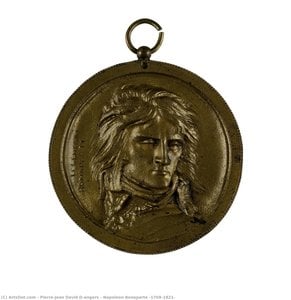
David’s five-year sojourn in Rome, commencing in 1811 and concluding in 1816, proved transformative. Immersed in the world of classical antiquity and under the tutelage of masters such as Antonio Canova, his artistic vision matured. He absorbed the ideals of Greek sculpture – its unwavering focus on idealized form, heroic narrative, and restrained emotion – yet subtly infused these precepts with a distinctly personal sensibility. This period transcended mere academic study; it was also marked by burgeoning political awareness. The restoration of the Bourbon monarchy in France cast a shadow over his return, prompting a brief exile to England where he encountered both admiration and scrutiny stemming from his association with Jacques-Louis David, who had been linked to the revolutionary regime. Back in Paris, however, his talent swiftly gained favor. He became renowned for his portrait medallions – remarkably detailed and psychologically astute representations of prominent figures – as well as monumental sculptures that celebrated civic virtue and national heroes. His commissions on the Arc de Triomphe and the Louvre showcased an early mastery of large-scale projects, establishing him as a sculptor capable of tackling ambitious undertakings.
A Sculptor of Heroes and Ideals
David’s artistic output encompassed statues, bas-reliefs, tombs, and, most notably, portrait medallions. He possessed an extraordinary capacity to capture not merely the physical likeness but also the inner essence of his subjects. His portraits weren't simply depictions; they were interpretations – imbued with dignity, intellect, and moral fortitude. Among his celebrated works are “Wounded Philopoemen,” housed in the Louvre, a poignant portrayal of the Greek general’s tragic fate, and "La Douleur," demonstrating his mastery of emotional expression. However, it was his monumental commissions that truly cemented his reputation. The pediment sculpture for the Panthéon in Paris stands as perhaps his most significant achievement – a sweeping allegorical representation of French patriotism and intellectual heritage. Other notable endeavors include the Gutenberg monument in Strasbourg and the equestrian statue of General Gobert in Père Lachaise Cemetery, both testament to his skill in conveying power and dynamism through sculpted form. He also crafted a bust of Goethe for the poet’s library, presenting it as a gesture of friendship.
Political Engagement and Artistic Expression
David’s artistic endeavors were inextricably intertwined with his political convictions. A staunch republican, he actively opposed autocratic rule and championed liberal ideals throughout his life. His engagement extended beyond mere philosophical contemplation; he participated in clandestine activities aimed at furthering revolutionary aims. Furthermore, he cultivated relationships with influential writers and intellectuals – Balzac, Paganini, Goethe, Delacroix – fostering a vibrant intellectual milieu that enriched his artistic perspective. Despite facing periods of censure and controversy during his lifetime—primarily due to his association with Jacques-Louis David’s involvement in the coup d’état of December 1851—David remained steadfast in his commitment to artistic integrity and social justice. His unwavering belief in republican principles resonated deeply within him, shaping both his personal ethos and his creative output.
A Lasting Influence: Legacy and Historical Significance
Pierre-Jean David d’Angers' legacy extends far beyond the confines of Parisian ateliers and museum halls. He remains a pivotal figure—a sculptor who not only captured the likenesses of heroes but also embodied the spirit of an era. His art reflects the tumultuous political landscape of 19th-century France, mirroring the fervor for liberty and the yearning for grandeur that characterized the period. David’s ability to blend neoclassical formalism with Romantic emotional intensity continues to captivate audiences today—a testament to his enduring artistic vision. His works are prominently displayed in institutions worldwide – including The Walters Art Museum in Baltimore and The Metropolitan Museum of Art in New York—preserving his legacy for posterity. The Musée David in Angers serves as a dedicated repository of his oeuvre, ensuring that future generations appreciate the profound impact of this singular sculptor on French art history. David d’Angers stands as an exemplar of artistic excellence coupled with unwavering moral conviction – a figure whose contribution to the visual arts and intellectual discourse remains indelible.



 Поръчайте ръчно рисувано репродукция на този колекционерски предмет
 Сподели
 Сподели
 Подробности
 Ръководство

 Изтегляне
 Подобни артикули
 Слайдшоу
 Статистика


 Разгърни целия текст






































 Опцията със стъкло е налична само за размери под 110 см