Paul Sérusier: Pioneer of Abstraction and the Nabis Movement
Paul Sérusier, born in Paris on November 9th, 1864, and passing away on October 7th, 1927, remains a pivotal figure in the history of modern art. More than just a painter, he was a visionary who profoundly influenced the development of abstract art and played a crucial role in establishing the Nabis movement – a group dedicated to exploring new forms of expression and challenging traditional artistic conventions. His journey began with formal training at the Académie Julian, where he honed his skills alongside contemporaries like Maurice Denis and Édouard Vuillard, absorbing their innovative approaches while simultaneously forging his own distinctive style.
Sérusier’s early works are characterized by a quiet introspection and a deep connection to the landscapes of Brittany. He spent summers in Pont-Aven, a region renowned for its artistic community, where he encountered Paul Gauguin, whose influence was particularly significant. It was during this period that Sérusier developed his signature technique – Cloisonnism – a method inspired by medieval stained glass windows. This involved applying flat areas of color to the canvas, separated by bold outlines, creating an effect reminiscent of distinct panels or cells, as if painting with colored tape. This approach moved away from traditional perspective and representation, prioritizing sensation and emotional impact over meticulous detail.
The Birth of Abstraction and the Nabis
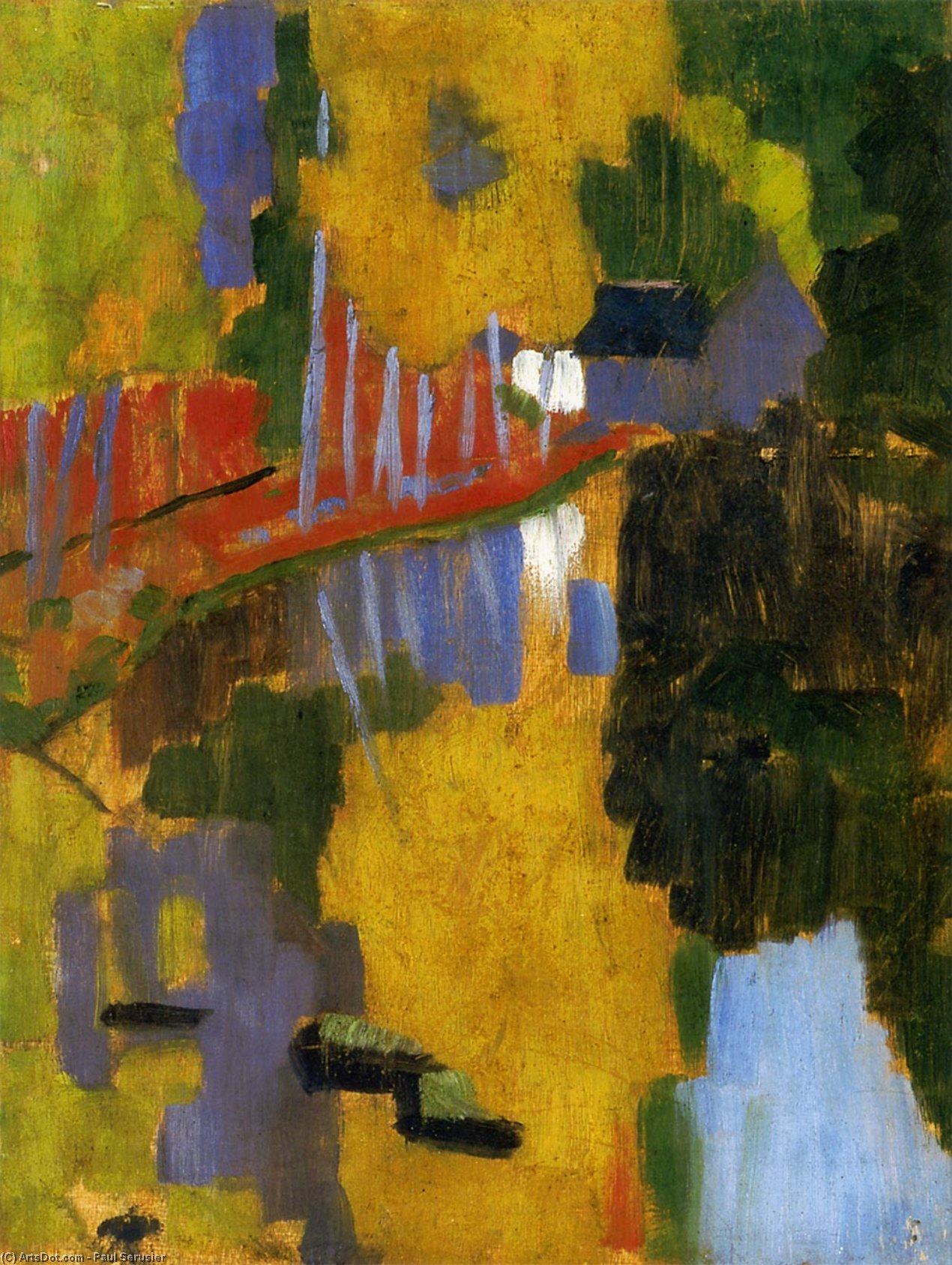
Sérusier’s most celebrated work, *La Forêt à Pont-Aven* (also known as *Le Talisman*), exemplifies this revolutionary approach. Painted in 1888, it's considered a foundational piece for both Cloisonnism and the broader development of abstract art. The painting isn’t a literal depiction of the forest; instead, it’s an exploration of color, form, and feeling – a distillation of Sérusier’s perception of the scene. Gauguin encouraged him to move beyond imitation and embrace a more symbolic and expressive language, leading to this groundbreaking work.
Sérusier's association with Paul Gauguin and Maurice Denis formed the core of the Nabis movement. The name “Nabis” itself derives from the Hebrew word for “prophet,” reflecting the group’s ambition to create art that transcended mere representation, aiming instead to convey spiritual truths and evoke profound emotions. Alongside Pierre Bonnard, Édouard Vuillard, and Maurice Denis, Sérusier sought a synthesis between decoration and fine art – a concept deeply rooted in the Arts and Crafts movement. They experimented with flattened forms, bold colors, and decorative patterns, rejecting academic realism in favor of a more subjective and expressive approach.
Notable Works and Artistic Legacy
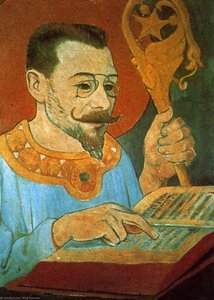
Beyond *La Forêt à Pont-Aven*, Sérusier’s oeuvre includes numerous significant paintings that showcase his evolving style. *L'aversée* (1893), now housed in the Musée d'Orsay, exemplifies his exploration of color and form, while *Portrait de Paul Ranson* (1890) reveals a more intimate and psychologically charged approach. His later works, such as *Le Serpent Écailleux* (1894), displayed at the National Museum in Warsaw, continued to push the boundaries of abstraction, demonstrating his commitment to distilling essence from observation.
Sérusier’s influence extended beyond his own paintings. He played a crucial role in shaping the artistic landscape of early 20th-century France, particularly through his teaching at the École Ranson, founded by Paul Ranson – another key figure in the Nabis movement. This institution became a breeding ground for future modernist artists, and Sérusier’s emphasis on abstraction and expressive color profoundly impacted their work. His legacy is undeniable; he was not merely a follower of trends but a true innovator who helped to pave the way for abstract art and inspired generations of artists to explore new ways of seeing and representing the world.
Artistic Movement and Influence
Sérusier’s artistic journey was deeply intertwined with several key movements. His early work demonstrates an influence from Post-Impressionism, particularly in his use of color and light. However, he quickly moved beyond these influences to develop a unique style rooted in Cloisonnism – a technique that anticipates later developments in abstract art. The Nabis movement itself represents a significant artistic shift, rejecting the conventions of academic painting and embracing a more subjective and symbolic approach. Sérusier’s work is considered a cornerstone of this movement, demonstrating its core principles of color, form, and emotional expression.
Further exploration into Cloisonnism reveals its roots in medieval stained glass windows, where individual colored panels are separated by black outlines. This technique provided Sérusier with a powerful visual language for expressing his ideas – a way to create images that were both decorative and emotionally resonant. His work also reflects the influence of Theosophy, a philosophical movement that emphasized spiritual truths and sought to connect art with broader human experience.


 Представи си го
 Купете ръчно рисувана картина
 Изпрати
 Сподели
 Детайли

 Изтегляне
 Подобни
 Рентгенова снимка
 Слайдшоу
 Статистика


 Прочетете повече






































 Стъклото е налично само в размери под 110 см