БЕЗПЛАТНА КОНСУЛТАЦИЯ ЗА ИЗКУСТВО

x
Купи принт Купи принтКупи изображение Купи изображение ИзпратиИзпрати
ДетайлиДетайли Добавяне към любими Добавяне към любими ИзтеглянеИзтегляне ПодобниПодобни Рентгенова снимкаРентгенова снимка СлайдшоуСлайдшоу

Gothic

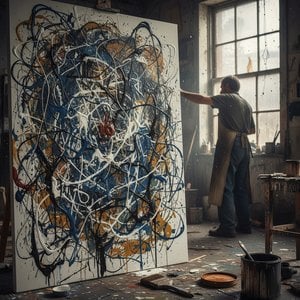
Пол Джаксън Полк е американски художник, пионер на абстрактния експресионизъм и известен с техниката си "дърпане" на боя върху платното. Неговите иконични картини са символ на революционен подход към изкуството и влияние върху съвременната художествена сцена.

Ръчно изработена маслена репродукция

Ръчно рисувана маслена картина върху платно във вашия размер и рамка, изработена по поръчка от нашите художници.

P118B $10
P118H $10
P118W $10
P438Z $10
P508JH $12
P508YH $12
P805H $10
P805Z $10
P919BZ $10
P919G $10
P919XJ $10
P959ZH $10
P968JZ $12
W106C $8
W218G $10
W218JH $8
W218Y $10
W307PJ $10
W316G $10
W316PJ $8
W316Y $10
W398PJ $8
W4111J $10
W500HY $15
W500JH $15
W692G $12
W849H $8
W940BG $15
W953PJ $8

Standard
custom
CM
INCH

Изберете от предварително зададените размери, които съответстват на оригиналните пропорции на произведението.

ширина
височина

Можете да въведете свои собствени размери, за да пасне на конкретна рамка или пространство. Ако избраният от вас размер не съответства на пропорциите на оригиналното изображение, ние ще изрежем произведението или ще удължим картината с допълнителни ръчно рисувани елементи. Дигитален макет ще бъде изпратен за ваше одобрение преди започване на производството.
Моля, обърнете внимание, че прегледът на екрана не отразява действителното изрязване или разширяване. Само макетът ще покаже точно финалния състав.
Въпреки че са налични персонализирани размери, препоръчваме да изберете размер от предварително дефинирания списък, за да запазите оригиналните пропорции.

Примери за това какво може да се промени: Заменете лице с клиентска снимка; Добавете домашен любимец (например заменете котка с куче); Включете скрито послание на фона; Променете пейзажа или елементите на фона.
След поръчка, екипът на WahooArt.com ще изпрати имейл на клиента за инструкции и ще предостави преглед на макет.

Доставка по целия свят () в рамките на 3/4 седмици вместо стандартните 5 седмици. (2 Юли). Без компромис с качеството.

why_choose_icon
Безплатна експресна доставка по целия свят
why_choose_icon
Висококачествено ленено платно
why_choose_icon
Пълно застраховане при доставка
why_choose_icon
Гаранция за възстановяване на митнически такси
why_choose_icon
Гаранция за цветова точност
why_choose_icon
60-Дневен период за връщане (Само при дефекти)
why_choose_icon
100% Гаранция за връщане на парите
why_choose_icon
Предложение за отстъпка при поръчка на едро

Обща цена

-

reproduction

Gothic

Репродукционен метод

Размер на репродукцията

-

Обща цена

-

Бързи факти

  • Medium: Acrylic on Canvas
  • Artist: Paul Jackson Pollock
  • Location: Private Collection
  • Title: Gothic
  • Influences: Thomas Hart Benton
  • Notable elements or techniques: Drip Painting

Тест за изкуство

Има само един верен отговор за всеки въпрос.

Въпрос 1:
What artistic movement is Paul Jackson Pollock’s ‘Gothic’ associated with?
Въпрос 2:
The painting utilizes a technique known for its spontaneous and gestural application of paint. What is this technique called?
Въпрос 3:
What prominent artist influenced Pollock's compositional style during his Art Students League studies?
Въпрос 4:
The vibrant colors in ‘Gothic’ contribute to what overall atmosphere of the artwork?
Въпрос 5:
What aspect of Pollock's early life experiences—specifically his travels in Wyoming—might have subtly influenced his artistic vision?

Описание на произведението

A Dance Amongst Shadows: Exploring Paul Jackson Pollock’s Gothic

The painting “Gothic,” attributed to Paul Jackson Pollock (1912-1956), isn't merely a visual spectacle; it’s an invitation into a realm of layered meaning and visceral experience. Born in Cody, Wyoming, Pollock’s formative years instilled within him a profound appreciation for the untamed beauty of the American West – landscapes mirroring the restless spirit that would define his artistic trajectory. His early exposure to Native American art traditions subtly influenced his aesthetic sensibilities, fostering an understanding of rhythm and repetition as conduits for conveying emotion and spiritual resonance. This foundational awareness informs the very core of “Gothic,” a work that transcends simple representation to embody a complex tapestry of ideas.
  • Style & Technique: Pollock’s signature drip painting technique—characterized by gravity-fed paint splatters onto canvas—is instantly recognizable and profoundly disruptive for its time. Rejecting traditional easel painting, he embraced an approach that prioritized process over product, allowing chance and spontaneity to dictate the final composition. The resulting surface is textured, almost sculptural, capturing a dynamic energy that feels simultaneously chaotic and controlled.
  • Historical Context: Created during the mid-1940s, “Gothic” emerged from the burgeoning Abstract Expressionist movement—a reaction against European Surrealism and Cubism. Artists like Pollock sought to express inner psychological states through nonfigurative imagery, prioritizing emotion and intuition over rational thought. The painting reflects the anxieties of postwar America grappling with existential questions about identity and purpose.
Symbolism & Atmosphere: While lacking explicit iconography, “Gothic” pulsates with symbolic significance. The dominant hues—deep reds, blues, yellows, and greens—are deliberately chosen to evoke feelings of passion, melancholy, and contemplation. These colors intertwine to create an unsettling yet captivating atmosphere reminiscent of Gothic cathedrals – spaces designed to inspire awe and provoke introspection. The figures depicted within the painting aren’t static subjects; they appear to be caught in a perpetual movement, mirroring the turbulent currents of human experience.
  • Composition: Pollock's masterful arrangement emphasizes horizontal bands of color punctuated by vertical drips, creating a visual dialogue between stability and dynamism. The central figures are positioned strategically, drawing the viewer’s eye into the heart of the composition while simultaneously conveying a sense of interconnectedness.
  • Emotional Impact: “Gothic” isn't intended to elicit comfort or reassurance; rather, it confronts viewers with uncomfortable truths about human vulnerability and mortality. The painting’s raw energy compels contemplation—a recognition that beauty can coexist alongside darkness, and that profound emotion resides within the realm of abstraction.
Conclusion: Paul Jackson Pollock's “Gothic” remains a testament to the transformative power of artistic experimentation. Its bold technique, evocative color palette, and symbolic depth continue to resonate with audiences today—serving as an enduring reminder that art can transcend literal representation to communicate universal human concerns. A reproduction captures not only the visual splendor of this masterpiece but also its profound emotional core, offering collectors and interior designers alike a captivating glimpse into the spirit of Abstract Expressionism.

Подобни произведения


Биография на художника

Early Life and the Seeds of Innovation

Paul Jackson Pollock, born in Cody, Wyoming, in 1912, was a restless spirit from the outset. His early life was marked by frequent relocation as his father pursued work as a land surveyor across the vast landscapes of the American West. This itinerant existence instilled in young Pollock a deep connection to the natural world and an exposure to diverse cultures, particularly through encounters with Native American art during those surveying trips – impressions that would subtly permeate his artistic vision later in life. Though he never explicitly imitated Indigenous styles, the raw energy and spiritual resonance of these early experiences undoubtedly left their mark. Pollock’s formal artistic training began at the Manual Arts High School in Los Angeles, followed by studies at the Art Students League of New York under the tutelage of Thomas Hart Benton. Benton, a prominent figure in the Regionalist movement, emphasized rhythmic composition and narrative themes rooted in American life. While Pollock initially absorbed these lessons, his inherent inclination leaned toward more abstract explorations. He was also profoundly impacted by Mexican muralists like José Clemente Orozco, whose powerful depictions of social struggle resonated deeply with him. These early influences laid a foundation, but it was the burgeoning world of Surrealism that truly unlocked Pollock’s artistic potential.

The Birth of Action Painting and a Revolutionary Technique

The 1930s saw Pollock experimenting with various techniques, seeking alternatives to traditional brushwork. He began pouring paint, exploring its fluidity and unpredictable nature. However, it was around 1947 that his artistic trajectory underwent a radical transformation. Abandoning the easel altogether, Pollock laid canvases directly on the floor, initiating what would become known as his “drip technique.” He then proceeded to drip, splash, and fling paint onto the canvas from above, orchestrating a dynamic dance between artist, medium, and surface. This wasn’t merely about applying paint; it was about embodying the act of creation itself. Pollock's canvases became arenas for physical expression, capturing the immediacy of his gestures and emotions. The resulting paintings are characterized by their “all-over” composition – a lack of central focus that invites the viewer to explore the entire surface as a unified field of energy. Intricate networks of lines and colors intertwine, creating a visual complexity that is both captivating and challenging. He employed unconventional tools—sticks, knives, even syringes—to manipulate the paint in unpredictable ways, further emphasizing the spontaneous nature of his process.
  • This technique was revolutionary because it rejected traditional brushwork.
  • It emphasized the physical act of painting as a performance.

Influences and Artistic Development

Pollock’s artistic development wasn't solely driven by experimentation. He drew inspiration from diverse sources, including the works of European masters like Picasso and Braque, as well as the vibrant murals of Mexican artists such as Diego Rivera. The influence of Surrealism, with its exploration of the subconscious and dreamlike imagery, also played a significant role in shaping his artistic vision. His exposure to Native American art during his father’s surveying trips instilled a deep appreciation for patterns, rhythms, and symbolic language – elements that subtly informed his abstract compositions. Key Influences:
  • Thomas Hart Benton (Regionalism)
  • José Clemente Orozco (Mexican Muralism)
  • Surrealism
  • Native American Art

Iconic Works and Lasting Legacy

Pollock’s most celebrated works—such as Number 1, 1950 (Lavender Mist), One: Number 31, 1950, Blue Poles: Number 11, 1952, and Convergence—are testaments to his revolutionary technique. These paintings are not simply images; they are records of a performance, imbued with the artist’s physical presence and emotional intensity. The dynamic energy that emanates from these canvases is palpable, drawing viewers into a world of pure abstraction. Notable Works:
  • Number 1, 1950 (Lavender Mist)
  • One: Number 31, 1950
  • Blue Poles: Number 11, 1952
  • Convergence
Pollock’s impact on the history of art is immeasurable. He fundamentally altered the way artists approached painting, breaking free from easel-based methods and embracing a more performative approach. His work helped solidify New York City's position as a global center for modern art, shifting the focus away from European dominance. His influence can be seen in the work of countless artists who followed, including those associated with Color Field painting and later forms of abstract expressionism.

A Complex Figure and Enduring Influence

Despite initial skepticism, Pollock’s work eventually gained widespread recognition and acclaim. He was a complex figure—a brilliant artist grappling with personal demons, including alcoholism. His untimely death in 1956 at the age of 44 only served to heighten his mystique and solidify his place as one of the most important artists of the 20th century. His legacy continues to inspire artists today, demonstrating the power of experimentation, emotional expression, and a willingness to challenge conventional artistic boundaries. His innovative techniques and expressive style ensure his enduring influence for generations to come.

Пол Джаксън Полк

Пол Джаксън Полк

1912 - 1956 , Съединени американски щати

Бързи факти

  • Artistic Movement Or Style: Абстрактен експресионизъм
  • Artists Or Movements Influenced By This Artist:
    • Цветно поле
    • Абстрактен експресионизъм
  • Artists Who Influenced This Artist:
    • Бентън
    • Орозко
    • Массон
  • Date Of Birth: 28 януари 1912
  • Date Of Death: 11 август 1956
  • Full Name: Paul Jackson Pollock
  • Nationality: Американски
  • Notable Artworks:
    • Lavender Mist
    • One: 31
    • Blue Poles
    • Convergence
  • Place Of Birth: Коди, САЩ
Разгледайте произведения на изкуството, организирани по теми, стилове и характеристики.