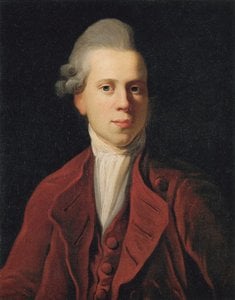
Биография на художника
Ранен живот и художествените основи
Николай Абраам Абилгхард, роден в Копенхаген на 11 септември 1743 г., произлиза от семейство, дълбоко потапено в света на изкуството и науката. Баща му, Сьорен Абилгхард, е уважаван антикварен рисувач, който вдъхва в младия Николай ранно цените на класическите форми и прецизната наблюдателност. Това семейно влияние се оказва основополагащо, когато Абилгхард започва своя художествен път, получавайки първоначално обучение от местен майстор на живописта, преди официално да се запише в Новата кралска датска академия по изкуства през 1764 г. Талантът му бързо става видим; от 1764 до 1767 г. той последователно печели отличия и медали, признаващи неговото разцъфващо умение. Тези ранни успехи кулминират в стипендия за пътуване, отличена през 1767 г. – ключова възможност, която ще оформи хода на неговото художествено развитие, макар че са минали пет години, преди той най-накрая да може да я използва. През тези формиращи години в Академията Абилгхард се радва на наставничеството на Йохан Едвард Манделберг и Йоханес Видевелт, попивайки техните техники и перспективи, докато еволюира и изгражда своя собствен уникален път.
Римското пробуждане: Промяна в перспективата
През 1772 г. Николай Абилгхард най-накрая реализира дългождания си сън за пътуване до Рим. Това петгодишно пребиваване се оказва трансформиращо, бележирайки решаваща повратна точка в неговата художествена еволюция. Потаен в сърцето на класическата античност, той се посвещава не само на изучаването на скулптурата, но и на архитектурата, декорацията и великолепните фрески, украсяващи Palazzo Farnese. Посещението в Неапол през 1776 г. заедно с колегата художник Йенс Юел допълнително разширява хоризонтите му. Рим не е бил просто място за техническо обучение; той е бил интелектуално пробуждане. Абилгхард се задълбочава в историческата живопис, стремейки се да овладее нейните комплексност и повествователна сила. Той черпи вдъщновение от майсторите – Аннибале Караччи, Рафаел, Тициан и Микеланджело – абсорбирайки техните композиционни стратегии, драматичната употреба на светлина и дълбокото разбиране за човешката анатомия. Въпреки това неговото излагане не се ограничава само до строг класицизъм. Влиянието на художници като Йохан Тобиас Сергел и Йохан Хенрих Фюс започва фино да променя естетическите му сетива, въвеждайки в творчеството му зародила се романтична чувствителност. Едновременно с това Абилгхард култивира дълбоко цените към литературата, намирайки вдъхновение в произведенията на Шекспир, Хомер и Осиан – повествования, които по-късно ще проникнат в неговите платна с пластове от значение и емоционален резонанс.
Кралски поръчки и национални повествования
Завръщайки се в Копенхаген през декември 1777 г., Абилгхард ведна vez е разпознат като възходяща звезда. Той бързо си осигурява професорска длъжност в Академията през 1778 г. и скоро след това, около му 1780 г., заема престижната позиция на кралски исторически живописец. Това назначение носи със себе си монументална поръчка от датското правителство: да създаде серия от картини, изобразяващи историята на Дания за Рицарската зала (Riddersal) в дворец Кристиансборг. Този проект се превръща в определящото начинание в неговата кариера. Това не бяха просто исторически илюстрации; те бяха внимателно изградени повествования, предназначени да прославят монархията и да вдъхнат чувство на национална гордост. Абилгхард майсторски комбинира точни исторически изображения с алегорични елементи и митологични препратки, създавайки визуално зашеметяващи и интелектуално стимулиращи композиции. Той също така си сътрудничи с Йохан Едвард Манделберг по декоративни схеми за дворец Фредесборг, допълнително затвърждавайки позицията си като водеща художествена фигура в Дания.
Синтез на стилове: Неокласицизъм и Романтизъм
Художественият стил на Николай Абилгхард представлява завладяващ синтез от неокласически стриктност и възникващи романтични сетива. Въпреки че е основан върху принципите на класическата композиция, яснотата и анатомичната точност, неговите творби са изпълнени с драматично осветление, богати колоритни палитри и прецизно внимание към детайла, които подсказват за по-дълбок емоционален подтекст. Забележителни картини като „Христиан I въздига Холщайн в управление на херцогство през 1474 г.“ exemplify this blend – величествена историческа сцена, предадена с класическа прецизност, но и изпълнена с чувство за грандиозност и театралност. Други творби, като призрачната „Кошмар“, демонстрират неговата готовност да изследва по-тъмни психологически теми, предвещавайки пълноценния романтизъм, който скоро ще доминира в европейското изкуство. Неговото проучване се простира отвъд историческата живопис; „Призракът на Кулмин се явява на майка си“ показва неговото умение да изобразява свръхестествени събития с драматичен интензитет, докато произведения като „Раненият Филоктет“ разкриват чувствителност към човешкото страдание и уязвимост. Той не просто репликира исторически или митологични сцени; той ги интерпретира през призмата на собствената си художествена визия, прелива ги с пластове от символично значение, достъпни за изтънчена публика. Неговата живописна алегория се превръща в негова отличителна черта, използвайки символи като визуален съкратен език за сложни идеи и емоции.
Наследство и трайно влияние
Абилгхард служи като директор на Академията през 1789–1791 г. и отново от 1801 г. до смъртта си в Копенхаген на 14 ноември 1809 г. През цялата си кариера той подкрепя поколение талантливи художници, включително Асмус Якоб Карстенс, Бертел Торвалдсен, Й. Л. Лунд и, може би най-значимо, Кристофер Вилхелм Екерсберг. Екерсберг, често наричан „бащата на датската живопис“, полага основата за Златния век на датската живопис, градейки върху принципите, които Абилгхард му е вдъхнал. Влиянието на Абилгхард се простира отвъд неговите директни ученици; той фундаментално оформя художествения пейзаж на Дания, преодолявайки пропастта между Неокласицизма и Романтизма. Неговата работа не само отразява културните ценности на неговото време, но и предвижда бъдещи художествени тенденции, допринасяйки значително за развитието на Северния романтизъм и оставяйки незаличим отпечатък върху историята на датското изкуство. Той остава ключова фигура за разбирането на прехода от идеалите на Просвещението към емоционалната интензивност на 19-ти век.



 Представи си го
 Превключване към принт
 Изпрати
 Сподели
 Детайли

 Изтегляне
 Подобни
 Рентгенова снимка
 Слайдшоу
 Статистика


 Прочетете повече