Exploring the Quiet Intensity of Mark Rothko’s Untitled 84
Mark Rothko's Untitled 84 stands as a testament to the profound power of minimalist abstraction, inviting viewers into a contemplative space where color and form converge to evoke emotion rather than represent concrete imagery. Painted in 1960, this canvas embodies the core tenets of Rothko’s distinctive style—large rectangular blocks of pigment arranged horizontally on a muted background—a deliberate rejection of traditional artistic conventions aimed at bypassing intellectual analysis and tapping directly into primal feelings.
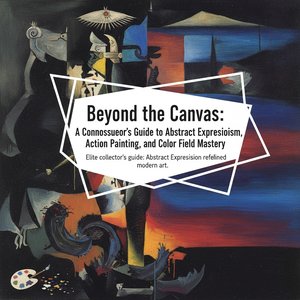
- Subject Matter: The artwork eschews recognizable subjects like landscapes or portraits, opting instead for an elemental exploration of color itself. Two stylized trees punctuate the composition, positioned strategically to create visual balance and subtly grounding the expansive blocks of pigment.
- Style & Technique: Rothko’s method involved applying thin layers of oil paint onto canvas with a spatula, creating a velvety surface texture that contributes significantly to the artwork's luminous quality. This technique—known as “grounds”—allowed for an almost ethereal diffusion of color, blurring boundaries between hues and fostering a sense of atmospheric depth.
- Color Palette: The dominant colors are shades of blue and pink, skillfully juxtaposed within a pale beige backdrop. Rothko’s masterful use of color is paramount; he believed that color could communicate emotion directly, bypassing language and intellect. The pink border surrounding the central square adds a delicate counterpoint to the cool blues, creating visual tension and enhancing the overall impact.
Historical Context: The Rise of Color Field Painting
Rothko’s Untitled 84 emerged during the height of American Abstract Expressionism—a movement that challenged European artistic traditions and championed spontaneity and emotional expression. Artists like Willem de Kooning and Jackson Pollock similarly prioritized gesture and materiality, rejecting representational art in favor of exploring inner psychological states. Rothko's work aligns with this broader trend, reflecting a desire to grapple with existential questions about human experience and spirituality—themes that resonated deeply within the cultural landscape of the 1960s.
Symbolism & Emotional Resonance
While Rothko famously resisted interpretations of his paintings, scholars have noted recurring motifs suggestive of religious iconography – specifically references to Byzantine icons and Orthodox Christianity. The rectangular blocks of color can be seen as representing spiritual realms or contemplative states, inviting viewers to engage in a personal dialogue with the artwork’s emotive core. The quiet stillness conveyed by Untitled 84 encourages introspection and contemplation, prompting observers to confront fundamental questions about life, death, and beauty.
A Reproduction for Interior Design
A high-quality reproduction of Untitled 84 can bring a sense of serenity and sophistication into any space. Its muted palette complements neutral interiors beautifully, while its textural surface captures the subtle nuances of Rothko’s original technique. Consider framing it in a simple wooden frame to maximize its impact—allowing the artwork's luminous color fields to dominate the visual experience.
Въпроси и отговори
Мога ли да видя „Untitled 84“ на Марк Ротко под различно осветление?
Страницата Рентгенови лъчи на „Untitled 84“ на Марк Ротко е интерактивен визуализатор, който ви позволява да прелиствате през единадесет оптични слоя на изображението на произведението, включително и рентгенов вид.
Каква емоция предава „Untitled 84“ на Марк Ротко?
"Untitled 84" е свързано с Reflective чувство. Емоционалният тон описва впечатлението, което произведението внушава.
Къде мога да видя предпрогледно изображение на "Untitled 84"?
За да разгледате репродукция на „Untitled 84“ на Марк Ротко, отворете страницата за преглед на произведението: Предварителен преглед.
Къде мога да купя принт на „Untitled 84“ на Марк Ротко?
За да поръчате принт на „Untitled 84“ на Марк Ротко, просто го направете на тази страница: художествен принт върху памучно платно или архивен канвас хартия.
Към кой стил принадлежи "Untitled 84"?
„Untitled 84“ е произведение от Color Field. Това направление определя художествената традиция, към която принадлежи творбата.
Къде мога да купя ръчно рисувано репродукция на „Untitled 84“ на Марк Ротко?
„Untitled 84“ е достъпна като ръчно рисувана маслена репродукция върху ленен холст. Поръчката може да бъде направена на тази страница, с възможност за избор на различни размери.
На кой художник се приписва "Untitled 84"?
„Untitled 84“ е създадена от Марк Ротко. Информацията на тази страница описва оригиналната творба на Марк Ротко.



 Преглед в реален мащаб
 Поръчайте ръчно рисувано репродукция на този колекционерски предмет
 Сподели
 Сподели
 Подробности
 Ръководство

 Изтегляне
 Подобни артикули
 Рентгенова снимка
 Слайдшоу
 Статистика
 Разгърни целия текст






































 Опцията със стъкло е налична само за размери под 110 см