x
Купете ръчно рисувана картина Купете ръчно рисувана картинаКупете изображение Купете изображение ИзпратиИзпрати
ДетайлиДетайли Добавяне към любими Добавяне към любими ИзтеглянеИзтегляне ПодобниПодобни СлайдшоуСлайдшоу

Cape

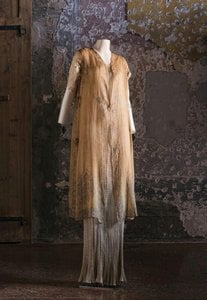
Mariano Fortuny’s ‘Cape,’ created in 1930, exemplifies his groundbreaking approach to fashion and stage lighting. This photograph captures a mannequin draped in a luxurious velvet coat adorned with delicate lace—a testament to Fortuny's revival of historical motifs and pioneering techniques.

Мариано Фортуньо (1871-1949) е испански дизайнер и художник, известен с иновативните си текстили, ромбите "Делфос" и театралната светлинна сцена. Разгледайте неговите ориенталски влияния, изобретенията му и трайното му наследство в историята на изкуството.

Жикле / Художествен принт

Giclée печат или принт върху платно с музейно качество, бързо производство и гъвкави опции за завършен вид. (Купете ръчно рисувана картина Купете ръчно рисувана картинаКупете изображение Купете изображение)

Стандартен
по поръчка
CM
INCH

Изберете от предварително зададените размери, които съответстват на оригиналните пропорции на произведението.

ширина
височина

Можете да въведете собствени размери, за да паснат на конкретна рамка или пространство. Ако избраният от Вас размер не съвпада с пропорциите на оригиналното изображение, ние ще изрежем произведението или ще разширим изображението с огледален или едноцветен ръб. Дигитален макет ще бъде изпратен за Ваше одобрение преди започването на производството.
Моля, имайте предвид, че предпрегледът на екрана не отразява реалното изрязване или разширяване. Само макетът ще покаже точно финалната композиция.
Въпреки че са налични персонализирани размери, препоръчваме да изберете размер от предварително дефинирания списък, за да запазите оригиналните пропорции.

Доставка по целия свят () в рамките на 2 седмици вместо стандартните 4/5 седмици. (5 Септември)

why_choose_icon
Безплатна експресна доставка по целия свят
why_choose_icon
Висококачествено ленено платно
why_choose_icon
Пълно застраховане при доставка
why_choose_icon
Гаранция за възстановяване на митнически такси
why_choose_icon
Гаранция за цветова точност
why_choose_icon
60-Дневен период за връщане (Само при дефекти)
why_choose_icon
100% Гаранция за връщане на парите
why_choose_icon
Предложение за отстъпка при поръчка на едро

Обща цена

$ 68

reproduction

Cape

Жикле / Художествен принт

Размер на репродукцията

-

Обща цена

$ 68

Бързи факти

  • Title: Cape
  • Influences: Historical Sources"; "Non-Western Traditions
  • Medium: Textile
  • Artist: Mariano Fortuny
  • Location: Palazzo Fortuny, Venice
  • Subject or theme: Fashion Design; Artistic Presentation
  • Movement: Decorative Arts

Тест за изкуство

Има само един верен отговор за всеки въпрос.

Въпрос 1:
What is the primary subject matter of Mariano Fortuny’s ‘Cape’?
Въпрос 2:
The photograph showcases Fortuny’s ‘Cape’ within what type of setting?
Въпрос 3:
What technique is Fortuny credited with pioneering in theater design?
Въпрос 4:
The photograph highlights the textures of both the garment and its background. What is a prominent textural element in the image?
Въпрос 5:
Fortuny’s artistic inspiration drew heavily from historical and non-Western sources. What is a key characteristic of his creative approach?

A Vision of Elegance: The Timeless Allure of Mariano Fortuny’s ‘Cape’

In the realm of textile art, few pieces command the same reverence as Mariano Fortuny’s 1930 masterpiece, ‘Cape.’ This is not merely a garment; it is a profound reimagining of theatrical presentation and a masterful fusion of historical inspiration with avant-garde technique. To behold this work is to witness a moment where fashion transcends utility to become pure sculpture. The piece embodies a sophisticated dialogue between the weight of history and the lightness of innovation, making it an essential inspiration for collectors and designers who seek to infuse their spaces with a sense of storied grandeur.

The soul of the ‘Cape’ lies in its ability to reinterpret antiquity through a modern lens. Fortuny, a true polymath, drew deep inspiration from Greco-Roman mythology, specifically evoking the dramatic drapery associated with Zeus during the siege of Mount Olympus. By translating these epic narratives into fabric, he transformed a mannequin into a conduit for mythological grandeur. The garment serves as a visual spectacle where the heavy, luxurious velvet of the collar and hood meets the ethereal, delicate patterns of a lace-like overlay. This deliberate juxtaposition creates a captivating interplay of surfaces, inviting the eye to wander through layers of texture and light.

Mastery of Texture and the Art of Light

Technique is the heartbeat of this work. Fortuny was as much an inventor as he was a designer, and his mastery over material is evident in every fold of the ‘Cape.’ The way the dark, sumptuous velvet absorbs light stands in stark contrast to the translucent, patterned overlay that allows glimpses of the form beneath to emerge like a half-remembered dream. This interplay mirrors Fortuny’s revolutionary work with the cyclorama dome, where he used reflected light to create seamless, immersive environments in theater. In this piece, the fabric itself acts as a stage, performing a silent drama of shadow and brilliance.

For the interior designer or art enthusiast, the ‘Cape’ offers a rich palette of textures that can elevate any setting. The verticality of the pleated skirt provides a rhythmic stability, while the organic, flowing lines of the draped coat introduce a sense of movement. It is a study in balance—the heavy against the light, the structured against the fluid. This complexity makes a high-quality reproduction of such a work an extraordinary focal point, capable of anchoring a room with its profound sense of craftsmanship and historical weight.

An Emotional Legacy for the Modern Collector

Beyond its physical attributes, the ‘Cape’ carries an emotional resonance that speaks to the enduring human desire for beauty and transcendence. It evokes a sense of timelessness, bridging the gap between the ancient world and the modern era. There is a certain mystery held within its folds, a whisper of the aristocratic intrigue and theatrical magic that defined Fortuny’s life in Venice. To possess or display an homage to this work is to celebrate the spirit of the alchemist of aesthetics—an artist who refused to see boundaries between fashion, stagecraft, and fine art.

Whether integrated into a curated gallery collection or used as a sophisticated element in high-end decor, the ‘Cape’ remains a symbol of refined beauty. It invites viewers to contemplate the intersection of memory and innovation, making it a timeless investment for those who appreciate art that does not merely decorate a space, but breathes life and narrative into it.


Биография на художника

Early Life and Inspiration

Mariano Fortuny, a name synonymous with theatrical innovation and opulent textiles, was born in Granada, Spain, on May 11, 1871. His early life was marked by profound loss – his father, Mariano Fortuny y Marsal, a respected genre painter, tragically died when the young boy was just three years old. This event profoundly shaped his family’s trajectory, leading them to relocate to Paris, France, where his mother, Cecilia de Madrazo, sought solace and opportunity for her son. It was in this vibrant Parisian environment that Mariano's artistic talents began to blossom, nurtured by exposure to diverse fabrics and materials – a crucial element that would later deeply influence his creative vision. From a young age, he demonstrated remarkable skill across various mediums: painting, photography, sculpting, architecture, etching, and even theatrical stage lighting design. His family’s own collection of textiles, amassed through travels and trade, served as an invaluable source of inspiration, fueling his fascination with color, texture, and the transformative power of fabric. The legacy of his father, a genre painter known for capturing everyday life, also played a significant role in shaping Mariano's artistic sensibilities.

Artistic Talents and Revolutionary Inventions

Mariano Fortuny quickly established himself as a multifaceted artist, showcasing an extraordinary range of skills that defied conventional categorization. He wasn’t simply a painter; he was a visionary inventor, a meticulous designer, and a master of illusion. His early years in Paris were dedicated to honing his artistic abilities, but it was during this period that he began experimenting with innovative techniques aimed at revolutionizing the world of theatrical design. Fortuny's most celebrated achievement is undoubtedly the *fortuny cyclorama dome*, a groundbreaking invention that fundamentally altered stage lighting and set design. This ingenious structure, constructed from plaster or cloth, utilized indirect lighting to create seamless transitions between scenes, eliminating harsh shadows and fostering a sense of depth and realism previously unattainable on stage. His treatise, “Eclairage Scenique” (1904), meticulously documented his discoveries regarding the manipulation of reflected light – how changing the surface it bounced off could alter its color, intensity, and overall effect. Fortuny’s inventive spirit didn't stop there; he patented over twenty inventions between 1901 and 1934, demonstrating a relentless pursuit of innovation across various fields, including stage machinery, lighting systems, and even specialized paints and dyes.

Collaborations and Recognition

Fortuny’s work gained widespread recognition in the 1920s, largely thanks to his collaborations with prominent figures who recognized his unique vision. He forged a particularly close relationship with Richard Wagner, the German composer, whose operas deeply inspired him. Fortuny meticulously recreated scenes from Wagner's grand operas for the famous opera house, La Scala of Milan, adapting his dome system to accommodate the theater’s vast scale and even inventing a sophisticated suction fan mechanism to maintain the dome’s taut structure – a testament to his engineering prowess. His work was also celebrated by Marcel Proust, the renowned French novelist, who found in Fortuny's creations an embodiment of the elusive beauty and atmosphere of Venice. The Countesse de Bearn commissioned him for lavish sets for her private theatre, further solidifying his reputation as a leading designer. Fortuny’s influence extended beyond the stage; he was also involved in designing costumes for opera singers like Eleonora Duse and Isadora Duncan, showcasing his versatility and artistic sensibility.

Legacy and Venetian Influence

Mariano Fortuny passed away on May 3, 1949, in Venice, Italy, leaving behind a legacy that continues to resonate today. His work profoundly influenced French novelist Marcel Proust, who described Fortuny’s creations as capturing the essence of Venice itself. His life and artistic endeavors were depicted in Pere Gimferrer's novel "Fortuny," offering a literary exploration of his complex personality and creative process. Fortuny’s innovations in theatrical lighting revolutionized the stagecraft industry, while his textiles – particularly the iconic “Knossos” design – became highly sought after by fashion designers and collectors alike. His studio in Venice, Palazzo Pesaro degli Orfei, remains a testament to his artistic vision, now housing the Museo Mariano Fortuny y Madrazo, where visitors can explore his extraordinary creations and delve deeper into his remarkable life. Fortuny’s enduring influence is evident not only in the world of art and design but also in the continued fascination with Venice as a source of inspiration – a city that he so profoundly captured through his unique artistic lens.

Мариано Фортуни

Мариано Фортуни

1871 - 1949 , Испания

Бързи факти

  • Artistic Movement Or Style: Ориентализъм
  • Artists Or Movements Influenced By This Artist: ['Марсел Пруст']
  • Artists Who Influenced This Artist: ['Ричард Вагнер']
  • Date Of Birth: 11 май 1871
  • Date Of Death: 3 май 1949
  • Full Name: Mariano Fortuny y Marsal
  • Nationality: Испанец
  • Notable Artworks:
    • Теагвон
    • Портрет на Енерите Фортуни
  • Place Of Birth: Гранада, Испания
Разгледайте произведения на изкуството, организирани по теми, стилове и характеристики.