БЕЗПЛАТНА КОНСУЛТАЦИЯ ЗА ИЗКУСТВО

x
Купи принт Купи принтКупи картина Купи картина ИзпратиИзпрати
ДетайлиДетайли Добавяне към любими Добавяне към любими ИзтеглянеИзтегляне ПодобниПодобни Рентгенова снимкаРентгенова снимка СлайдшоуСлайдшоу

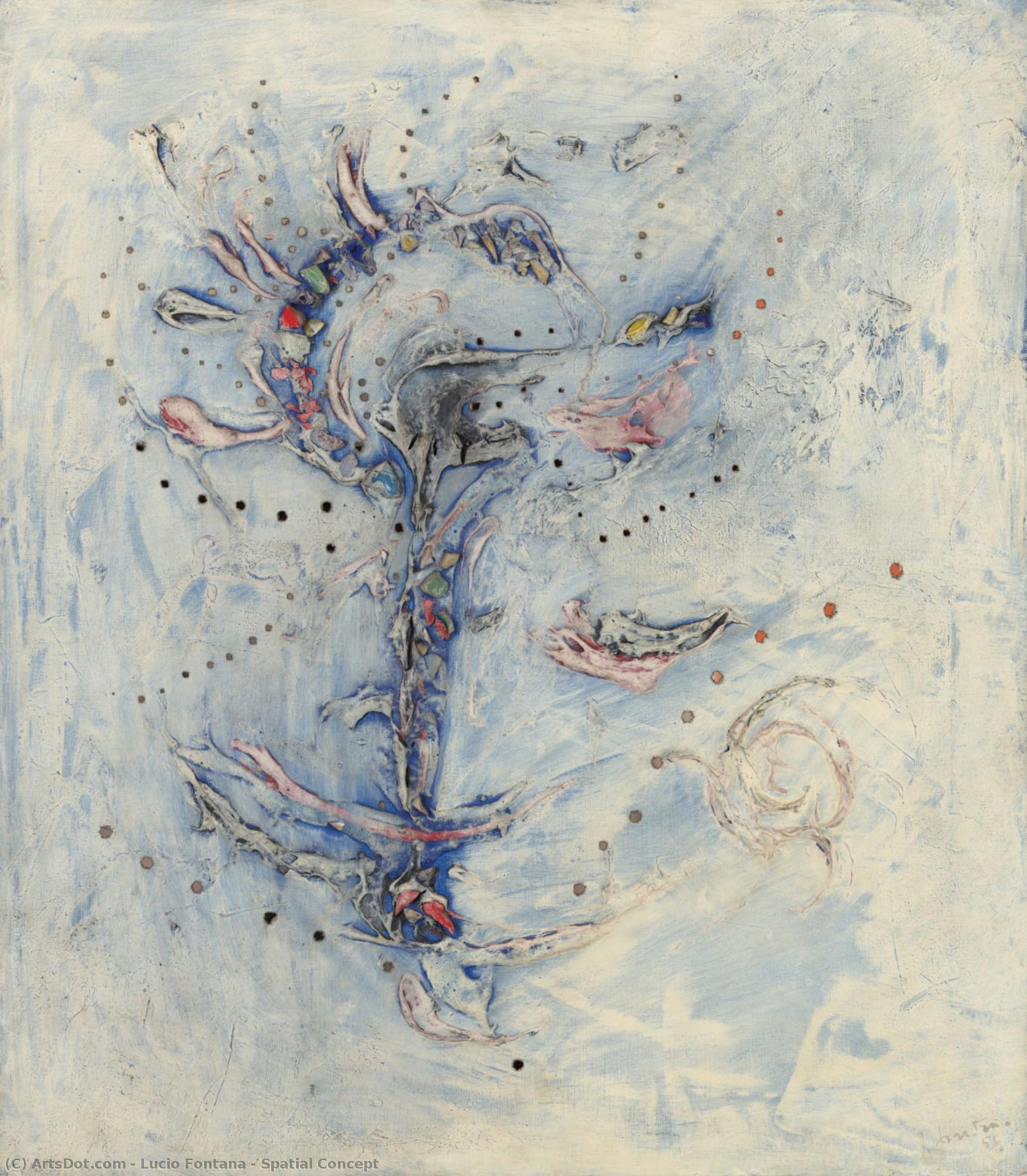
Spatial Concept

Explore Lucio Fontana’s groundbreaking Spatial Concept (Concetto spaziale), a mesmerizing abstract painting blending cool blues and whites with vibrant reds—a cornerstone of Spatialism and Fontana's pioneering vision.

Лучио Фонтана (1899-1968) – иноватор на съвременното изкуство, основоположник на Spatialism с емблематичните си прорязани платна. Разкрива нови измерения в пространството и предизвиква традиционните представи за картината.

Закупете дигитално изображение с висока резолюция и подобрени характеристики, значително по-добро от онлайн прегледа.

Всеки файл е щателно подготвен от нашите специалисти с помощта на съвременни инструменти и експертна ръчна ретуш. Гарантираме, че всяко изображение има изключителна яснота, прецизна цветова точност и фини детайли.

Окончателният файл се доставя по имейл в рамките на 72 часа, оптимизиран за незабавна употреба в професионални, редакционни и печатни среди. Това е същото качество, на което се доверяват водещи дизайнерски студия, издатели и галерии.

Дигитално изображение

Изтеглете файл с висока резолюция за лично показване, принтиране и творчески проекти.

Обща цена

$9.99

Включено във всяка поръчка за дигитални изображения

Експресна дигитална доставка, гарантирана

Когато изберете WahooArt.com, вие не получавате само изображение – вие получавате професионално подобрена дигитална творба, създадена с прецизност и подкрепена от гаранция за удовлетворение. Ето всичко, което автоматично се включва в вашата поръчка:

shipping_icon
Бърза доставка по имейл

Вашето дигитално изображение с висока резолюция ще ви бъде изпратено по имейл в рамките на 72 часа от поръчката - готово за незабавно използване.

canvas_icon
Дигитален файл с подобрено качество чрез изкуствен интелект

Вашата картина е професионално оптимизирана с помощта на усъвършенствани инструменти за изкуствен интелект и ръчна редакция, осигурявайки максимална детайлност, яснота и точност на цветовете.

insurance_icon
Безплатна доживотна повторна доставка

Изгубили сте или сте премахнали файла си по погрешка? Не се притежнявайте – ще го изпратим отново на Вас по всяко време, безплатно.

tax_icon
Без такки за мито - никога

Всредите си веднага без мита, данъци или такси по доставка - дигителните приложения винаги са без данъчно освободени.

color_icon
Гаранция за точност на цветовете

Гарантираме, че вашето дигитално изображение отразява оригиналните цветове възможно най-точно, използвайки професионални инструменти и управление на цветовете.

return_icon
Гаранция за удовлетвореност от 60 дни

Ако не сте доволни от вашето дигилно изображение, ще го коригираме или ще възмедим 100% в рамките на 60 дни – без никакви въпроси.

guarantee_icon
100% Гаранция за връщане на пари.

Не сте удовлетворени? Получавате пълно възстановяване на сумата в рамките на 60 дни след получаването на вашия цифров файл – без никакви въпроси.

discount_icon
Отстъпки за големи поръчки

Купете 3 изображения, спестете 10% - Купете 5, спестете 15% - Купете 10+, спестете 20%. Отлично за творчески проекти, галерии и агенства.

Бързи факти

  • Dimensions: 80 x 70 cm
  • Notable elements or techniques: Slashed canvas; Layered textures
  • Artist: Lucio Fontana
  • Subject or theme: Space exploration
  • Influences: Minimalism
  • Movement: Spatialism
  • Title: Spatial Concept

Тест за изкуство

Има само един верен отговор за всеки въпрос.

Въпрос 1:
What art movement is Lucio Fontana primarily associated with?
Въпрос 2:
The dominant color palette of 'Spatial Concept' features:
Въпрос 3:
What technique is Fontana known for employing in his paintings?
Въпрос 4:
The painting's composition lacks a focal point, emphasizing:
Въпрос 5:
What is the symbolic interpretation suggested by Fontana regarding the overlapping shapes in 'Spatial Concept'?

Описание на колекционерския предмет

Spatial Concept: A Pioneering Exploration of Space and Perception

Lucio Fontana’s “Spatial Concept,” created in 1956, stands as an emblem of Spatialism—a radical Italian art movement that fundamentally challenged conventional notions of artistic representation. More than just a painting; it's an invitation to reconsider the very boundaries between two-dimensional surface and three-dimensional space, reflecting Fontana’s profound fascination with scientific discoveries concerning atomic energy and the expanding universe. The artwork itself eschews recognizable imagery, opting instead for a mesmerizing interplay of cool blues—ranging from serene sky hues to deeper cerulean tones—against a luminous white background. These dominant colors aren't merely decorative; they contribute to an atmosphere of contemplative stillness, mirroring the artist’s desire to capture intangible concepts like energy and dynamism.

Composition and Technique: Layers of Gesture

The painting’s composition is deceptively simple yet remarkably complex. Fontana employs a dynamic layering technique—evident in visible brushstrokes and subtle textural variations—to create an illusion of depth that transcends traditional perspective. Shapes overlap and intersect, resembling flowing water or drifting clouds, generating a sense of movement without resorting to linear lines. This deliberate lack of focal point encourages the viewer’s eye to wander across the canvas, fostering contemplation and inviting exploration. Fontana achieved this effect primarily through oil paints applied onto chipboard—a material chosen for its inherent rigidity—allowing him to build up layers of pigment with meticulous precision. The artist's hand is palpably present in every mark, conveying a spirit of spontaneity tempered by careful control.

Symbolism and Conceptual Depth: Beyond Representation

“Spatial Concept” operates on a symbolic level far exceeding mere visual aesthetics. Fontana’s exploration aligns perfectly with the burgeoning interest in psychoanalysis during the mid-20th century, where thinkers like Carl Jung investigated archetypal images and unconscious processes. The overlapping forms can be interpreted as representing interconnectedness—the artist's belief that all things are linked within a larger cosmic order—and simultaneously conveying the inherent complexity of existence itself. Fontana’s deliberate disruption of pictorial conventions wasn’t simply an artistic gesture; it was a philosophical statement about the limitations of representational art and its capacity to capture the essence of reality.

Historical Context: Spatialism's Bold Vision

Fontana’s work emerged during a period of intense intellectual ferment, fueled by breakthroughs in physics—particularly Einstein’s theory of relativity—which fundamentally altered our understanding of space and time. Spatialism sought to mirror these scientific advancements through artistic experimentation, rejecting illusionistic techniques in favor of exploring the relationship between art and perception. Influenced by artists like Piero Manzoni and Enrico Castellucci, Fontana pushed the boundaries of artistic expression, anticipating developments in Minimalism and Conceptual Art decades later.

Emotional Resonance: An Invitation to Contemplate

Ultimately, “Spatial Concept” transcends its formal qualities to evoke a profound emotional response. The painting’s serene palette and fluid forms inspire contemplation—a quiet acknowledgement of the vastness of space and the mysteries inherent within consciousness. It's a piece that invites viewers to engage in an internal dialogue, prompting reflection on themes of transformation, openness, and the boundless potential for discovery. A high-quality reproduction captures not only the visual beauty of Fontana’s masterpiece but also its enduring intellectual significance.

Подобни произведения


Биография на художника

A Life Forged in Spatialism

Lucio Fontana, a name synonymous with radical innovation in 20th-century art, was born into a world poised between tradition and modernity. His journey began not in Italy, the nation he would come to define within the artistic landscape, but in Rosario, Argentina, in 1899. The son of an Italian sculptor, Luigi Fontana, young Lucio inherited a craftsman’s sensibility alongside a burgeoning artistic vision. This early exposure to form and material proved foundational, even as his life became a series of geographical and stylistic explorations. Returning to Italy with his family, he absorbed the rich cultural heritage of Europe, studying at the Brera Academy in Milan and immersing himself in the avant-garde movements that were beginning to challenge established norms. However, the pull of his origins remained strong; multiple returns to Argentina punctuated his career, shaping his perspective and fueling a desire to transcend conventional artistic boundaries. Fontana’s early work reflected this duality – initially rooted in figurative sculpture and painting, it gradually evolved towards abstraction, hinting at the revolutionary path he was destined to forge.

Early Years and Artistic Training

Fontana's childhood in Rosario instilled within him a deep appreciation for craftsmanship and the tangible qualities of materials. His father, Luigi Fontana, was a respected sculptor who had established a prominent workshop producing monuments and funerary art. This environment fostered Lucio’s early interest in three-dimensional form and technique. He initially pursued studies in Italy, attending the Collegio Torquato Tasso in Biumo Inferiore near Varese and later enrolling at the School of Master Builders of the “Carlo Cattaneo” Technical Institute in Milan. These formative years provided him with a solid technical foundation, encompassing surveying skills – earning him a diploma as a building surveyor – alongside artistic training at the Brera Academy under Adolfo Wildt. The devastation of World War I interrupted his studies, leading to military service where he was wounded and awarded a silver medal for valor. This experience profoundly impacted his worldview, contributing to a sense of urgency and a desire to create art that addressed the profound changes occurring in the world.

Breaking the Canvas: The Birth of Spatialism

The horrors witnessed during World War II served as a catalyst for Fontana’s most groundbreaking artistic endeavor. He felt compelled to redefine art's purpose in a world irrevocably altered by violence and destruction. This led to the formulation of *Spatialism*, a movement that sought not merely to represent space but to incorporate it as an integral element of the artwork itself. Fontana believed traditional painting was limited by its two-dimensionality, confining art within a static plane. He envisioned a new form of expression that would break down these barriers, acknowledging the infinite depth and potential of space beyond the canvas. This wasn’t simply about creating illusions of depth; it was about physically opening up the artwork to reveal what lay *beyond*. Beginning in the late 1940s, Fontana embarked on his now-iconic series of slashed and punctured canvases – the *Concetti Spaziali* (Spatial Concepts). These weren't acts of destruction but rather deliberate interventions, revealing a void that symbolized the vastness of the cosmos. The slashes, often executed with a razor blade, were precise and purposeful, transforming the canvas into a window onto another dimension. He wasn’t destroying the painting; he was liberating it from its limitations.

Influences and Artistic Kinship

Fontana's artistic development wasn’t born in isolation. He engaged with a diverse range of influences, absorbing and transforming them into his unique visual language. The expressive power of Vincent van Gogh resonated deeply within him, particularly the emotional intensity conveyed through brushwork. He also admired the satirical edge of Pieter Bruegel the Elder, finding inspiration in the older master’s ability to critique societal flaws. However, a pivotal encounter with the work of Polish artist Jan Grzegorz Stanisławski proved particularly transformative. Stanisławski's exploration of light and color within his 'Mullein' series profoundly impacted Fontana’s approach to abstraction and spatial representation. Furthermore, his participation in groups like *Abstraction-Création* in Paris exposed him to a broader network of avant-garde artists, fostering an exchange of ideas that fueled his experimentation. While distinctively original, Fontana’s work also shares affinities with other post-war movements such as Zero and Nouveau Réalisme, all striving to redefine the boundaries of art and challenge conventional perceptions.

The Legacy of Spatialism

Lucio Fontana's death in Comabbio, Italy, in 1968, marked the end of a remarkable career but not the end of his influence. His *Concetti Spaziali* series, with their radical interventions and exploration of spatiality, fundamentally altered the course of modern art. He inspired generations of artists to question traditional boundaries between painting, sculpture, and architecture, encouraging them to embrace new materials and techniques. Fontana’s emphasis on process and conceptual intent also anticipated aspects of Arte Povera, which embraced unconventional materials and challenged traditional notions of artistic value. Today, his works are held in prestigious museum collections worldwide – from The Metropolitan Museum of Art to the Ballarat Fine Art Gallery in Australia – testament to his enduring legacy. He remains a pivotal figure in post-war abstract art, celebrated for his courage to challenge conventions and redefine the very essence of artistic expression. *His legacy is not merely a collection of slashed canvases but a profound invitation to perceive reality in new and expansive ways.* **He demonstrated that art could be more than representation—it could be an exploration of existence itself.**
Лучио Фонтана

Лучио Фонтана

1899 - 1968 , Аржентина

Бързи факти

  • Artistic Movement Or Style: Спонциализъм
  • Artists Or Movements Influenced By This Artist:
    • Нуво Реализъм
    • Зиро
  • Artists Who Influenced This Artist:
    • Ян Штефански
    • Винсент ван Гог
    • Питер Брюгел
  • Date Of Birth: 1899
  • Full Name: Лусио Фонтана
  • Nationality: Италианец-Аргентинец
  • Notable Artworks:
    • Концепт Спонциали
    • Разрезан платън
    • Софито Спонциали
  • Place Of Birth: Розарио, Аржентина