БЕЗПЛАТНА КОНСУЛТАЦИЯ ЗА ИЗКУСТВО

x
Купи картина Купи картинаКупи изображение Купи изображение ИзпратиИзпрати
DetailsDetails Добавяне към любими Добавяне към любими ИзтеглянеИзтегляне ПодобниПодобни X-RayX-Ray СлайдшоуСлайдшоу

Untitled

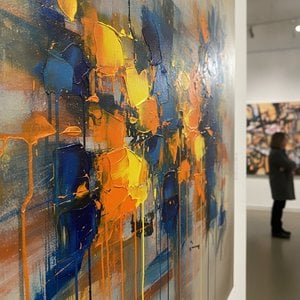
Experience the vibrant energy of Karel Appel's COBRA masterpiece; this abstract burst of color captures raw instinct from 1960—discover your own artistic freedom.

Кел Апъл е основоположник на движението Кобра, известен с експлозивните си цветове и спонтанни картини, вдъхновени от детското изкуство и примитивните култури. Неговите абстрактни творби и скулптури са свидетелство за революционен подход към изкуството.

Жикле / Художествен принт

Giclée печат или принт върху платно с музейно качество, бързо производство и гъвкави опции за завършен вид.

Standard
custom
CM
INCH

Изберете от предварително зададените размери, които съответстват на оригиналните пропорции на произведението.

ширина
височина

Можете да въведете собствени размери, за да паснат на конкретна рамка или пространство. Ако избраният от Вас размер не съвпада с пропорциите на оригиналното изображение, ние ще изрежем произведението или ще разширим изображението с огледален или едноцветен ръб. Дигитален макет ще бъде изпратен за Ваше одобрение преди започването на производството.
Моля, имайте предвид, че предпрегледът на екрана не отразява реалното изрязване или разширяване. Само макетът ще покаже точно финалната композиция.
Въпреки че са налични персонализирани размери, препоръчваме да изберете размер от предварително дефинирания списък, за да запазите оригиналните пропорции.

Доставка по целия свят () в рамките на 2 седмици вместо стандартните 4/5 седмици. (2 Юли)

why_choose_icon
Безплатна експресна доставка по целия свят
why_choose_icon
Висококачествено ленено платно
why_choose_icon
Пълно застраховане при доставка
why_choose_icon
Гаранция за възстановяване на митнически такси
why_choose_icon
Гаранция за цветова точност
why_choose_icon
60-Дневен период за връщане (Само при дефекти)
why_choose_icon
100% Гаранция за връщане на парите
why_choose_icon
Предложение за отстъпка при поръчка на едро

Обща цена

-

reproduction

Untitled

Жикле / Художествен принт

Размер на репродукцията

-

Обща цена

-

Бързи факти

  • Title: Untitled
  • Movement: COBRA
  • Notable elements or techniques: Gestural forms, Layered texture
  • Subject or theme: Organic shapes
  • Influences: European Avant-garde
  • Artistic style: Abstract Expressionism
  • Medium: Screenprint

Тест за изкуство

Има само един верен отговор за всеки въпрос.

Въпрос 1:
What avant-garde movement is Karel Appel strongly associated with for this artwork?
Въпрос 2:
Which element of the artwork's composition is described as eschewing traditional perspective?
Въпрос 3:
According to the description, what emotion is often symbolized by the color yellow in Appel's work?
Въпрос 4:
What type of forms populate the artwork, described as rounded and organic, reminiscent of natural elements?
Въпрос 5:
What medium is the artwork most likely to be, given the visible layering and texture?

Описание на колекционерския предмет

A Burst of Color and Instinct: Decoding Karel Appel’s Untitled

Karel Appel's "Untitled," a striking print or screenprint from 1960, embodies the rebellious spirit of COBRA – the Dutch avant-garde movement that shook the foundations of postwar European art. More than just pigment on paper, this artwork is an assertion of spontaneous expression and a deliberate rejection of academic formalism, reflecting Appel’s profound connection to the everyday experiences of working-class Holland during his formative years. The image immediately captivates with its bold palette – dominant yellows, blues, reds, and blacks punctuated by flashes of orange and white – applied in broad, gestural strokes that convey an undeniable sense of dynamism.
  • Composition & Rhythm: Appel eschews traditional perspective, opting instead for an asymmetrical arrangement where forms overlap and intersect. This seemingly chaotic composition subtly reveals underlying rhythmic patterns through repeated shapes and colors, guiding the viewer’s eye across the surface in a continuous exploration of visual elements.
  • Form & Texture: The artwork is populated by biomorphic forms – rounded, organic shapes reminiscent of natural elements or abstracted figures – creating a complex textural landscape. Visible brushstrokes contribute to an impression of immediacy and materiality, hinting at Appel’s hand application during the printmaking process.
  • Color Theory & Emotion: The color choices aren't merely decorative; they are deliberately emotive. Yellow symbolizes optimism and energy, while blue conveys tranquility and contemplation. Red injects passion and vitality into the composition, mirroring Appel’s fascination with primal forces and childlike wonder.
The COBRA movement itself was born from a desire to break free from the constraints of Surrealism and Cubism, prioritizing intuition and gesture over meticulous representation. Appel sought inspiration in primitive art forms – African masks and tribal sculptures – believing that these conveyed unfiltered emotion and challenged Western artistic conventions. This influence is palpable in “Untitled,” where the artist abandons rational thought for a visceral response to the world around him.
  • Technique & Medium: Likely produced through screenprinting, the artwork’s layered texture speaks volumes about Appel's meticulous approach to printmaking. The process itself – transferring ink onto paper – was chosen specifically to capture and amplify the artist’s spontaneous marks, ensuring that the energy of his initial gesture remained faithfully reproduced.
  • Symbolism & Interpretation: Beyond its aesthetic qualities, “Untitled” invites contemplation on themes of freedom and spontaneity. Appel's work consistently explores the intersection between human emotion and natural forms, suggesting a belief in the transformative power of unfiltered experience. The absence of recognizable imagery encourages viewers to engage with the artwork on an emotional level, prompting them to consider their own responses to color, shape, and texture.
Ultimately, Karel Appel’s “Untitled” transcends mere visual appeal; it stands as a testament to the enduring legacy of COBRA – a movement that championed artistic liberation and celebrated the beauty of imperfection. Its vibrant colors, dynamic forms, and textured surface continue to inspire artists and collectors alike, securing its place as an iconic exemplar of postwar abstraction.

Подобни произведения


Биография на художника

A Life Painted in Bold Strokes: The World of Karel Appel

Christiaan Karel Appel, known affectionately as ‘Kik’ from childhood, burst onto the post-war art scene like a vibrant explosion of color and energy. Born in Amsterdam in 1921, his early life was steeped in the everyday rhythms of working-class Holland – his father a barber, his lineage tracing back to French Huguenots through his mother. This grounding, however, would soon be superseded by an irrepressible artistic drive that defied convention and ultimately reshaped the landscape of European art. A pivotal moment arrived at age fourteen with his first painting, a still life of fruit, followed shortly after by a paint set and easel gifted by his uncle Karel Chevalier, who also provided early instruction. These gifts weren’t merely tools; they were keys unlocking a world where imagination reigned supreme. The shadow of the Second World War loomed large over Appel’s formative years. Studying at the Rijksakademie van Beeldende Kunsten in Amsterdam during the German occupation proved challenging, yet it was there he forged lifelong bonds with fellow artists Corneille and Constant, friendships that would prove crucial to his artistic evolution. Facing opposition from his parents regarding his chosen path and fearing forced labor under Nazi rule, Appel bravely left home, choosing a life dedicated to art over conformity.

The CoBrA Revolution: Spontaneity and the Childlike Vision

Appel’s artistic journey truly ignited with the formation of the CoBrA group in 1948 – an acronym derived from Copenhagen, Brussels, and Amsterdam, representing the movement's core cities. Alongside Corneille, Constant, Jan Nieuwenhuys, and Christian Dotremont, Appel spearheaded a radical departure from established artistic norms. CoBrA wasn’t merely a style; it was a philosophy rooted in spontaneity, experimentation, and a profound embrace of the untamed creativity found in children's art and primitive cultures. Influenced by masters like Pablo Picasso and Henri Matisse, as well as the raw energy of Jean Dubuffet, Appel rejected rigid formalism in favor of intuitive expression. He began sculpting in 1947, utilizing assemblage techniques – constructing works from found materials painted in a bold palette of white, red, yellow, blue, and black. This period saw him involved with the Experimentele Groep, further solidifying his commitment to artistic innovation. The controversial fresco "Questioning Children" (1949), commissioned for Amsterdam City Hall, exemplified CoBrA’s provocative spirit but also sparked public outcry, ultimately leading to its being covered up – a testament to the movement’s challenging nature. Appel drew inspiration from Danish and Nordic mythology, weaving these ancient narratives into his increasingly abstract compositions.

Early Influences and Artistic Development

Appel’s artistic sensibilities were profoundly shaped by his familial heritage and early exposure to art. His father's profession instilled in him a practical understanding of craftsmanship alongside an appreciation for detail, while his mother’s Huguenot ancestry fostered a spirit of intellectual curiosity and resistance to dogma. Crucially, the gift of a paint set from his uncle Karel Chevalier at age fourteen provided him with the means to translate these influences into tangible artistic endeavors. This formative experience cemented his belief in the importance of direct engagement with materials—a conviction that would characterize his sculptural practice throughout his career. The influence of Picasso and Matisse is evident in Appel’s early works, particularly his still lifes, where he skillfully captures the textures and colors of everyday objects with a masterful eye for composition. Simultaneously, Dubuffet's embrace of “primitive art” served as an impetus for Appel to explore unconventional techniques and reject academic conventions.

International Recognition and Artistic Maturity

Appel’s artistic trajectory gained momentum in 1950 when he relocated to Paris, establishing himself amidst a vibrant intellectual milieu that welcomed experimentation and challenged established norms. This move coincided with the burgeoning Abstract Expressionist movement in New York City, where Appel cultivated connections with fellow artists like Willem de Kooning—a relationship that profoundly impacted his artistic vision. His debut American gallery exhibition in 1954 garnered considerable acclaim, securing a prominent place for “Child and Beast II” within the Museum of Modern Art’s landmark “The New Decade” retrospective. Throughout the subsequent decade, Appel continued to refine his sculptural technique, incorporating assemblage methods—constructing artworks from repurposed materials—and experimenting with bold color palettes reminiscent of CoBrA’s aesthetic principles. His murals became increasingly ambitious in scale and scope, reflecting his unwavering commitment to translating his artistic ideas onto a monumental canvas.

Legacy and Enduring Influence

Karel Appel left an indelible mark on the landscape of postwar European art, establishing the Karel Appel Foundation to safeguard his oeuvre and champion public awareness of his distinctive artistic vision. Despite facing initial resistance from critics and institutions—particularly regarding CoBrA’s radical stance—Appel’s work experienced a resurgence in popularity following 1990, culminating in major exhibitions organized by Rudy Fuchs in Amsterdam and Brussels. Appel's legacy extends beyond the artworks themselves; it resides in his unwavering conviction that art could serve as a vehicle for expressing raw emotion and challenging societal conventions. His influence continues to resonate within contemporary artists who embrace spontaneity and reject stylistic constraints—ensuring that Karel Appel’s bold vision persists as an inspiration for generations to come.
Кarel Appel

Кarel Appel

1921 - 2006 , Нидерландия

Бързи факти

  • Artistic Movement Or Style: Кобра
  • Artists Who Influenced This Artist:
    • Пикасо
    • Матис
    • Дубъфет
  • Date Of Birth: 25 април 1921
  • Date Of Death: 3 май 2006
  • Full Name: Christiaan Karel Appel
  • Nationality: Нидерландски
  • Notable Artworks:
    • Квадрат човек
    • Параорел Жена с Птица
    • Мускули
  • Place Of Birth: Амстердам, Нидерландия