Представи си гоПредстави си го AR прегледAR преглед Превключване към принт Превключване към принтПревключване към дигитално изображение Превключване към дигитално изображение ИзпратиИзпрати
ДетайлиДетайли Добавяне към любими Добавяне към любими ИзтеглянеИзтегляне ПодобниПодобни Рентгенова снимкаРентгенова снимка СлайдшоуСлайдшоу СтатистикаСтатистика

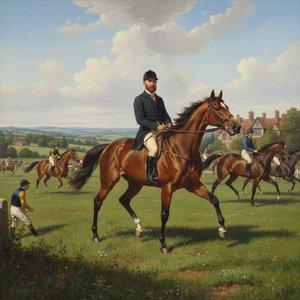
The Shooting Party

John Wootton's "The Shooting Party" (1740) captures a royal hunting scene with Prince Frederick, showcasing his skill & aristocratic leisure amidst stunning landscapes and detailed figures.

Джон Уотъртън е английски художник на спортни сцени и пейзажи, известен със своите елегантни портрети на коне и повлиял върху естетиката на XVIII век чрез използването на класически елементи в творбите си.

Ръчно изработена маслена репродукция

Ръчно рисувана маслена картина върху платно във вашия размер и рамка, изработена по поръчка от нашите художници. (Превключване към принт Превключване към принтПревключване към дигитално изображение Превключване към дигитално изображение)

P118B $10
P118H $10
P118W $10
P438Z $10
P508JH $12
P508YH $12
P805H $10
P805Z $10
P919BZ $10
P919G $10
P919XJ $10
P959ZH $10
P968JZ $12
W106C $8
W218G $10
W218JH $8
W218Y $10
W307PJ $10
W316G $10
W316PJ $8
W316Y $10
W398PJ $8
W4111J $10
W500HY $15
W500JH $15
W692G $12
W849H $8
W940BG $15
W953PJ $8

Стандартен
по поръчка
CM
INCH

Изберете от предварително зададените размери, които съответстват на оригиналните пропорции на произведението.

ширина
височина

Можете да въведете свои собствени размери, за да пасне на конкретна рамка или пространство. Ако избраният от вас размер не съответства на пропорциите на оригиналното изображение, ние ще изрежем произведението или ще удължим картината с допълнителни ръчно рисувани елементи. Дигитален макет ще бъде изпратен за ваше одобрение преди започване на производството.
Моля, обърнете внимание, че прегледът на екрана не отразява действителното изрязване или разширяване. Само макетът ще покаже точно финалния състав.
Въпреки че са налични персонализирани размери, препоръчваме да изберете размер от предварително дефинирания списък, за да запазите оригиналните пропорции.

Примери за това какво може да се промени: Заменете лице с клиентска снимка; Добавете домашен любимец (например заменете котка с куче); Включете скрито послание на фона; Променете пейзажа или елементите на фона.
След поръчка, екипът на WahooArt.com ще изпрати имейл на клиента за инструкции и ще предостави преглед на макет.

Доставка по целия свят () в рамките на 3/4 седмици вместо стандартните 5 седмици. (12 Септември). Без компромис с качеството.

why_choose_icon
Безплатна експресна доставка по целия свят
why_choose_icon
Висококачествено ленено платно
why_choose_icon
Пълно застраховане при доставка
why_choose_icon
Гаранция за възстановяване на митнически такси
why_choose_icon
Гаранция за цветова точност
why_choose_icon
Политика за връщане в рамките на 100 дни (само при дефекти)
why_choose_icon
100% Гаранция за връщане на парите
why_choose_icon
Предложение за отстъпка при поръчка на едро

Обща цена

$ 272

reproduction

The Shooting Party

Репродукционен метод

Размер на репродукцията

-

Обща цена

$ 272

Бързи факти

  • Medium: Oil on canvas
  • Movement: British Sporting Art
  • Artist: John Wootton
  • Year: 1740
  • Influences:
    • Poussin
    • Dughet
  • Artistic style: Rococo, Equestrian
  • Notable elements: Hunting scene, figures

A Sporting Masterpiece: John Wootton’s “The Shooting Party”

John Wootton's "The Shooting Party," painted around 1740, isn’t merely a depiction of a hunting scene; it’s a meticulously crafted tableau of aristocratic leisure and the burgeoning social dynamics of Georgian England. This remarkable work, now housed in prestigious collections worldwide, offers a captivating glimpse into a world of privilege, tradition, and subtle power plays, all rendered with an unparalleled sensitivity to light, texture, and human character.

The painting immediately draws the eye with its carefully orchestrated composition. A group of gentlemen – identifiable as Frederick, Prince of Wales; Horace Walpole, the famed writer; and the Duke of Queensberry – are gathered in a richly detailed forest setting. Wootton’s skill lies not just in capturing their likenesses but in conveying their personalities through posture, expression, and the way they interact with one another. The Prince of Wales, seated prominently at the center, exudes an air of authority and relaxed enjoyment, while Walpole, to his left, appears more contemplative, perhaps observing the unfolding social dynamics with a critical eye. The inclusion of two loaders, meticulously positioned in the background, subtly underscores the activity that dominates the scene – the pursuit of game.

A Portrait of Georgian Aristocracy

Wootton’s work firmly establishes him as a pioneer of sporting art, a genre previously dominated by Dutch and Flemish masters. He moved beyond simple depictions of hunting to create sophisticated conversations pieces, imbued with narrative depth and psychological insight. “The Shooting Party” exemplifies this shift; it's not simply about the act of shooting but about the relationships between the participants, their social standing, and the unspoken tensions that simmer beneath the surface of polite conversation.

The figures are dressed in the height of fashionable attire – velvet jackets, embroidered waistcoats, feathered hats – reflecting the wealth and status of the group. The details are exquisite: the Prince’s coronet and feathers on the frame, the hounds' heads adorning the base rail, all speak to a deliberate effort to showcase both aristocratic taste and the bounty of the hunt. Wootton’s meticulous attention to detail extends to the landscape itself, which is rendered with atmospheric perspective and a masterful understanding of light and shadow, creating a sense of depth and realism that anchors the scene.

Technique and Style: A Blend of Influences

Wootton's artistic training under Jan Wyck provided him with a solid foundation in draftsmanship and painting techniques. However, he quickly developed his own distinctive style, drawing inspiration from a diverse range of sources. The influence of Poussin is evident in the carefully structured composition and the use of light to create a sense of drama and atmosphere. Gaspard Dughet’s landscapes are reflected in the atmospheric perspective and the subtle modeling of forms, while Claude Lorrain's emphasis on natural beauty contributes to the painting's overall elegance.

The brushwork is remarkably smooth and refined, indicative of Wootton’s mastery of oil paint. He employs a layering technique, building up color gradually to create rich textures and luminous effects. The use of light is particularly noteworthy – it illuminates the faces of the figures, highlighting their expressions and creating a sense of warmth and intimacy. The subtle gradations of tone contribute to the painting's overall realism and depth.

Symbolism and Emotional Resonance

Beyond its surface depiction of a hunting party, “The Shooting Party” is rich in symbolism. The hunt itself represents more than just sport; it’s a ritual that reinforces social hierarchies, celebrates masculine prowess, and provides an outlet for aristocratic leisure. The subtle tensions between the figures – Walpole's contemplative gaze, the Prince’s relaxed authority – hint at underlying rivalries and power struggles.

The painting evokes a sense of nostalgia for a bygone era, a time when aristocratic life was characterized by elegance, tradition, and a certain degree of social formality. Yet, there is also an undercurrent of melancholy, suggesting the decline of such a world. “The Shooting Party” captures not only a specific moment in time but also the broader cultural shifts that were transforming England during the Georgian period. It’s a timeless masterpiece that continues to resonate with viewers today, offering a window into the lives and aspirations of a privileged elite.


Биография на художника

A Pioneer of Sporting Art: The Life and Legacy of John Wootton

John Wootton, born around 1686 in the quaint Warwickshire village of Snitterfield, near Stratford-upon-Avon, emerged as a pivotal figure in the development of British sporting art. While precise details of his early life remain somewhat elusive, it is believed he entered the service of the esteemed Beaufort family at a young age, an experience that likely fostered his deep connection to equestrian pursuits and the aristocratic world surrounding them. His artistic journey began with formal training under Jan Wyck during the 1690s, where he honed fundamental skills in draftsmanship and painting techniques – a foundation upon which he would build a remarkably successful career. Even in these early years, Wootton demonstrated an innate talent for capturing the essence of horses, as evidenced by his earliest known work, “Bonny Black” (1711), a piece that foreshadowed his future mastery of equine portraiture.

Early Life and Artistic Training

Little is known about Wootton’s formative years beyond his birthplace and familial connections. However, records indicate he received instruction from Jan Wyck, a Flemish painter renowned for his meticulous realism and masterful use of light and shadow – an influence that would permeate Wootton's artistic sensibilities throughout his career. This early exposure to Wyck’s techniques instilled in him a disciplined approach to observation and representation, shaping his subsequent stylistic choices. It was during this period that Wootton began to develop his distinctive style, characterized by exceptional detail and a profound understanding of equine anatomy.

Establishing a Reputation: Newmarket and Patronage

By 1706, Wootton had firmly established himself in London, quickly gaining recognition for his depictions of horses, particularly those gracing the racing scene at Newmarket – Britain’s premier equestrian center. He wasn't merely documenting these animals; he was capturing their spirit, their power, and their individual character with an unprecedented level of detail and sensitivity. This specialization brought him into close contact with Britain’s elite – a patronage that included figures like George II and Frederick, Prince of Wales. Wootton actively engaged with the artistic community, subscribing to the first English Academy of Painting and Drawing in 1711 and later serving as a steward of the Virtuosi Club of St Luke’s by 1717, demonstrating his commitment to fostering artistic discourse and collaboration.

Innovating Landscape Style: The Influence of Gaspard Dughet

Wootton's contribution extended beyond simply painting horses. He was a key figure in introducing what became known as the “ideal landscape” to British art – a style heavily influenced by artists like Gaspard Dughet (also known as Gaspar van Wittel). By incorporating classical elements into his landscapes, he offered a refreshing alternative to the prevailing Dutch and Flemish styles, laying the groundwork for future generations of British landscape painters. Wootton’s meticulous attention to perspective, composition, and atmospheric effects elevated landscape painting beyond mere decorative representation, transforming it into a vehicle for conveying emotion and intellectual contemplation.

Major Works and Legacy

Wootton's oeuvre encompasses a vast array of subjects – battle scenes, equestrian portraits, hunting landscapes—each imbued with remarkable precision and expressive power. Notable masterpieces include “Bonny Black” (1711), “Before the hunt,” and “The Bloody-Shouldered Arabian,” which exemplify his unparalleled skill in capturing equine likenesses and conveying movement and dynamism. His landscapes, such as “Viscount Weymouth’s Hunt,” demonstrate a masterful command of artistic technique and contribute to the enduring fascination with Wootton's work. He bridged the gap between earlier traditions and the emerging styles that would define 18th-century British art. Today, Wootton’s works are held in prestigious collections worldwide – including the Tate Gallery (London), the Virginia Museum of Fine Arts (Richmond), and the Yale Center for British Art – ensuring his legacy continues to be appreciated by art enthusiasts. He stands as a testament to the power of observation, innovation, and the enduring appeal of capturing the beauty and dynamism of both the natural world and the aristocratic pursuits that defined his era.
Джон Уотъун

Джон Уотъун

1682 - 1764 , Великобритания

Бързи факти

  • Artistic Movement Or Style: Sporting art, Landscape
  • Artists Or Movements Influenced By This Artist: ['Thomas Gainsborough']
  • Artists Who Influenced This Artist:
    • Jan Wyck
    • Gaspard Dughet
  • Date Of Birth: c. 1686
  • Date Of Death: 1764
  • Full Name: John Wootton
  • Nationality: British
  • Notable Artworks:
    • Bonny Black
    • Before the hunt
    • The Bloody-Shouldered Arabian
  • Place Of Birth: Snitterfield, UK
Разгледайте произведения на изкуството, организирани по теми, стилове и характеристики.