a life of artistry and royal patronage
John Hoppner (1758–1810) was a celebrated english portrait painter known for his vibrant colours & depictions of british royalty, women, and children. He achieved fame as a colourist, deeply influenced by the masterful style of Joshua Reynolds. Born in whitechapel, london, to german immigrant parents who worked at the court of george ii., hoppner’s life unfolded amidst artistic ambition and privileged connections. Early Life and Training
From his formative years, hoppner demonstrated an exceptional talent for drawing and painting—a passion nurtured by his upbringing within a family steeped in cultural traditions. He began his musical education as a chorister at the royal chapel, st james's, honing his observational skills and developing a profound understanding of composition and perspective. Recognizing his innate artistic inclination, he enrolled in the royal academy in 1775, immersing himself in the rigorous training demanded by the institution—a cornerstone of british art education during that era. A pivotal moment arrived in 1778 when he secured a silver medal for drawing from life, validating his burgeoning talent and establishing him as one of the academy’s most promising pupils. Furthermore, in 1782, hoppner garnered the gold medal for historical painting with his ambitious undertaking on king lear—a testament to his versatility and artistic vision.
Rise to Fame and Notable Works
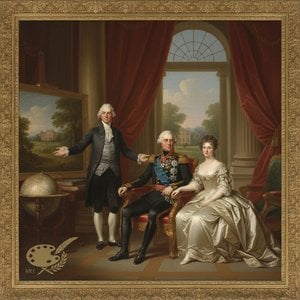
Hoppner's reputation swiftly ascended within london’s artistic circles thanks to his captivating portraits of women and children—works that captivated discerning judges and cemented his position as a leading figure in the genre. His distinctive technique, characterized by expansive brushstrokes and remarkable freedom, mirrored the expressive dynamism found in reynolds’ paintings—a stylistic kinship that underscored hoppner's commitment to capturing emotion and nuance. Among his most enduring achievements are:
- Mrs. Jordan as Viola in ‘twelfth night’, now at english heritage (london, united kingdom)—a masterpiece showcasing hoppner's unparalleled ability to convey character and psychological depth through colour and form.
- Portraits of the prince of wales, duke of york, lord rodney, and lord nelson—commissioned by the royal family, these canvases exemplify hoppner’s elevated social standing and his mastery of depicting regal dignity and grandeur.
Legacy and Later Life
Despite facing challenges stemming from a chronic liver disease—a condition that tragically curtailed his artistic pursuits—hoppner's legacy persists through his luminous portraits, which continue to inspire admiration and scholarly study. His unwavering dedication to craftsmanship and his profound understanding of human emotion solidified his place as one of britain’s most influential portrait painters of the eighteenth century. He passed away peacefully on january 23, 1810, leaving behind a body of work that embodies the spirit of british artistic excellence—a testament to a life devoted to beauty and creative expression.
Explore more of john hoppner's works at
https://WahooArt.com/@/johnhoppner. Discover the broader context of british art at
https://en.wikipedia.org/wiki/art_of_the-united-kingdom. Further reading and exploration for a deeper dive into the world of british art, consider the following:



 Купи принт
 Изпрати
 Сподели
 Детайли

 Изтегляне
 Подобни
 Рентгенова снимка
 Слайдшоу
 Прочетете повече






































 Стъклото е налично само в размери под 110 см