Представи си гоПредстави си го AR прегледAR преглед Купете ръчно рисувана картина Купете ръчно рисувана картинаКупете изображение Купете изображение ИзпратиИзпрати
ДетайлиДетайли Добавяне към любими Добавяне към любими ИзтеглянеИзтегляне ПодобниПодобни Рентгенова снимкаРентгенова снимка СлайдшоуСлайдшоу

Tuxedo

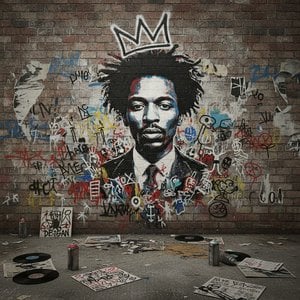
Experience Jean-Michel Basquiat’s raw neo-expressionist masterpiece, "Tuxedo," a chaotic screenprint brimming with text and symbols exploring identity and power – perfect for art lovers seeking a bold statement piece.

Жан-Мишел Баскиа – революционен художник от Бруклин, известен с неоекспресионизма и уличното изкуство. Смел глас на социални проблеми и културни идентичности, оставил трайна следа в съвременното изкуство.

Жикле / Художествен принт

Giclée печат или принт върху платно с музейно качество, бързо производство и гъвкави опции за завършен вид. (Купете ръчно рисувана картина Купете ръчно рисувана картинаКупете изображение Купете изображение)

P118B $10
P118H $10
P118W $10
P438Z $10
P508JH $12
P508YH $12
P805H $10
P805Z $10
P919BZ $10
P919G $10
P919XJ $10
P959ZH $10
P968JZ $12
W106C $8
W218G $10
W218JH $8
W218Y $10
W307PJ $10
W316G $10
W316PJ $8
W316Y $10
W398PJ $8
W4111J $10
W500HY $15
W500JH $15
W692G $12
W849H $8
W940BG $15
W953PJ $8

Стандартен
по поръчка
CM
INCH

Изберете от предварително зададените размери, които съответстват на оригиналните пропорции на произведението.

ширина
височина

Можете да въведете собствени размери, за да паснат на конкретна рамка или пространство. Ако избраният от Вас размер не съвпада с пропорциите на оригиналното изображение, ние ще изрежем произведението или ще разширим изображението с огледален или едноцветен ръб. Дигитален макет ще бъде изпратен за Ваше одобрение преди започването на производството.
Моля, имайте предвид, че предпрегледът на екрана не отразява реалното изрязване или разширяване. Само макетът ще покаже точно финалната композиция.
Въпреки че са налични персонализирани размери, препоръчваме да изберете размер от предварително дефинирания списък, за да запазите оригиналните пропорции.

Доставка по целия свят () в рамките на 2 седмици вместо стандартните 4/5 седмици. (6 Септември)

why_choose_icon
Безплатна експресна доставка по целия свят
why_choose_icon
Висококачествено ленено платно
why_choose_icon
Пълно застраховане при доставка
why_choose_icon
Гаранция за възстановяване на митнически такси
why_choose_icon
Гаранция за цветова точност
why_choose_icon
100-Дневен период за връщане (Само при дефекти)
why_choose_icon
100% Гаранция за връщане на парите
why_choose_icon
Предложение за отстъпка при поръчка на едро

Обща цена

$ 68

reproduction

Tuxedo

Жикле / Художествен принт

Размер на репродукцията

-

Обща цена

$ 68

Бързи факти

  • Artist: Jean-Michel Basquiat
  • Artistic style: Raw Energy, Chaotic
  • Year: 1982
  • Notable elements: Crown, Text, Screenprint
  • Dimensions: 261 x 152 cm
  • Influences: Gray's Anatomy
  • Title: Tuxedo

Jean-Michel Basquiat’s “Tuxedo”: A Chronicle of Urban Noise

“Tuxedo,” painted in 1982, is more than just an image; it's a visceral eruption of raw energy and fragmented thought – a quintessential work by the tragically short-lived genius that was Jean-Michel Basquiat. This screenprint on canvas immediately confronts the viewer with a chaotic symphony of black and white markings, text fragments, and iconic symbols, reflecting the frenetic pulse of 1980s New York City and the artist’s own intensely personal struggle for recognition within the art world.

  • A Visual Vocabulary: The artwork's composition is deliberately overwhelming. A prominent crown, a recurring motif in Basquiat’s oeuvre, dominates the upper left corner, instantly evoking notions of royalty and power – themes he relentlessly explored through his work.
  • Layered Meaning: Beneath the crown lies a dense layering of text, seemingly random but meticulously arranged, alongside geometric shapes and organic forms. This isn't simply visual noise; it’s a deliberate attempt to capture the overwhelming influx of information that characterized urban life and, perhaps, Basquiat’s own experience navigating the complexities of identity and representation.
  • Neo-Expressionist Intensity: “Tuxedo” embodies the core tenets of neo-expressionism – a movement defined by its rejection of formal restraint and embrace of emotional intensity. The aggressive application of ink through the screenprinting technique mirrors this raw energy, creating a textured surface that feels both immediate and unsettling.

Technique and Materials: A Conversation Between Artist and Process

Basquiat’s process in creating “Tuxedo” was deeply rooted in the technical demands of screenprinting. This method, utilizing stencils to transfer ink onto canvas, allowed him to build up layers of imagery with remarkable speed and control – a crucial element given his relentless output. The almost uniform distribution of marks suggests meticulous planning, yet the overall effect is one of spontaneous creation. The choice of acrylic or another suitable screenprinting medium likely contributed to the artwork’s durability and vibrant color saturation, despite its monochromatic presentation.

  • Screenprinting Precision: The technique itself speaks volumes about Basquiat's approach – a calculated chaos where precision and spontaneity intertwine.
  • Canvas as Ground: The canvas serves not merely as a support but as an active participant in the artwork’s narrative, absorbing and amplifying the intensity of the printed image.

Symbolism and Context: Decoding Basquiat's Universe

“Tuxedo” is steeped in symbolism, reflecting Basquiat’s fascination with history, mythology, and social commentary. The tuxedo itself – a symbol of formality and wealth – is juxtaposed against the raw, unrefined aesthetic of the artwork, creating a potent tension. The inclusion of anatomical references, subtly hinted at by the book *Gray's Anatomy* that profoundly influenced his work, adds another layer of complexity, suggesting an exploration of the human body as both a physical form and a site of cultural and social meaning.

  • Crown’s Significance: The crown, beyond its literal representation, symbolizes power, aspiration, and the artist's desire to transcend societal limitations.
  • Textual Layers: The fragmented text likely represents the overwhelming nature of information in a rapidly changing world, echoing themes of alienation and social critique prevalent in Basquiat’s work.

Emotional Impact and Legacy

“Tuxedo” is not merely a visually arresting image; it's an emotionally charged statement about identity, power, and the struggle for recognition. Basquiat’s ability to distill complex ideas into such a powerfully evocative work cemented his place as one of the most important artists of his generation. A reproduction of “Tuxedo” offers a direct connection to this extraordinary talent, allowing viewers to experience firsthand the raw energy and intellectual depth that defined his groundbreaking art.


Биография на художника

A Brooklyn Beginning and the Rise of SAMO

Jean-Michel Basquiat erupted onto the 1980s art scene as a force of raw energy and intellectual depth, an impact that continues to resonate profoundly today. Born on December 22, 1960, in Brooklyn, New York, to a Haitian father and Puerto Rican mother, his upbringing was a vibrant tapestry woven with diverse cultures and languages—Spanish, English, and French filled his childhood home. This multilingual environment, coupled with his mother’s dedication to artistic pursuits—she enrolled him as a Junior Member of the Brooklyn Museum at age six—laid an early foundation for his creative journey. However, Basquiat's life wasn’t without hardship; a car accident at eight years old resulted in a splenectomy and a period of convalescence during which he became captivated by a copy of *Gray’s Anatomy* gifted by his mother. The book’s detailed illustrations would later profoundly influence the anatomical imagery that frequently appears in his work, becoming a haunting motif throughout his career. Before achieving recognition as a painter, Basquiat made his mark under the pseudonym SAMO, alongside friend Al Diaz. Together they covered Lower Manhattan with cryptic, poetic graffiti—epigrams challenging societal norms and questioning established power structures. These weren’t mere tags; they were thought-provoking statements that captured the spirit of the burgeoning hip-hop culture and the gritty energy of 1970s New York City. SAMO was more than just street art; it was a philosophical intervention, a visual disruption designed to provoke dialogue and challenge perceptions.

Neo-Expressionism and Artistic Innovation

By the early 1980s, Basquiat transitioned from graffiti to canvas, rapidly gaining recognition within the New York art world. His paintings weren’t easily categorized; they were a unique synthesis of influences ranging from Abstract Expressionism to tribal art, comic books, and historical painting. He became a central figure in the Neo-Expressionist movement, though he resisted easy labeling. His canvases are characterized by a frenetic energy—a chaotic layering of text, symbols, figures, and colors. Basquiat’s technique was deliberately raw and improvisational, often incorporating collage, scratching, and dripping paint. He wasn't interested in technical perfection; instead, he sought to convey emotion, ideas, and social commentary with visceral immediacy. Recurring motifs—crowns, skulls, anatomical diagrams, words crossed out or repeated—became his signature visual language. The crown, perhaps his most iconic symbol, has been interpreted as a representation of aspiration, self-mythologization, and the complexities of Black identity in America. His work frequently grappled with themes of wealth versus poverty, integration versus segregation, and the internal struggles of the individual within society. Paintings like *Piscine versus the Best Hotels (or various loin)* exemplify his ability to juxtapose seemingly disparate elements—luxury and deprivation, beauty and decay—creating a powerful commentary on social inequalities. Basquiat’s art was not merely about what he depicted but how he depicted it, creating a visual language that was both deeply personal and universally resonant.

Collaboration, Recognition, and a Tragic End

Basquiat’s ascent was meteoric. In 1982, at just twenty-one years old, he participated in Documenta in Kassel, Germany, becoming the youngest artist ever to exhibit there. The following year, he showcased his work at the Whitney Biennial, further solidifying his position within the art establishment. A pivotal moment came with his friendship and artistic collaboration with Andy Warhol. The two artists pushed each other creatively, exploring themes of consumerism, celebrity, and mass media in a series of collaborative paintings. While their partnership was complex and sometimes fraught with tension, it undoubtedly elevated both artists’ profiles. Despite achieving international acclaim and financial success, Basquiat struggled with the pressures of fame and his ongoing battle with drug addiction. He began using heroin at a young age, and this ultimately led to his untimely death. His work became increasingly introspective and darker as he grappled with personal demons and societal injustices. Tragically, Jean-Michel Basquiat died on August 12, 1988, at the age of twenty-seven from a heroin overdose. His untimely death cemented his status as a tragic figure—a brilliant artist whose life was cut short by addiction and the complexities of navigating the art world.

Legacy and Lasting Influence

In the years since his death, Basquiat’s reputation has only grown. His work continues to captivate audiences with its raw energy, intellectual depth, and unflinching social commentary. In 2017, *Untitled* (1982), a powerful depiction of a skull, sold for $110.5 million at Sotheby's, setting a new record for any U.S. artist at auction—a testament to the enduring value and cultural significance of his work. Basquiat’s influence can be seen in the work of countless contemporary artists, particularly those who explore themes of identity, race, and social justice. He paved the way for a more diverse and inclusive art world, challenging traditional notions of artistic expression and representation. His ability to seamlessly blend high and low culture—graffiti, fine art, music, poetry—continues to inspire artists today. He remains a potent symbol of creative rebellion, intellectual curiosity, and the power of art to challenge the status quo. His paintings are not merely aesthetic objects; they are windows into a complex mind grappling with profound questions about humanity, society, and the search for meaning in a chaotic world.

Key Works & Themes

Here are some defining works that encapsulate Basquiat’s artistic vision:
  • Untitled (Skull): A powerful representation of mortality and the African diaspora, achieving record-breaking auction prices.
  • Piscine versus the Best Hotels (or various loin): Exemplifies Basquiat’s juxtaposition of wealth and poverty, showcasing his unique artistic style.
  • Portrait of the Artist as a Young Derelict: A self-portrait that embodies themes of identity, alienation, and societal critique.
  • Hollywood Africans: Explores African American history and culture through symbolic imagery and textual elements.
jean michel basquiat

jean michel basquiat

1960 - 1988 , Съединени американски щати

Бързи факти

  • Artistic Movement Or Style: Неоекспресионизъм
  • Artists Or Movements Influenced By This Artist: ['Съвременни художници']
  • Artists Who Influenced This Artist:
    • Абстрактни експресионисти
    • Тропически арт
    • Комикси
  • Date Of Birth: 22 декември 1960
  • Date Of Death: 12 август 1988
  • Full Name: Jean-Michel Basquiat
  • Nationality: Американски
  • Notable Artworks:
    • Без заглавие - Череп
    • Писцине срещу най-добрите хотели
    • Портрет на художника като млад изедряк
  • Place Of Birth: Бруклин, САЩ
Разгледайте произведения на изкуството, организирани по теми, стилове и характеристики.