Представи си го AR преглед Превключване към принт Купете ръчно рисувана картина Изпрати
Детайли Добавяне към любими Изтегляне Подобни Рентгенова снимка Слайдшоу Статистика

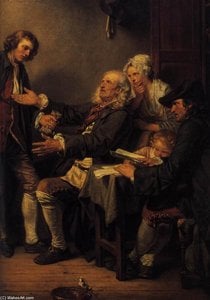
The Broken Pitcher

Experience the poignant emotion of The Broken Pitcher by Jean-Baptiste Greuze (1771), a masterpiece capturing sentimental 18th-century life; bring this timeless sorrow home.

Жан-Баптист Груе е френски художник от 18 век, известен с емоционалните си жанрови картини и портрети, които пресъздават всекидневния живот и морални поуки. Той е пионер в рококо стила и оставил трайно влияние върху изкуството.

Закупете дигитално изображение с висока резолюция и подобрени характеристики, значително по-добро от онлайн прегледа.

Всеки файл е щателно подготвен от нашите специалисти с помощта на съвременни инструменти и експертна ръчна ретуш. Гарантираме, че всяко изображение има изключителна яснота, прецизна цветова точност и фини детайли.

Окончателният файл се доставя по имейл в рамките на 72 часа, оптимизиран за незабавна употреба в професионални, редакционни и печатни среди. Това е същото качество, на което се доверяват водещи дизайнерски студия, издатели и галерии.

Дигитално изображение

Изтеглете файл с висока резолюция за лично показване, принтиране и творчески проекти. ( Превключване към принт Купете ръчно рисувана картина)

Обща цена

$ 24,90

Включено във всяка поръчка за дигитални изображения

Експресна дигитална доставка, гарантирана

Когато изберете WahooArt.com, вие не получавате само изображение – вие получавате професионално подобрена дигитална творба, създадена с прецизност и подкрепена от гаранция за удовлетворение. Ето всичко, което автоматично се включва в вашата поръчка:

shipping_icon
Бърза доставка по имейл

Вашето дигитално изображение с висока резолюция ще ви бъде изпратено по имейл в рамките на 72 часа от поръчката - готово за незабавно използване.

canvas_icon
Дигитален файл с подобрено качество чрез изкуствен интелект

Вашата картина е професионално оптимизирана с помощта на усъвършенствани инструменти за изкуствен интелект и ръчна редакция, осигурявайки максимална детайлност, яснота и точност на цветовете.

insurance_icon
Безплатна доживотна повторна доставка

Изгубили сте или сте премахнали файла си по погрешка? Не се притежнявайте – ще го изпратим отново на Вас по всяко време, безплатно.

tax_icon
Без такки за мито - никога

Всредите си веднага без мита, данъци или такси по доставка - дигителните приложения винаги са без данъчно освободени.

color_icon
Гаранция за точност на цветовете

Гарантираме, че вашето дигитално изображение отразява оригиналните цветове възможно най-точно, използвайки професионални инструменти и управление на цветовете.

return_icon
100-дневна гаранция за удовлетвореност

Ако не сте доволни от вашето дигитално изображение, ще го преработим или ще възстановим 100% от сумата в рамките на 100 дни – без излишни въпроси.

guarantee_icon
100% Гаранция за връщане на пари.

Не сте доволни? Получете пълен възврат на сумата в рамките на 100 дни от получаването на вашия цифров файл – без излишни въпроси.

discount_icon
Отстъпки за големи поръчки

Купете 3 изображения, спестете 10% - Купете 5, спестете 15% - Купете 10+, спестете 20%. Отлично за творчески проекти, галерии и агенства.

Бързи факти

  • Year: 1771
  • Artist: Jean-Baptiste Greuze
  • Subject or theme: Distress, loss, heartbreak
  • Artistic style: Sentimental genre painting
  • Dimensions: 109 x 87 cm

Тест за изкуство

Има само един верен отговор за всеки въпрос.

Въпрос 1:
What is the primary emotional atmosphere suggested by 'The Broken Pitcher'?
Въпрос 2:
Who is the artist credited with painting 'The Broken Pitcher'?
Въпрос 3:
In what year was 'The Broken Pitcher' painted?
Въпрос 4:
Which element is NOT mentioned as being in the background of the painting?
Въпрос 5:
Jean-Baptiste Greuze was known for his talent in capturing which aspect of human life?

A Whisper of Melancholy: Exploring The Broken Pitcher

To stand before Jean-Baptiste Greuze's The Broken Pitcher is to step directly into the heart of eighteenth-century sentimentality. This painting, executed in 1771, is far more than a mere portrait; it is a carefully composed tableau vivant of human vulnerability. The subject—a woman enveloped in a simple white dress—commands immediate attention, her posture speaking volumes without uttering a single word. Her hands, clasped together near her chest, suggest a profound internal dialogue, perhaps one tinged with loss or deep contemplation. Greuze masterfully captures that fleeting moment when emotion crests just before it breaks.

The Art of Sentiment: Context and Style

Greuze himself was a pivotal figure whose career blossomed during the rise of genre painting, an art form deeply attuned to the everyday dramas and emotional nuances of bourgeois life. While academic tastes often favored grand historical epics or mythological grandeur, Greuze found his voice in the intimate sphere. The Broken Pitcher exemplifies this shift toward sentimentality. The inclusion of secondary elements—the watchful dog and the sturdy chair—are not mere props; they are silent witnesses to the woman's emotional state. They ground the ethereal quality of her sorrow in a tangible, domestic reality, making her heartbreak feel immediate and deeply relatable to the viewer.

Technique and Emotional Resonance

The technical brilliance at play here lies in Greuze’s ability to render texture and gesture with exquisite care. Observe the soft fall of the white drapery against the darker tones of the background; this contrast serves to isolate and illuminate the figure's emotional core. The brushwork, while skilled enough for a high-quality reproduction, retains the characteristic warmth of an artist deeply invested in narrative feeling. It is through these subtle gradations of light and shadow that Greuze guides our eye directly to the poignant expression on her face, inviting us into the quiet drama unfolding within the frame.

Symbolism of Loss and Connection

The title itself, The Broken Pitcher, hints at a narrative tragedy or a broken promise—a potent symbol of shattered domestic peace or emotional wholeness. The pitcher, though unseen in its broken state, acts as an emotional proxy for the woman's own fractured spirit. The dog, often symbolizing unwavering loyalty, adds a layer of poignant companionship to her solitude. For the modern collector or decorator, this piece offers more than just aesthetic beauty; it offers a contemplation point—a beautiful meditation on resilience found within moments of perceived breakage.

Bringing Sentiment Home

Reproducing such an emotionally charged work allows one to infuse a space with history and deep feeling. Whether displayed in a formal drawing-room or a more intimate study, The Broken Pitcher acts as a soulful anchor. It speaks to the enduring human capacity for profound feeling—joy, sorrow, longing—and reminds us that the most powerful art often resides not in what is grandly depicted, but in what is quietly felt.


Биография на художника

Jean-Baptiste Greuze: A Master of Sentiment and the Soul of Rococo

Born in the tranquil Burgundian town of Tournus in 1725, Jean-Baptiste Greuze’s life was a testament to both extraordinary talent and persistent struggle. His early years were marked by modest circumstances – his father a roofer, his mother a seamstress – yet within him burned an undeniable passion for art, a spark that defied the limitations imposed upon him. It was through the guidance of Grandon, a Lyon artist who recognized Greuze’s innate gift, that this nascent talent began to blossom, leading to formative studies in Lyon and ultimately, the prestigious Royal Academy in Paris under Charles-Joseph Natoire. This Parisian sojourn proved pivotal, shaping his artistic vision while simultaneously pushing him towards a path of independent exploration, diverging from the prevailing academic focus on grand historical narratives.

The Dawn of a New Genre: Painting the Everyday

Greuze’s breakthrough arrived in 1755 with *Le Père de famille expliquant la Bible à ses enfants* (The Father Explaining the Bible to His Children). This wasn't merely a depiction of domestic life; it was an embodiment of the Enlightenment’s core values, a poignant portrayal of familial piety and moral instruction. The painting resonated profoundly with the contemporary public, capturing a spirit of bourgeois virtue – a burgeoning sense of morality and social responsibility – that was rapidly gaining traction within French society. The discerning collector Ange-Laurent de La Live de Jully immediately recognized its significance, acquiring it and catapulting Greuze to instant fame. He swiftly followed this success with a series of genre scenes—intimate glimpses into the lives of ordinary people, imbued with an extraordinary depth of emotional resonance and subtle moral undertones. A journey to Italy in 1755, undertaken alongside Abbé Louis Gougenot, broadened his artistic horizons, exposing him to classical influences while simultaneously reinforcing his commitment to depicting the realities of French life rather than idealized historical settings. This period saw a refinement of his technique, a deepening understanding of composition and light, but crucially, a firm establishment of his unique style—one characterized by an unparalleled ability to evoke genuine feeling: joy, sorrow, remorse, and everything in between.

The Language of Emotion: Techniques and Symbolism

Greuze’s genius lay not simply in his technical skill, but in his profound understanding of human psychology and his masterful manipulation of visual language. He was a meticulous observer of everyday life, capturing the subtle gestures, fleeting expressions, and unspoken emotions that defined the experiences of ordinary people. His compositions were often carefully staged—a bare timbered room, strategically lit to draw attention to key figures; a simple arrangement of objects—each carrying symbolic weight. He employed a distinctive palette, favoring muted tones and soft pastels, creating an atmosphere of intimacy and vulnerability. The use of dramatic lighting – pools of light illuminating faces and hands – heightened the emotional impact of his scenes, drawing the viewer into the heart of the narrative. Greuze’s ability to convey inner turmoil through facial expressions alone was legendary; a single glance could reveal a lifetime of sorrow or a fleeting moment of joy. His work wasn't merely representational; it was an exploration of the human condition—a meditation on morality, faith, and the complexities of family relationships.

The Academy’s Resistance: A Struggle for Recognition

Despite his burgeoning fame and critical acclaim, Greuze faced persistent resistance from the Académie Royale de Peinture et de Sculpture. Initially denied full membership, he was relegated to the status of a genre painter—a category considered less prestigious than history painting, which encompassed mythological and religious subjects. This rejection fueled his ambition and intensified his determination to be recognized as a serious artist. He attempted a bold transition into historical painting with *Septimius Severus Reproaching Caracalla* (1769), a monumental work that showcased his technical prowess but ultimately failed to impress the Academy’s conservative judges. The composition, while ambitious in scale, lacked the clarity and emotional depth expected of a history painting, and it was met with harsh criticism. This setback further solidified his position as a genre painter—a label he initially resisted, yet one that ultimately defined his career.

Later Years and a Legacy of Sentiment

The rejection by the Academy marked a turning point in Greuze’s life, leading to a period of isolation and disillusionment. He withdrew from exhibiting at the Salon for many years, becoming increasingly reclusive and embittered. His later works often explored darker themes—the allure of seduction, the consequences of moral transgression, and the vulnerability of youth. While technically proficient, these paintings lacked the emotional resonance and moral clarity that characterized his earlier masterpieces. He died in poverty within the Louvre itself in 1805, a poignant reminder of the challenges he faced throughout his career. Despite this decline, Jean-Baptiste Greuze’s influence on French art remains profound. He pioneered a new form of genre painting—one focused on contemporary life and exploring universal human emotions—and paved the way for later artists who sought to depict the realities of everyday existence with honesty and sensitivity. His legacy endures as a testament to the power of sentiment, the beauty of the ordinary, and the enduring appeal of a master storyteller.

Key Works & Their Significance

  • Le Père de famille expliquant la Bible à ses enfants (1755): A cornerstone of his early success, embodying Enlightenment ideals of familial piety.
  • La Jeune Fille qui pleure son oiseau mort (c. 1765): Demonstrates Greuze’s mastery of emotional expression and poignant storytelling.
  • Savoyard with a Dancing Doll (c. 1763): Captures the spirit and vulnerability of childhood, showcasing his skill in portraiture.
  • Septimius Severus Reproaching Caracalla (1769): A failed attempt at historical painting that highlighted his strengths lay elsewhere.
  • The Broken Pitcher (c. 1770s): Represents a shift towards more sensual and morally ambiguous themes in his later work.

Жан-Баптист Груе

Жан-Баптист Груе

1725 - 1805 , Франция

Бързи факти

  • Artistic Movement Or Style: Рококо, Жанров пейзаж
  • Artists Or Movements Influenced By This Artist: ['Николай Пусин']
  • Artists Who Influenced This Artist: ['Grandon (или Grondom)']
  • Date Of Birth: 1725
  • Date Of Death: 1805
  • Full Name: Jean-Baptiste Greuze
  • Nationality: Френски
  • Notable Artworks:
    • Le Père de famille...
    • Малка момичка...
    • Савойар с танцуваща кукла
  • Place Of Birth: Tournus, Франция