Преглед в реален мащаб Преглед с AR Избор на принт Превключване към дигитално изображение Сподели
Подробности Ръководство Добави в любими Изтегляне Подобни артикули Рентгенова снимка Слайдшоу Статистика

Number

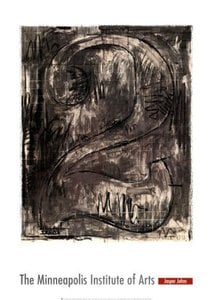
Jasper Johns’ ‘Numbers in Color’ is a chaotic abstract expressionist masterpiece featuring layered red & blue squares, evoking data & unsettling visuals. Explore this unique artwork.

Джаспер Джонс (р. 1930) е американски художник, пионер на Pop и абстрактния експресионизъм! Открийте емблематични творби като 'Flag', картини с цели и символи – преосмисляне на съвременното изкуство.

Изкуството, представено на тази страница, е защитено от законите за авторско право, което означава, че не можем законно да създаваме или продаваме идентични репродукции. Тази защита се прилага съгласно международни споразумения като Бернска конвенция и от националното законодателство, включително разпоредбите на Закон за авторското право на САЩ – Раздел 17.

Като уважителна и законна алтернатива, ние предлагаме изработени по поръчка, ръчно рисувани произведения на изкуството, вдъхновени от оригинала. Нашите умени и професионални артисти внимателно изучават стила, настроението и артистичната същност на оригиналното произведение, за да създадат ново, уникално творческо произведение, което предизвиква същото чувство – оставайки в същото време самостоятелно оригинално творение.

Този метод е напълно съвместим с законите за авторско право, тъй като не включва копиране или дублиране на защитеното произведение. Вместо това става въпрос за творческа реинтерпретация – нова картина, която е вдъхновена от оригинала, но не е идентична с него.

Ръчно изработена маслена репродукция

Ръчно рисувана маслена картина върху платно във вашия размер и рамка, изработена по поръчка от нашите художници. ( Избор на принт Превключване към дигитално изображение)

Corner sample of the P118B picture frame: формован полистирол, 5 cm wide and 3 cm thick
P118B 10
Corner sample of the P118H picture frame: формован полистирол, 5 cm wide and 3 cm thick
P118H 10
Corner sample of the P118W picture frame: формован полистирол, 5 cm wide and 3 cm thick
P118W 10
Corner sample of the P438Z picture frame: формован полистирол, 5.5 cm wide and 3.5 cm thick
P438Z 10
Corner sample of the P508JH picture frame: формован полистирол, 7 cm wide and 3.5 cm thick
P508JH 12
Corner sample of the P508YH picture frame: формован полистирол, 7 cm wide and 3.5 cm thick
P508YH 12
Corner sample of the P805H picture frame: формован полистирол, 5 cm wide and 3.5 cm thick
P805H 10
Corner sample of the P805Z picture frame: формован полистирол, 5 cm wide and 3.5 cm thick
P805Z 10
Corner sample of the P919BZ picture frame: формован полистирол, 7 cm wide and 3.5 cm thick
P919BZ 10
Corner sample of the P919G picture frame: формован полистирол, 7 cm wide and 3.5 cm thick
P919G 10
Corner sample of the P919XJ picture frame: формован полистирол, 7 cm wide and 3.5 cm thick
P919XJ 10
Corner sample of the P959ZH picture frame: формован полистирол, 5 cm wide and 3 cm thick
P959ZH 10
Corner sample of the P968JZ picture frame: формован полистирол, 6 cm wide and 4 cm thick
P968JZ 12
Corner sample of the W106C picture frame: масивна дървесина, 5 cm wide and 3 cm thick
W106C 8
Corner sample of the W218G picture frame: масивна дървесина, 5 cm wide and 3 cm thick
W218G 10
Corner sample of the W218JH picture frame: масивна дървесина, 5 cm wide and 3 cm thick
W218JH 8
Corner sample of the W218Y picture frame: масивна дървесина, 5 cm wide and 3 cm thick
W218Y 10
Corner sample of the W307PJ picture frame: масивна дървесина, 6 cm wide and 3 cm thick
W307PJ 10
Corner sample of the W316G picture frame: масивна дървесина, 6 cm wide and 3 cm thick
W316G 10
Corner sample of the W316PJ picture frame: масивна дървесина, 6 cm wide and 3 cm thick
W316PJ 8
Corner sample of the W316Y picture frame: масивна дървесина, 6 cm wide and 3 cm thick
W316Y 10
Corner sample of the W398PJ picture frame: масивна дървесина, 5 cm wide and 3 cm thick
W398PJ 8
Corner sample of the W4111J picture frame: масивна дървесина, 6.5 cm wide and 3.5 cm thick
W4111J 10
Corner sample of the W500HY picture frame: масивна дървесина, 7 cm wide and 5 cm thick
W500HY 15
Corner sample of the W500JH picture frame: масивна дървесина, 7 cm wide and 5 cm thick
W500JH 15
Corner sample of the W692G picture frame: масивна дървесина, 8 cm wide and 4 cm thick
W692G 12
Corner sample of the W849H picture frame: масивна дървесина, 5 cm wide and 3 cm thick
W849H 8
Corner sample of the W940BG picture frame: масивна дървесина, 7.5 cm wide and 4.5 cm thick
W940BG 15
Corner sample of the W953PJ picture frame: масивна дървесина, 6 cm wide and 3.5 cm thick
W953PJ 8

Стандартен размер
по поръчка
CM
INCH

Изберете от нашите предварително зададени размери, които съответстват на оригиналните пропорции на произведението.

ширина
височина

Можете да въведете свои собствени размери, за да паснат на конкретна рамка или пространство. Ако избраният от вас размер не съответства на пропорциите на оригиналното изображение, ние ще изрежем произведението или ще разширим картината с допълнителни ръчно рисувани елементи. Дигитален макет ще бъде изпратен за ваше одобрение преди започване на производството.
Моля, обърнете внимание, че предпрогледа на екрана не отразява действителното изрязване или разширяване. Само макетът ще покаже точно финалната композиция.
Въпреки че са налични персонализирани размери, препоръчваме да изберете размер от предварително дефинирания списък, за да запазите оригиналните пропорции.

Примери за възможности за персонализация: Заменете лицето с фотография на клиента; Добавете домашен любимец (например заменете котка с куче); Включете скрито послание на фона; Променете пейзажа или елементите на фона.
След получаване на поръчка, екипът на WahooArt.com ще изпрати имейл до клиента с инструкции и ще предостави примерен макет за преглед.

Доставка по целия свят () в рамките на 3-4 седмици вместо стандартните 5 седмици. (13 Октомври). Без компромис с качеството.

Безплатна експресна доставка по целия свят
Висококачествено ленено платно
Пълно застраховане на доставката
Гаранция за възстановяване на митнически такси
Гаранция за пълно съответствие на цветовете
Политика за връщане в рамките на 100 дни (само при дефекти)
100% Гаранция за връщане на сумата
Отстъпка при поръчка на повече произведения

Обща сума

€ 235

Number

Техника на репродукция

Размер на репродукцията

-

Крайна цена

€ 235

Бърза информация

  • Influences: Minimalism
  • Movement: Abstract Expressionism
  • Medium: Ink on paper
  • Title: Number
  • Artistic style: Geometric abstraction

A Symphony of Gray: The Enigmatic Presence of Jasper Johns’ “Number”

In the vast landscape of twentieth-century abstraction, few works possess the quiet, commanding gravity of Jasper Johns’ “Number.” Created in 1966, this masterpiece serves as a profound meditation on the visual language we often take for granted. At first glance, the viewer is met with a stark, minimalist composition dominated by a monochromatic palette of grays, blacks, and whites. Yet, beneath this seemingly simple exterior lies a complex architectural feat of texture and form. The artwork centers around a large, stylized numeral ‘0,’ which sits anchored against a dense, rhythmic background of small circular shapes. This deliberate arrangement establishes an immediate visual hierarchy, pulling the eye toward the central void while simultaneously inviting a deeper contemplation of the surrounding patterns that seem to pulse with a life of their own.

The brilliance of “Number” lies in its masterful use of technique and materiality. Johns employs a method reminiscent of screenprinting or lithography, achieving a remarkable precision in the repetition of the background circles. This is not merely a flat graphic exercise; rather, the artwork possesses a palpable, tactile richness. The layers appear built up through careful application, creating a surface that mimics the physicality of a printed object. For the discerning collector or interior designer, this textural depth offers an incredible sensory experience, as the subtle variations in tone and shadow create a sense of movement even within a static, grayscale field. The lighting within the piece feels diffused and even, allowing the interplay of light and dark to emerge naturally from the raised elements of the composition.

Symbolism and the Weight of the Void

Beyond its graphic elegance, “Number” operates on a deeply symbolic plane, bridging the gap between the literal and the metaphysical. By selecting the numeral ‘0,’ Johns engages with themes of wholeness, completion, and the void. The zero is a symbol that represents both nothingness and infinite potential, a concept that resonates powerfully within the context of post-war American art. The surrounding field of dense, repetitive circles introduces a secondary layer of meaning; these patterns can evoke feelings of overwhelming complexity or even a sense of confinement, mirroring the anxieties of an increasingly fragmented modern world. This tension between the singular, bold figure of the ‘0’ and the chaotic, crowded background creates a psychological depth that keeps the viewer perpetually engaged.

Historically, this work sits at a fascinating crossroads in art history. While emerging during the era of Pop Art, “Number” subtly rejects the movement's typical preoccupation with bright, consumerist imagery. Instead, Johns draws upon the legacy of Abstract Expressionism, utilizing the raw power of form and texture to explore American iconography. He transforms an everyday, inorganic symbol—a number—into a subject of profound artistic inquiry. For those looking to integrate this piece into a curated space, “Number” offers more than just aesthetic beauty; it provides a sophisticated intellectual anchor. It is a work that demands attention through its restraint, making it an ideal centerpiece for a modern gallery, a high-end study, or a minimalist living space where art is intended to provoke thought and inspire quiet reflection.

Въпроси и отговори

Кой е създал "Number" и в какъв стил е?

Зад "Number" стоят Джаспер Джонс и движението Pop Art.

За какво се разказва в "Number"?

Темите, представени в „Number“ на Джаспер Джонс, включват minimalism, geometric, repetition, texture, symbolism, monochrome, typography. Заедно те обобщават съдържанието на произведението.

Мога ли да видя рентгенов образ на „Number“ на Джаспер Джонс?

Number“ може да бъде разгледан слой по слой на страницата Рентгенови лъчи на произведението – интерактивен преглед, вдъхновен от светлинната маса на реставратор, предлагащ единадесет оптични слоя на изображението.

„Number“ на Джаспер Джонс картина ли е, рисунка или принт?

"Number" е произведение от тип WallArt.

Мога ли да използвам добавена реалност, за да видя „Number“ на Джаспер Джонс в моята стая?

Страницата AR преглед на произведението „Number“ на Джаспер Джонс използва добавена реалност, за да покаже творбата във вашето собствено пространство чрез съвместимо устройство.

В кое художествено направление и в коя епоха се поставя „Number“ на Джаспер Джонс?

Number“ на Джаспер Джонс се определя като произведение от течението Pop Art, създадено в епохата Модерно изкуство на своя автор.

В коя част от дома би изглеждала добре репродукцията на "Number"?

Препоръчителното пространство за „Number“ на Джаспер Джонс е Living Room. Тази препоръка, разбира се, може да бъде адаптирана към вашия интериор.

Намира ли се „Number“ на Джаспер Джонс в обществено достояние?

Що се отнася до авторското право, „Number“ е в все още е защитено от авторско право.


Биография на художника

A Life Painted in Symbols: The World of Jasper Johns

Jasper Johns emerged as a pivotal figure in the landscape of American art, bridging the emotive intensity of Abstract Expressionism with the burgeoning Pop Art movement that would soon redefine artistic boundaries. Born in Augusta, Georgia, in 1930, his early life was marked by a sense of displacement following his parents’ divorce, an experience that perhaps subtly informed his later explorations of identity and belonging within the context of American iconography. His formative years unfolded across various schools before he briefly attended the University of South Carolina, but it wasn't until his move to New York City in 1949 that Johns truly began to forge his artistic path. A period of service during the Korean War further shaped his perspective, exposing him to a world far removed from the burgeoning art scene he was eager to embrace upon his return.

Breaking with Abstraction: The Dawn of a New Visual Language

The post-war American art world was dominated by Abstract Expressionism—a style characterized by spontaneous gesture and deeply personal emotional expression. While initially influenced by this movement, Johns felt compelled to move beyond its purely non-representational approach. He sought a new visual language, one that incorporated recognizable imagery not as illustrations but as vehicles for deeper contemplation. This wasn’t simply about *depicting* the world; it was about questioning how we perceive and interpret symbols within it. Key influences guided his departure: Marcel Duchamp's radical readymades challenged conventional notions of art-making, demonstrating that ordinary objects could be elevated to the status of art through their presentation, while the emphasis on materiality in Abstract Expressionism informed Johns’ early techniques. However, it was the everyday objects and potent symbols of American culture—flags, targets, maps, numbers—that truly became central to his artistic vocabulary. He wasn’t interested in escaping representation; he wanted to dissect it, layer it with meaning, and ultimately reveal its inherent ambiguities. Johns' early work often involved a deliberate blurring of the lines between painting and collage, incorporating elements like newsprint and found objects into his compositions, reflecting a fascination with the process of seeing and making art.

Iconic Images: Flags, Targets, and the Language of Symbols

Johns’ breakthrough works arrived in the mid-1950s, instantly establishing him as a force to be reckoned with. His paintings of flags, most notably *Flag* (1954–55), were not patriotic declarations but rather investigations into the very nature of representation. Rendered in a semi-abstract style, using encaustic—pigment mixed with hot wax—and collage techniques, these flags weren’t simply images; they were textured surfaces laden with symbolic weight. The image of the flag itself became a recurring motif, explored through variations and reinterpretations that challenged conventional notions of national identity. Similarly, his series of target paintings – beginning in 1958 – explored themes of visibility, danger, and the act of marking. These works were not celebrations of hunting but rather meditations on the relationship between the viewer and the object being observed. *Map* (1961), with its fragmented and layered depictions of the United States, delved into themes of geography, identity, and the complexities of national representation. Johns’ approach was to present maps as incomplete records, suggesting that our understanding of space is always subjective and mediated by perception. Works like *False Start* (1959) demonstrated his experimentation with language and visual codes, creating complex compositions that challenged viewers to decipher their underlying meanings. Even *White Flag* (1955), a seemingly simple monochrome canvas, prompted profound questions about absence, surrender, and the very act of seeing.

A Legacy of Influence: Paving the Way for Pop Art and Beyond

Jasper Johns’ impact on the trajectory of modern art is undeniable. He played a crucial role in the transition from Abstract Expressionism to Pop Art, challenging the prevailing aesthetic norms and opening up new avenues for artistic exploration. By embracing recognizable imagery, he paved the way for artists like Andy Warhol and Roy Lichtenstein, who would further blur the lines between high art and popular culture. His close collaboration with Robert Rauschenberg was also profoundly influential, fostering a spirit of experimentation and pushing the boundaries of artistic practice. Johns’ work often involved a deliberate juxtaposition of seemingly disparate elements—the familiar and the abstract, the concrete and the symbolic—creating works that demanded active engagement from the viewer. He wasn't interested in providing easy answers but rather in stimulating critical reflection on the nature of art, representation, and the world around us. Johns’ enduring legacy lies not only in the iconic images he created but also in the profound questions he raised about the nature of representation, symbolism, and the very essence of what it means to be an artist in a rapidly changing world.

Recognition and Enduring Impact

Throughout his illustrious career, Jasper Johns has received numerous accolades, including a Golden Lion at the Venice Biennale in 1988, the National Medal of Arts in 1990, and the Presidential Medal of Freedom in 2011. His works are held in major museum collections worldwide—the Museum of Modern Art, the Whitney Museum of American Art, the Metropolitan Museum of Art in New York, and Tate Modern in London, to name just a few. He has been the subject of countless exhibitions, cementing his status as one of the most important figures in 20th and 21st-century art. Beyond his paintings, Johns’ contributions extend to sculpture and printmaking, demonstrating his versatility and unwavering commitment to artistic innovation. He remains an active artist, constantly evolving his approach and solidifying his position as a leading figure in contemporary art.
Джаспер Джонс

Джаспер Джонс

1930 - , Съединени Американски Щати

Бързи факти

  • Artistic Movement Or Style: Поп арт, Абстрактен експресионизъм
  • Artists Or Movements Influenced By This Artist:
    • Andy Warhol
    • Roy Lichtenstein
  • Artists Who Influenced This Artist: ['Marcel Duchamp']
  • Date Of Birth: 15 май 1930
  • Full Name: Jasper Johns
  • Nationality: Американски
  • Notable Artworks:
    • Flag
    • Target
    • Map
  • Place Of Birth: А Augusta, САЩ
Разгледайте произведения на изкуството, организирани по теми, стилове и характеристики.