Представи си гоПредстави си го AR прегледAR преглед Превключване към принт Превключване към принтПревключване към дигитално изображение Превключване към дигитално изображение ИзпратиИзпрати
ДетайлиДетайли Добавяне към любими Добавяне към любими ИзтеглянеИзтегляне ПодобниПодобни Рентгенова снимкаРентгенова снимка СлайдшоуСлайдшоу СтатистикаСтатистика

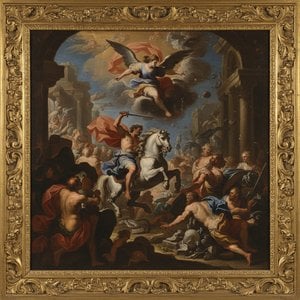
The Last Supper

Experience the visceral drama of Tintoretto's The Last Supper, a Venetian Baroque masterpiece filled with dynamic light and shadow that invites you to bring this profound moment of faith into your own collection.

Джакопо Тинторето е венециански художник от Ренесанса и Барок, известен с драматичните си композиции, експресивни мастила и новаторския подход към светлината и перспективата. Разгледайте неговото наследство!

Ръчно изработена маслена репродукция

Ръчно рисувана маслена картина върху платно във вашия размер и рамка, изработена по поръчка от нашите художници. (Превключване към принт Превключване към принтПревключване към дигитално изображение Превключване към дигитално изображение)

P118B $10
P118H $10
P118W $10
P438Z $10
P508JH $12
P508YH $12
P805H $10
P805Z $10
P919BZ $10
P919G $10
P919XJ $10
P959ZH $10
P968JZ $12
W106C $8
W218G $10
W218JH $8
W218Y $10
W307PJ $10
W316G $10
W316PJ $8
W316Y $10
W398PJ $8
W4111J $10
W500HY $15
W500JH $15
W692G $12
W849H $8
W940BG $15
W953PJ $8

Стандартен
по поръчка
CM
INCH

Изберете от предварително зададените размери, които съответстват на оригиналните пропорции на произведението.

ширина
височина

Можете да въведете свои собствени размери, за да пасне на конкретна рамка или пространство. Ако избраният от вас размер не съответства на пропорциите на оригиналното изображение, ние ще изрежем произведението или ще удължим картината с допълнителни ръчно рисувани елементи. Дигитален макет ще бъде изпратен за ваше одобрение преди започване на производството.
Моля, обърнете внимание, че прегледът на екрана не отразява действителното изрязване или разширяване. Само макетът ще покаже точно финалния състав.
Въпреки че са налични персонализирани размери, препоръчваме да изберете размер от предварително дефинирания списък, за да запазите оригиналните пропорции.

Примери за това какво може да се промени: Заменете лице с клиентска снимка; Добавете домашен любимец (например заменете котка с куче); Включете скрито послание на фона; Променете пейзажа или елементите на фона.
След поръчка, екипът на WahooArt.com ще изпрати имейл на клиента за инструкции и ще предостави преглед на макет.

Доставка по целия свят () в рамките на 3/4 седмици вместо стандартните 5 седмици. (9 Септември). Без компромис с качеството.

why_choose_icon
Безплатна експресна доставка по целия свят
why_choose_icon
Висококачествено ленено платно
why_choose_icon
Пълно застраховане при доставка
why_choose_icon
Гаранция за възстановяване на митнически такси
why_choose_icon
Гаранция за цветова точност
why_choose_icon
Политика за връщане в рамките на 100 дни (само при дефекти)
why_choose_icon
100% Гаранция за връщане на парите
why_choose_icon
Предложение за отстъпка при поръчка на едро

Обща цена

$ 272

reproduction

The Last Supper

Репродукционен метод

Размер на репродукцията

-

Обща цена

$ 272

Бързи факти

  • Movement: Baroque
  • Medium: Oil on Canvas
  • Title: The Last Supper
  • Year: 1594
  • Location: Basilica di San Giorgio Maggiore
  • Artistic style: Venetian Mannerism
  • Subject or theme: Religious Iconography

Тест за изкуство

Има само един верен отговор за всеки въпрос.

Въпрос 1:
What is the primary subject matter of Tintoretto’s "The Last Supper"?
Въпрос 2:
Tintoretto employed dramatic lighting techniques in this painting. What is the artistic term for this technique?
Въпрос 3:
In what year was "The Last Supper" completed by Jacopo Tintoretto?
Въпрос 4:
Where is "The Last Supper" currently housed?
Въпрос 5:
What stylistic characteristic distinguishes Tintoretto’s approach to painting from many of his contemporaries?

A Vision of Divine Drama: Tintoretto’s Last Supper

The Last Supper by Jacopo Tintoretto is not merely a depiction of a biblical event; it is a visceral, emotional explosion captured on canvas. Unlike the more static and balanced compositions often associated with the High Renaissance, Tintoretto’s masterpiece invites the viewer into a world ablaze with spiritual tension and theatrical movement. As one stands before this monumental work, the boundaries between the earthly and the divine seem to dissolve. The scene captures the profound moment of Christ sharing his final meal with his apostles, yet it transcends simple historical record to become an immersive experience of faith, betrayal, and the supernatural. Through a masterful command of light and shadow, Tintoretto transforms a dining room into a stage where the very air feels charged with the weight of impending destiny.

The Mastery of Il Furioso

To understand the impact of this painting, one must understand the hand that wielded the brush. Known to his contemporaries as Il Furioso, Tintoretto possessed an unparalleled ability to convey immediacy through rapid, energetic brushwork. His technique was revolutionary, eschewing the polished, porcelain-like finishes of some of his peers in favor of a more textured, luminous surface. By layering paint thinly and building up color with a sense of urgency, he created a flickering light that seems to pulsate within the frame. This approach allows the figures—muscular, expressive, and caught in mid-gesture—to appear as though they are moving through a haze of divine revelation. The composition itself defies traditional perspective, utilizing deep shadows and sudden bursts of illumination to guide the eye through a labyrinth of apostles, servants, and even the subtle presence of dogs, all contributing to a sense of lived, breathing reality.

Venetian Splendor and Spiritual Intensity

Born into the vibrant atmosphere of 16th-century Venice, Tintoretto’s work is deeply intertwined with the religious fervor of the Counter-Reformation. Commissioned for the Basilica of San Giorgio Maggiore, this painting served as a powerful tool of devotion, designed to stir the souls of the faithful. The historical context of Venice—a maritime republic at the height of its glory—provides the perfect backdrop for such an audacious display of artistry. The painting reflects the era's desire to use art as a sensory bridge to the divine, where the grandeur of the setting and the intensity of the human emotion work in tandem. For the collector or the lover of fine art, this piece offers more than just aesthetic beauty; it provides a window into a period of profound transition, where the structured ideals of the Renaissance were giving way to the dramatic, emotive power of the Baroque.

An Eternal Presence for the Discerning Space

For those seeking to bring a sense of history and profound narrative into a curated interior, a reproduction of The Last Supper serves as a breathtaking focal point. Its immense scale and dynamic composition make it an ideal centerpiece for grand halls, libraries, or sophisticated living spaces where conversation and contemplation are encouraged. The interplay of deep, moody tones and brilliant highlights allows the artwork to adapt to various lighting conditions, casting a timeless elegance over any room. Whether viewed as a study in Venetian technique or as a profound meditation on human connection and spiritual mystery, this work remains an enduring icon of Western art, offering an unparalleled sense of depth and drama to any collection.

Биография на художника

A Venetian Master of Drama and Light

Jacopo Tintoretto, born Jacopo Robusti in Venice around 1518, remains one of the most compelling and enigmatic figures of the High Renaissance and early Baroque periods. His very nickname, “Tintoretto” – little dyer – speaks to his family’s trade, yet it belies the immense artistry that would distinguish him from all others. Unlike many artists who benefited from structured apprenticeships, Tintoretto's path was largely self-directed, fueled by an insatiable curiosity and a relentless drive for innovation. While accounts suggest a brief and unsuccessful stint under Titian, the acknowledged master of Venetian colorism, it seems the experience proved more contentious than formative. Titian’s alleged dismissal of the young Jacopo – whether due to jealousy or artistic disagreement – spurred Tintoretto toward an independent course, one characterized by audacious experimentation and a uniquely dynamic style. He immersed himself in anatomical study, reportedly through dissection, and honed his skills by meticulously copying classical sculpture and the works of other masters. This dedication laid the foundation for a career that would redefine Venetian painting.

Forging a Distinctive Style: *Il Furioso*

Tintoretto’s artistic development was marked by an almost feverish energy, earning him another evocative nickname: *Il Furioso* – “the Furious One.” This moniker wasn't merely descriptive of his working pace but also captured the intensity and emotional charge that permeated his canvases. His early works already hinted at a departure from traditional Venetian conventions. While acknowledging Titian’s influence in color, Tintoretto gravitated towards Michelangelo’s powerful figures and dramatic compositions. He synthesized these influences into something entirely new: a style characterized by elongated forms, swirling draperies, and an innovative use of perspective that often created a sense of dizzying depth and movement. He abandoned the meticulous finish favored by his contemporaries, opting instead for a rapid, almost sketch-like brushstroke that conveyed immediacy and raw emotion. This technique, combined with his masterful manipulation of light and shadow – *chiaroscuro* – allowed him to create scenes of unparalleled drama and psychological intensity. He wasn’t simply depicting events; he was conveying their emotional core. His compositions were often asymmetrical and dynamic, creating a sense of movement and instability that reflected the turbulent spirit of the age.

Monumental Achievements: San Rocco and Beyond

Tintoretto's prodigious output spanned decades, encompassing religious narratives, historical allegories, and portraits. However, his most significant achievement lies in the cycle of paintings he created for the Scuola Grande di San Rocco, a Venetian confraternity dedicated to Saint Roch. Over a period of more than fifty years, Tintoretto adorned the Scuola’s halls with over sixty canvases, transforming it into a breathtaking visual testament to faith and human experience. Works like “The Last Supper,” completed late in his life, demonstrate his continued experimentation with perspective and composition. Departing from traditional depictions, Tintoretto placed the scene in a dramatically lit, architecturally unstable space, emphasizing the emotional turmoil of Christ’s final meal with his disciples. Other notable works include “The Miracle of St Mark Freeing the Slave,” a powerful display of dynamic composition and foreshortening, and numerous paintings for Venetian churches and palaces that showcase his mastery of scale and narrative storytelling. These monumental projects cemented Tintoretto's reputation as one of Venice’s most important artists.

Influences and Artistic Connections

Tintoretto’s artistic journey was shaped by a complex interplay of influences. As mentioned, Titian undoubtedly provided an initial foundation in color and technique, though their relationship remained strained. Michelangelo’s dynamism and anatomical precision served as another crucial inspiration, while the works of classical sculpture profoundly impacted his understanding of form and composition. He also studied the works of other Venetian masters, such as Paolo Veronese, absorbing their techniques and stylistic approaches. However, Tintoretto ultimately forged a unique path, developing a style that was distinctly his own—a synthesis of these diverse influences into something powerfully original. His work reflects not only the religious fervor and political tensions of his time but also a uniquely personal vision that continues to resonate with audiences today.

Legacy and Historical Significance

Jacopo Tintoretto died in Venice in 1594, leaving behind a vast and influential body of work. He bridged the gap between the High Renaissance and the Baroque period, anticipating many of the stylistic innovations that would define the latter. His dramatic compositions, expressive brushwork, and innovative use of light and shadow profoundly influenced artists such as Caravaggio, Rembrandt, and Delacroix. He wasn’t merely a painter; he was a visual storyteller who understood how to harness the power of art to evoke emotion and inspire awe. As one of the three great Venetian painters of the 16th century – alongside Titian and Paolo Veronese – Tintoretto played a crucial role in shaping the artistic landscape of Venice during its golden age. His work reflects not only the religious fervor and political tensions of his time but also a uniquely personal vision that continues to resonate with audiences today, solidifying his place as one of history’s most important and captivating artists. His legacy is a testament to the enduring power of artistic innovation and the transformative potential of human creativity.

Джакопо Тиньорето

Джакопо Тиньорето

1518 - 1594 , Италия

Бързи факти

  • Artistic Movement Or Style: Ренесанс, Маниеризъм
  • Artists Or Movements Influenced By This Artist:
    • Карважо
    • Барок
  • Artists Who Influenced This Artist:
    • Титациано
    • Микеланджело
  • Date Of Birth: 1518
  • Date Of Death: 1594
  • Full Name: Jacopo Robusti
  • Nationality: Италианец
  • Notable Artworks:
    • Чудо на св. Марк
    • Последна трапеза
    • Възнесение Девичи
  • Place Of Birth: Венеция, Италия
Разгледайте произведения на изкуството, организирани по теми, стилове и характеристики.