x
Представи си гоПредстави си го AR прегледAR преглед Купете принт Купете принтКупете изображение Купете изображение ИзпратиИзпрати
ДетайлиДетайли Добавяне към любими Добавяне към любими ИзтеглянеИзтегляне ПодобниПодобни Рентгенова снимкаРентгенова снимка СлайдшоуСлайдшоу

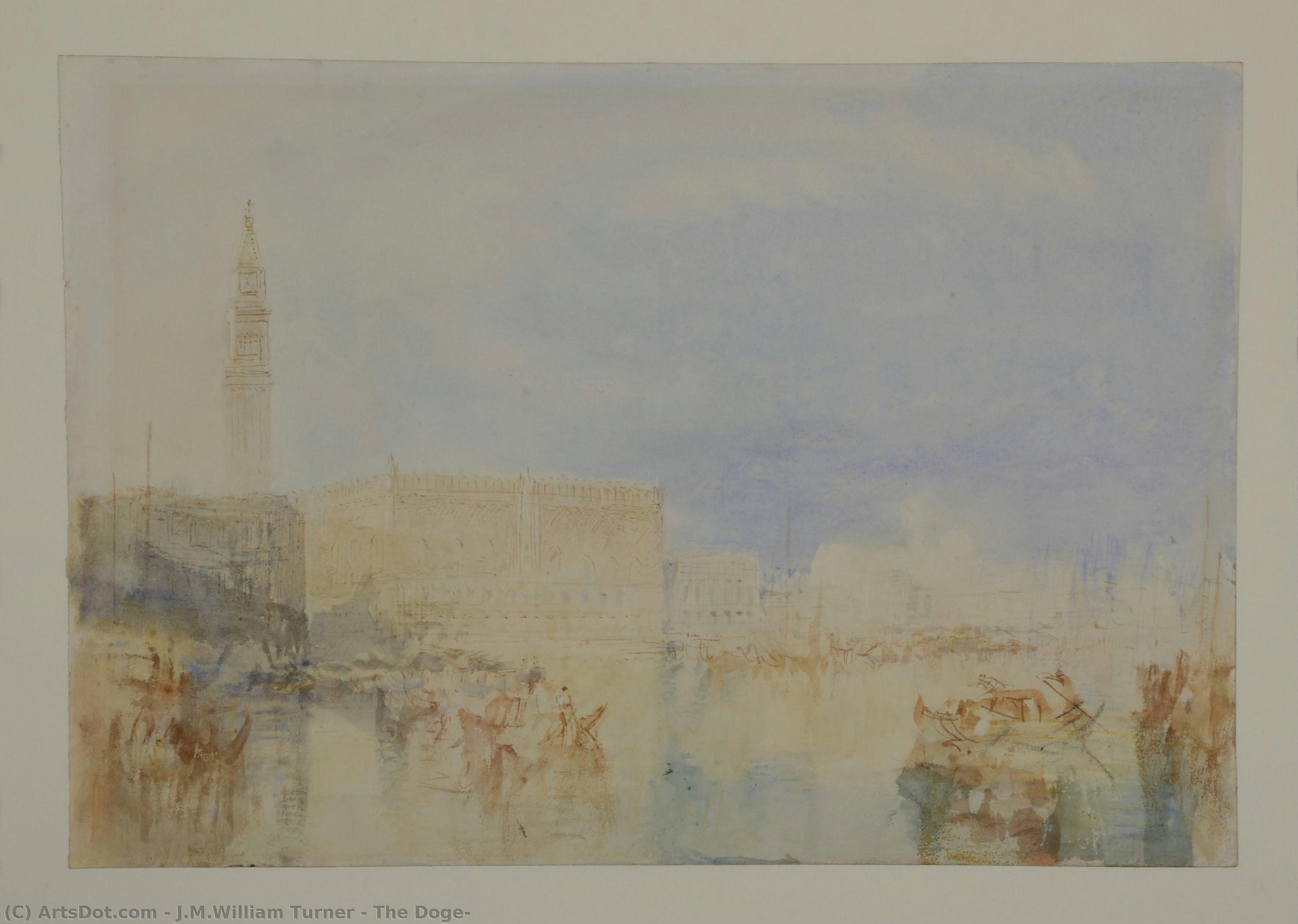
The Doge

Discover J.M.W. Turner’s ‘The Doge,’ a stunning 1840 watercolor study of Venice's Grand Canal. Explore atmospheric Romanticism & Turner’s unique technique.

"meta_description": "Джоузеф Тонер (1775-1851) е английски романтичен художник, известен с драматичните си пейзажи и мореплавателни картини. Той революционизира изкуството чрез експресивното използване на светлина и цвят, предхождайки импресионистите."

Ръчно изработена маслена репродукция

Ръчно рисувана маслена картина върху платно във вашия размер и рамка, изработена по поръчка от нашите художници. (Купете принт Купете принтКупете изображение Купете изображение)

P118B $10
P118H $10
P118W $10
P438Z $10
P508JH $12
P508YH $12
P805H $10
P805Z $10
P919BZ $10
P919G $10
P919XJ $10
P959ZH $10
P968JZ $12
W106C $8
W218G $10
W218JH $8
W218Y $10
W307PJ $10
W316G $10
W316PJ $8
W316Y $10
W398PJ $8
W4111J $10
W500HY $15
W500JH $15
W692G $12
W849H $8
W940BG $15
W953PJ $8

Стандартен
по поръчка
CM
INCH

Изберете от предварително зададените размери, които съответстват на оригиналните пропорции на произведението.

ширина
височина

Можете да въведете свои собствени размери, за да пасне на конкретна рамка или пространство. Ако избраният от вас размер не съответства на пропорциите на оригиналното изображение, ние ще изрежем произведението или ще удължим картината с допълнителни ръчно рисувани елементи. Дигитален макет ще бъде изпратен за ваше одобрение преди започване на производството.
Моля, обърнете внимание, че прегледът на екрана не отразява действителното изрязване или разширяване. Само макетът ще покаже точно финалния състав.
Въпреки че са налични персонализирани размери, препоръчваме да изберете размер от предварително дефинирания списък, за да запазите оригиналните пропорции.

Примери за това какво може да се промени: Заменете лице с клиентска снимка; Добавете домашен любимец (например заменете котка с куче); Включете скрито послание на фона; Променете пейзажа или елементите на фона.
След поръчка, екипът на WahooArt.com ще изпрати имейл на клиента за инструкции и ще предостави преглед на макет.

Доставка по целия свят () в рамките на 3/4 седмици вместо стандартните 5 седмици. (5 Септември). Без компромис с качеството.

why_choose_icon
Безплатна експресна доставка по целия свят
why_choose_icon
Висококачествено ленено платно
why_choose_icon
Пълно застраховане при доставка
why_choose_icon
Гаранция за възстановяване на митнически такси
why_choose_icon
Гаранция за цветова точност
why_choose_icon
60-Дневен период за връщане (Само при дефекти)
why_choose_icon
100% Гаранция за връщане на парите
why_choose_icon
Предложение за отстъпка при поръчка на едро

Обща цена

$ 272

reproduction

The Doge

Репродукционен метод

Размер на репродукцията

-

Обща цена

$ 272

Бързи факти

  • Influences: Turner's style
  • Dimensions: 22 x 32 cm
  • Artist: J.M.W. Turner
  • Artistic style: Watercolor wash
  • Movement: Romanticism
  • Year: 1840
  • Title: The Doge

Тест за изкуство

Има само един верен отговор за всеки въпрос.

Въпрос 1:
What is the primary subject of J.M.W. Turner’s ‘The Doge’?
Въпрос 2:
The watercolor ‘The Doge’ primarily utilizes what technique to create its atmospheric effect?
Въпрос 3:
According to the image description, what is a key characteristic of Turner’s use of perspective in this painting?
Въпрос 4:
In what year was ‘The Doge’ painted, based on the provided information?
Въпрос 5:
What is suggested by the description of the painting’s intended purpose – as a ‘colour study for Turner’s future reference’?

A Glimpse of Dusk – The Doge’s Palace and Riva degli Schiavoni

J.M.W. Turner's “The Doge’s Palace and Riva degli Schiavoni” isn’t merely a depiction of Venice; it’s an immersion into the city’s very soul, captured in a fleeting moment of twilight. Painted in 1840 during his final Venetian sojourn, this watercolor study transcends simple landscape painting, becoming a profound meditation on light, atmosphere, and the ephemeral beauty of a fading day. The scene unfolds along the Grand Canal, dominated by the imposing Doge’s Palace – a symbol of Venetian power and history – and framed by the bustling Riva degli Schiavoni, a vibrant waterfront teeming with gondolas and activity. Turner doesn't strive for photographic accuracy; instead, he prioritizes conveying an emotional response to the scene, utilizing his signature technique to dissolve form and emphasize feeling.

  • Subject Matter: The painting focuses on the interplay between architecture, water, and light in Venice.
  • Date: 1840
  • Medium: Watercolor with scraping (a technique where paint is scraped off the paper to reveal the underlying surface)

The Language of Light – Turner’s Revolutionary Technique

Turner's genius lies in his masterful manipulation of watercolor. He employs a layered approach, beginning with washes of yellow to represent the buildings and their reflections shimmering on the water. Crucially, he applies these washes immediately after laying down the blue for the foreground, resulting in occasional patches of green – a testament to the speed and spontaneity of his process. This technique, combined with ‘scraping,’ creates a remarkable sense of texture and luminosity. The scraping reveals the white paper beneath the paint, adding a subtle sheen and enhancing the atmospheric effect. It’s as if Turner is capturing not just what he sees, but the very essence of light itself, transforming the scene into an impressionistic dream.

Turner's use of color is particularly striking – muted blues and greens dominate, creating a sense of melancholy and mystery, while subtle hints of gold suggest the warmth of the setting sun.

Symbolism and Venetian Identity

Beyond its aesthetic beauty, “The Doge’s Palace and Riva degli Schiavoni” is rich in symbolic meaning. The Doge's Palace, with its towering campanile (bell tower), represents Venice’s long and illustrious history as a maritime republic. The bustling Riva degli Schiavoni, filled with gondolas and merchants, embodies the city’s vibrant commercial life. However, Turner doesn’t romanticize this scene; he presents it with a sense of detachment, almost as if observing from afar. The hazy atmosphere suggests a fleeting moment in time, hinting at the impermanence of beauty and power. The painting can be interpreted as a reflection on Venice's past glory juxtaposed against its inevitable decline – a theme that resonated deeply with Turner’s own artistic vision.

A Timeless Masterpiece – Capturing Emotion

“The Doge’s Palace and Riva degli Schiavoni” is more than just a painting; it's an experience. It evokes a sense of tranquility, mystery, and the profound beauty of Venice’s atmosphere. Turner’s ability to capture light and emotion with such delicate brushstrokes remains unparalleled. This watercolor study offers a glimpse into the heart of a city steeped in history and legend, inviting viewers to lose themselves in its timeless charm. Reproductions of this work retain much of the original's evocative power, making it a treasured addition to any art collection or interior space – a reminder that true beauty lies not just in representation, but in the feeling it inspires.


Биография на художника

A Life Painted in Light: The World of J.M.W. Turner

Joseph Mallord William Turner, universally known as J.M.W. Turner, wasn’t merely a painter; he was a visionary who fundamentally reshaped the landscape of art and laid the groundwork for modern abstraction. Born in Maiden Lane, Covent Garden, London, in 1775, his origins were modest – the son of a barber and wig maker. Yet, even from childhood, an extraordinary talent began to blossom within him. By the tender age of fourteen, he was enrolled at the Royal Academy, presenting his initial works just a year later. This early promise wasn’t simply technical proficiency; it hinted at an innate understanding of light, color, and atmosphere – qualities that would become the defining characteristics of his remarkable career. To supplement his artistic education, Turner gained practical experience as an architectural draftsman, honing his perspective and compositional skills—abilities that proved invaluable in rendering both meticulously detailed topographical views and vast, emotionally resonant landscapes. Turner’s formative years were characterized by a fervent dedication to his craft, fueled by a natural aptitude and an unwavering pursuit of artistic excellence.

The Romantic Tempest: Style and Influences

Turner emerged during the zenith of the Romantic era, yet he didn't simply adhere to its conventions. He absorbed influences from diverse sources – the Dutch masters like Claude Lorrain and Aelbert Cuyp, whose luminous landscapes captivated him, and artists such as Richard Wilson, known for his poetic depictions of nature. However, Turner didn’t merely imitate; he synthesized these influences into something entirely unique. His work is immediately recognizable by its expressive use of color, often employing bold contrasts and vibrant hues to convey emotion and atmosphere with remarkable intensity. He possessed a profound fascination with the power and drama of the natural world – turbulent seascapes, fiery sunsets, and swirling storms became recurring motifs in his paintings, each imbued with a palpable sense of energy and movement. Crucially, Turner wasn’t interested in passively recording what he saw; instead, he sought to capture *the feeling* of a place—the sublime awe inspired by the natural world. This pursuit led him to experiment with increasingly loose brushwork, dissolving forms into washes of color and light – techniques that presaged the Impressionist movement decades later. The influence of John Ruskin, who championed Turner’s work from 1840, elevated landscape painting to a new level of critical acclaim, solidifying Turner's place in art history.

A Prolific Legacy: The Scope of Turner’s Output

The sheer volume of Turner’s artistic output is astonishingly vast. He produced over 550 oil paintings, nearly 2,000 watercolors, and an astounding 30,000 works on paper—a testament to his tireless exploration of diverse subjects, techniques, and styles. His paintings span a remarkable range: from meticulously detailed topographical views of British landscapes to dramatic historical scenes and evocative maritime depictions. He was equally adept at capturing the tranquility of a pastoral scene and the terrifying power of a raging storm. Works like “Fort Vimieux” exemplify his mastery of depicting atmospheric effects—the swirling clouds, the crashing waves, and the intense light all contribute to a profound sense of drama and sublime beauty. Similarly, "Scene in the Campagna" showcases his ability to capture the warmth and serenity of the Italian countryside with delicate brushwork and luminous colors. Beyond painting, Turner was also a skilled printmaker, further disseminating his artistic vision through engravings and lithographs, expanding the reach of his work beyond the canvas.

Eccentricity and Remembrance: The Man Behind the Masterpieces

Turner’s personal life was as complex and enigmatic as his art. He remained intensely private and reclusive, often shunning social gatherings and preferring the solitude of his studio or the open road. He fathered two daughters, Evelina and Georgiana, with Sarah Danby, the wife of a fellow artist, but maintained a distant relationship with them. His later years were marked by increasing eccentricity and declining health. Following his father’s death in 1829, he became increasingly morose and withdrawn, living in squalor and neglecting his appearance. He adopted the pseudonym “Mr. Booth” to avoid recognition and even rowed his boat into the Thames during a census to remain untraceable. Despite these eccentricities—or perhaps because of them—Turner remains one of Britain’s most beloved artists. His final years were spent in Chelsea, where he passed away on December 19, 1851, at the age of 76. In a fitting tribute to his enduring legacy, he is buried in St Paul's Cathedral, alongside other British luminaries—a testament to his profound impact on art and culture. His work continues to inspire artists and captivate audiences worldwide, ensuring that the light of J.M.W. Turner will continue to shine for generations to come.

Major Achievements

Turner’s legacy rests upon a series of groundbreaking achievements:
  • Pioneering Atmospheric Effects: He revolutionized landscape painting by prioritizing capturing the *feeling* of a place over strict topographical accuracy, utilizing loose brushwork and vibrant color palettes to convey mood and atmosphere.
  • Maritime Masterpieces: His depictions of ships at sea—particularly “The Fighting Temeraire”—are considered among the greatest paintings ever created, capturing both the beauty and the brutality of naval life.
  • Historical Narratives: Turner’s dramatic historical scenes, such as "Snow Storm—Steamer off Blackfriars Bridge," demonstrated his ability to blend artistic expression with narrative storytelling.
  • Influence on Impressionism: His innovative use of color and light foreshadowed the techniques employed by the Impressionist movement, solidifying his position as a pivotal figure in art history.

Historical Significance

J.M.W. Turner’s work holds significant historical importance for several reasons:
  • Romanticism's Peak: He represents the culmination of Romantic ideals—a celebration of nature, emotion, and imagination.
  • Shift in Artistic Focus: His emphasis on subjective experience and atmospheric effects marked a decisive shift away from traditional academic painting.
  • Enduring Inspiration: Turner’s legacy continues to inspire artists today, demonstrating the power of art to capture the beauty and complexity of the world around us.

Джон Мърдок Уилъм Търнър

Джон Мърдок Уилъм Търнър

1775 - 1851 , Великобритания

Бързи факти

  • Artistic Movement Or Style: Романтизъм
  • Artists Or Movements Influenced By This Artist:
    • Impressionism
    • Abstract Art
  • Artists Who Influenced This Artist:
    • John Robert Cozens
    • Richard Wilson
  • Date Of Birth: 23 април 1775
  • Date Of Death: 19 декември 1851
  • Full Name: Joseph Mallord William Turner
  • Nationality: Британски
  • Notable Artworks:
    • Fort Vimieux
    • Scene in the Campagna
  • Place Of Birth: Лондон, Великобритания