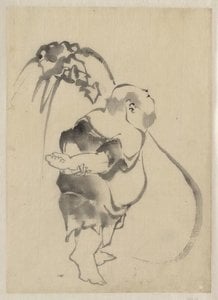
Визия на киотски търговец: Светът на Ито Якучу
Роден през 1716 г. сред оживения търговски квартал Нишики в Киото, Ито Якучу се издига като един от най-оригиналните и завладяващи японски художници. За разлика от мнозина свои съвременници, които следват утвърдени художествени линии, пътят на Якучу е уникално оформен от проспериращия търговски произход на семейството му и дълбоко лично ангажиране с философията на Дзен будизма. Баща му, Ито Гензаемон, е бил успешен търговец на хранителни стоки, осигурявайки на младия Якучу комфортно детство, което му позволява да развива нарастващия си талант за рисуване още от ранна възраст. Тази търговска среда обаче му вдъхва и осъзнаване за социалните промени и нарастващото влияние на търговския клас в Киото – перспектива, която по-късно нежно ще вдъхне живот на неговото художествено виждане. Въпреки че се очаквало в крайна сметка да пое семейния бизнес, страстта на Якучу лежи другаде – в стремежа да улови същността на живота чрез четка и мастило. След смъртта на баща му, когато е бил на 23 години, Якучу управлява кратко време магазина, преди да го повери на брат си, за да се посвети окончателно на изкуството.
Разкъсване на традициите: Стил и предмет на изобразяване
Художечният стил на Ито Якучу представлява завладяваща смесица от прецизен реализму и игрив експеримент. Въпреки че е дълбоко вкоренен в традиционни японски сюжети – особено птици, цветя и пейзажи – той вдъхва на своите творби иновативен дух, който го отличава от мнозина съвременници. Той печели известност заедно с Маруяма Окьо със своите реалистични изображения, но Якучу отива отвъд простото имитиране на природата. Неговите картини се характеризират с ярки цветове, динамични композиции и готовност да предизвикат конвенционалните перспективи.
Пилетата, по-специално, стават повтарящ се мотив в неговото творчество, издигнати от скромни фермерски животни до теми, достойни за дълбоко художествено изследване. Той не просто рисува *това*, което вижда, а по-скоро изследва вродената жизненост и характер във всяко създание. Освен птиците, творбите на Якучу често отразяват теми от Дзен будизма – съзерцателна тишина, преклонение пред непостоянството и почитане на природния свят. Неговият прочут
Бобен лоз, например, не е просто ботаническо изследване, а медитация върху растежа, разпадането и взаимосвързаността на всичко съществуващо. Неговите майсторски многоцветни рендери – *дошоку сай-е* – са особено прославени, демонстрирайки изключително внимание към детайла и жива палитра, рядко срещана в японската живопис на този период.
Дзен влияние и художествено развитие
Влиянието на Дзен будизма върху изкуството на Якучу е неоспоримо. Той става мирянин (*koji*) в храма Шококу-джи в Киото, потапяйки се в принципите на Дзен, които наблягат на директния опит, интуицията и търсенето на просветление чрез съзерцание. Тази духовна основа дълбоко оформя неговия художествен подход, насърчавайки чувство за откъс от светските грижи и непоколебим фокус върху улавянето на същността на неговите субекти. Казва се, че той дори е получил специално разрешение да изучава класически китайски пейзажи от колекцията на храма, абсорбирайки векове художествена традиция, докато е изграждал своя собствен уникален път. Въпреки че първоначално може да е учил под ръководството на Оока Шунбоку, художник от школата Кано, специализиран в рисуването на птици и цветя, той бързо надгражда традиционното обучение, развивайки идиосинкразичен стил, който не подлежи на лесно категоризиране. Неговата готовност да наруши установените норми го свързва с „Линията на ексцентриците“ – движение, подчертано в влиятелната книга на Нобуо Цуджи *Кисо но Кейфу* (Линия на ексцентриците). Тази работа прославя художници, които предизвикват художествените конвенции, затвърждавайки мястото на Якучу като ключова фигура в историята на японското изкуство.
Наследство и преоткриване
Въпреки таланта и отдадеността си, Ито Якучу остава сравнително неизвестен по време на своя живот. Едва през 20-ти век неговата работа започва да получава широко признание, главно благодарение на изследванията на Цуджи, които революционизират възприятието за живописта от Едовия период. Подкрепата на Цуджи за Якучу като ключова фигура в „Линията на ексцентриците“ разпалва нов интерес към неговото изкуство и го утвърждава като един от най-важните и иновативни японски художници. Неговото влияние може да се види и в развитието на
Укийо-е, популярния жанр на дърворезбените гравюри, демонстрирайки по-широко въздействие върху японската художествена култура. Готовността на Якучу да експериментира с перспектива, цвят и предмет на изобразяване проправя път за бъдещи поколения художници да предизвигват традициите и да изследват нови творчески възможности. Биография, написана от Дзен монаха Дайтен Кенджо през 1766 г., предлага ценен поглед върху художествената философия на Якучу, разкривайки неговото умишлено избягване на човешки фигури – избор, който подчертава фокуса му върху природния свят и неговата вродена красота. Днес Ито Якучу се почита не само заради своята техническа умелост, но и заради своята уникална визия – свидетелство за непреходната сила на един художник, който е дръзнал да проложи свой собствен път и да улови духа на своето време с безпрецедентна оригиналност.
Бележки творби
- Петстотин архата: Монументално произведение, демонстриращо изключителния умение и отдаденост на Якучу.
- Ханшан и Шиде (Канзан и Джитоку): Демонстрира способността му да улови същността на японската култура и фолклор.
- Раци и пивонии: Квинтесенциален пример за неговия характерен стил, съчетаващ прецизен детайл с наситен цвят.
- Бобен лоз: Шедьовърв в стил суми-е, олицетворяващ Дзен философията и показващ сложни детайли.
- Две журавки: Изобразява неговия артистичен опит в представянето на птици с грация и прецизност.
- Стара бор: Забележителна творба, демонстрираща неговата майсторска техника на четката (101 x 40 см, коприна).



 Преглед в реален мащаб
 Поръчайте ръчно рисувано репродукция на този колекционерски предмет
 Сподели
 Сподели
 Подробности
 Ръководство

 Изтегляне
 Подобни артикули
 Рентгенова снимка
 Слайдшоу
 Статистика


 Разгърни целия текст






































 Опцията със стъкло е налична само за размери под 110 см